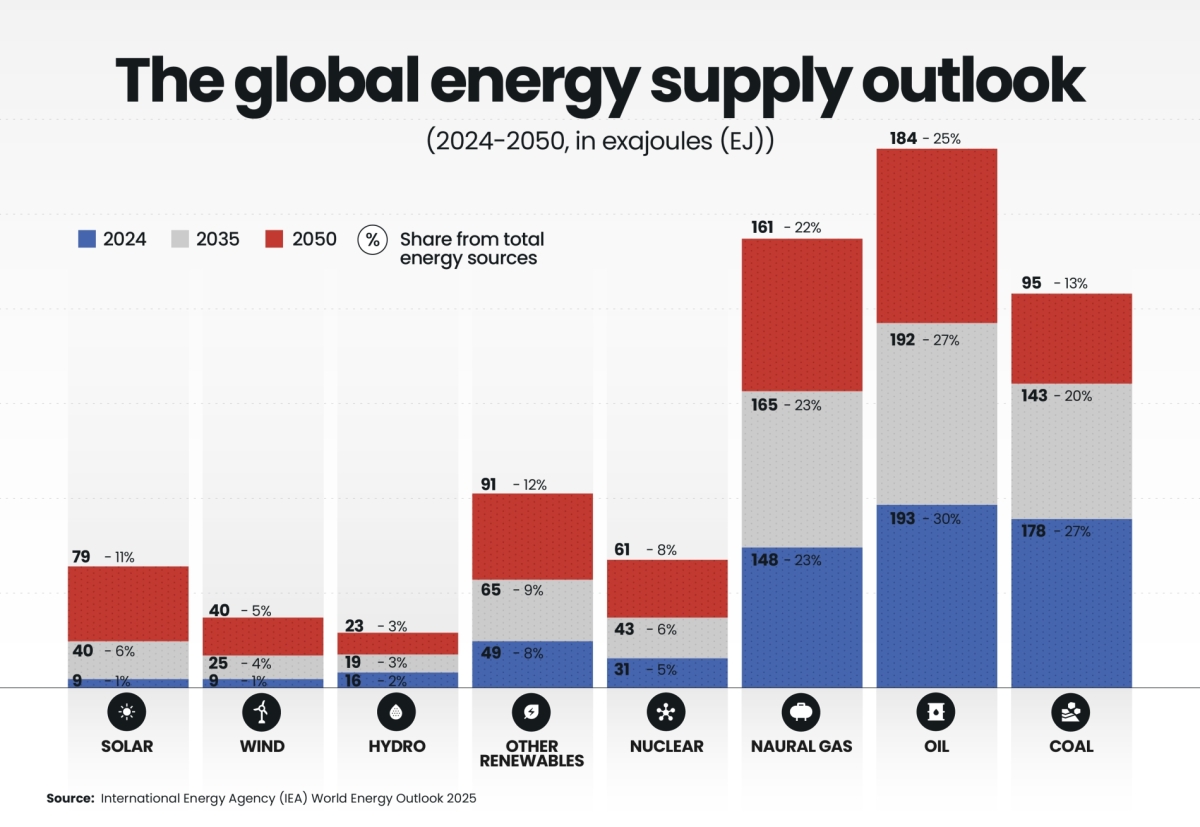

The world’s energy system is in the midst of a rapid structural shift, with rising demand being met increasingly by low-carbon sources even as all fuels expand to satisfy growth.
The International Energy Agency (IEA) projects the share of renewables to almost triple by 2050, up to 31% from 13%, with solar and wind driving the bulk of gains. Solar power alone is expected to grow nearly ninefold over the forecast period, whereas hydro power continues to rise more gradually.
By 2050, renewables are set to represent the largest source of net new global energy, with coal facing the steepest decline, reflecting policy phase-downs and competition from cleaner technologies. Nuclear power is expected to grow modestly as a stable baseload contributor.
Outlooks show that oil and natural gas will remain central to the energy mix over the next 25 years, with demand for hydrocarbons staying strong. Gas, especially in the form of liquefied natural gas (LNG), is expected to play a growing role in meeting power and industrial needs, underscoring how the transition away from fossil fuels will not be instantaneous.