The literary space nurturing Gaza's creative writers

Alumni students speak about how the institute helped shape their craft and process the trauma of Israel's genocidal war against them

Lina Jaradat

The literary space nurturing Gaza's creative writers

Jihad Abu Diya, 23, found an outlet for his creative passion when he joined Yara’at—a literary school affiliated with the Tamer Institute for Community Education—in Gaza during his first year at university. There, he found a centre that genuinely nurtured creative Palestinian talent, after experiencing other centres that he described as more rigid. “Yara'at gave me the intellectual nourishment and freedom of thought I needed,” he tells Al Majalla.

For Abu Diya, attending Yara’at classes was a bit of a trek, travelling from the Nuseirat refugee camp in central Gaza to western Gaza City, but it was a distance worth travelling, considering the skills he learned. At the centre, students learn by discovering one another’s worlds through reviewing their peers' writing, not by set lessons.

Sitting among his peers, he studies their faces as they read and lets his imagination wander. He recalls passages that have stayed with him, revealing different forms of expression and ways of constructing literary imagery. “Reading my peers' writing allowed me to see things from different perspectives and discover literary possibilities that I otherwise wouldn't have explored,” he says.

Discussions sometimes developed into debates that challenged people’s beliefs. He recalls an exchange about the place of poetry and the novel in contemporary life, with opinions divided between advocates of verse and prose, with no side successfully convincing the other. Abu Diya regards this as part of the collective’s character. “Discussion at Yara’at allows room for disagreement and questioning, without requiring everyone to reach a definitive conclusion.”

Over the years, even his understanding of what makes a good piece of writing has changed. He recalls a principle frequently repeated among members: “Do not justify your text.” Once a work leaves its author and reaches its readers, it becomes open to their interpretations. The writer can no longer stand beside it to explain every detail.

“That idea encouraged me to explore a style of writing that gives readers enough to understand it, without being too obscure or direct, allowing readers to come to their own conclusions and interpretations.”
Reading my peers' writing allowed me to see things from different perspectives and discover literary possibilities that I otherwise wouldn't have explored

Jihad Abu Diya, Ya'arat alumni student

After Israel launched its genocidal war on Gaza in 2023, Abu Diya stopped writing for a long time. Displacement from northern Gaza to the south, followed by the daily struggle to secure water, food and safety, consumed his days. As the months passed, he felt himself drifting away from the skills and pursuits that formed part of his identity.

Eventually, he returned to writing. He resumed work on his first poetry collection and began experimenting with illustrated stories, collaborating with his peers at Yara'at. Hoping to reach readers beyond Gaza, he helped produce illustrated stories about the war and displacement, translated into English and Japanese and published in several countries.

Omar AL-QATTAA / AFP
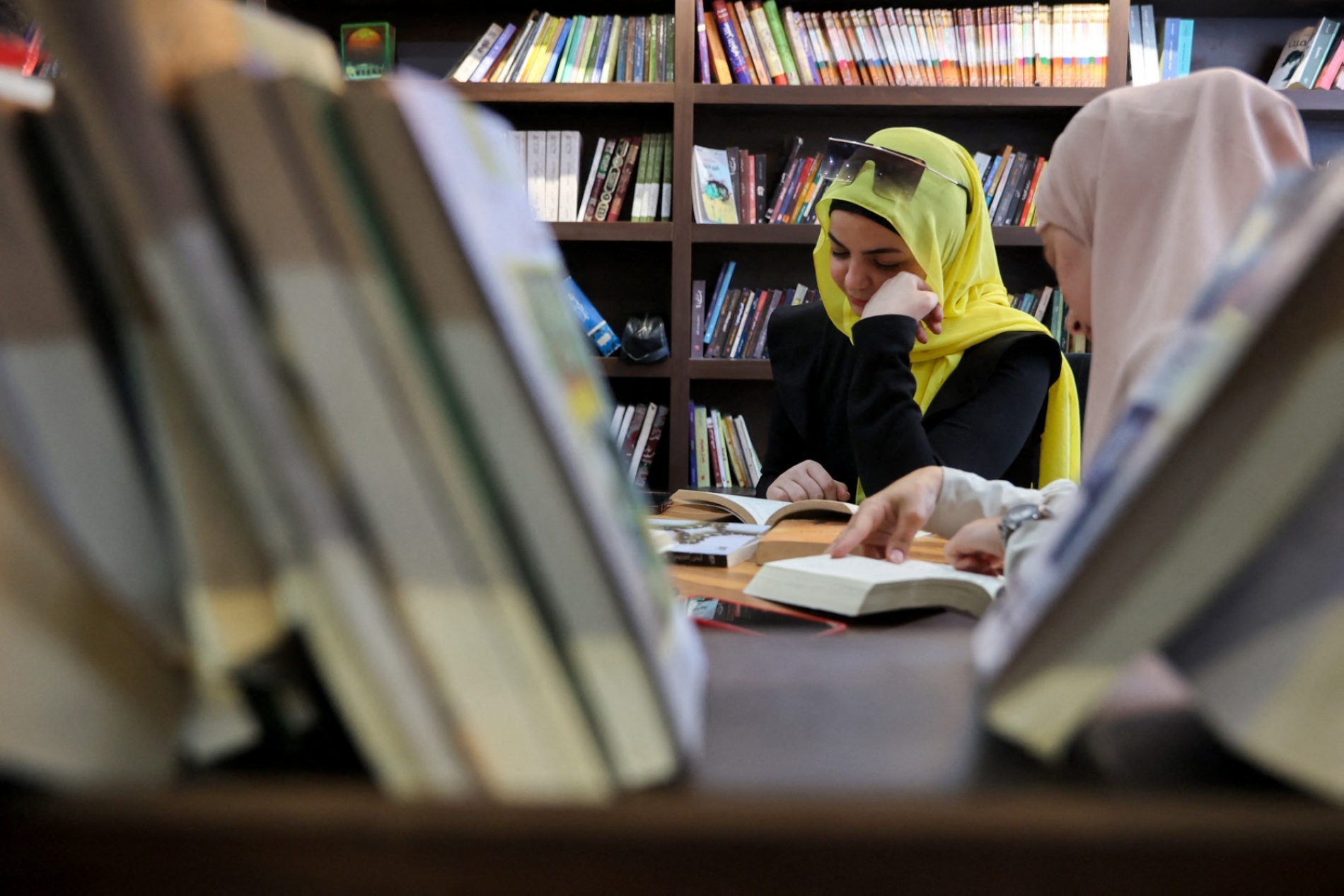
Displaced Palestinians browse books at the "Al-Anqa" library in the Rimal neighbourhood of Gaza City, on 21 April 2026.

Rawan Quwaider

Rawan Quwaider, 20, continued to write when the war first broke out, although anxiety made her pieces shorter. Later, she came to regard writing as a way to find her way back to herself, reclaim her identity, and understand her relationship with the world around her.

Quwaider recalls joining the centre before the war. She would sit quietly in a corner, mainly listening to older members whom she saw as more knowledgeable. "Over time, I began to see the other members as friends whose experiences I could learn from and with whom I could share my writing without feeling that I was any less capable than they were," she tells Al Majalla.

She remembers receiving comments that sometimes prompted her to restructure an entire piece or rewrite it from scratch. Peer feedback helped her tighten her prose and remove unnecessary detail. Gradually, her craft evolved, and she grew more confident in her ability to critique her peers' work. Today, she serves on the centre's editorial board.

For three decades, Yara'at has nurtured successive generations of Palestinian writers. For those who went on to other fields, the experience still stays with them.

"The Yara'at experience does not end when someone leaves the collective or moves on to another stage of life," Quwaider says. "The connections endure through shared literary interests, collaboration and mutual criticism. It feels like a family whose faces are constantly changing, while the bonds between successive generations of young writers remain."

Omar AL-QATTAA
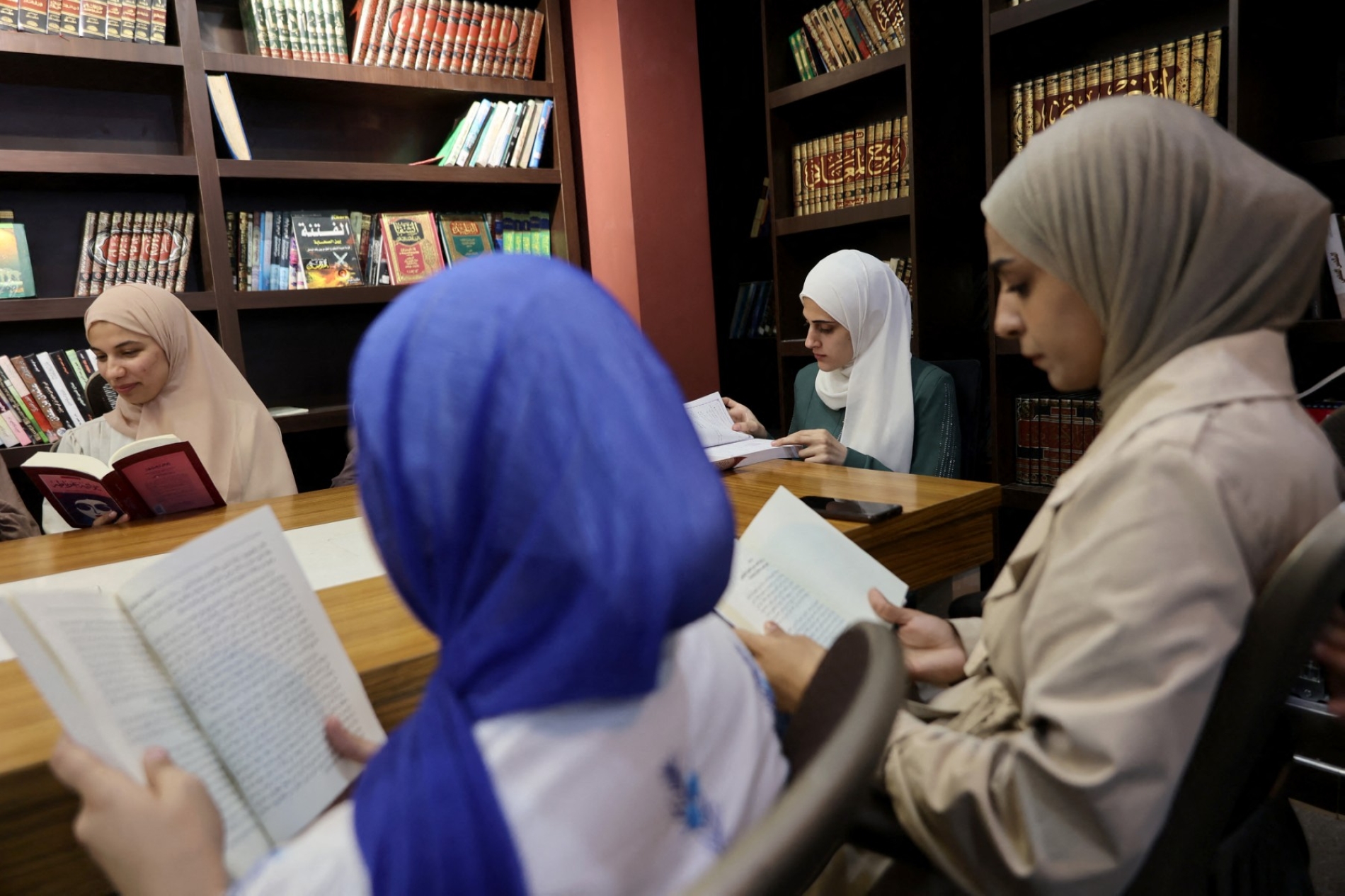
Displaced Palestinians read books at the "Al-Anqa" (Phoenix) library in the Rimal neighbourhood of Gaza City, on 21 April 2026.

Bisan Nateel

Bisan Nateel, coordinator of youth groups at the Tamer Institute, attended Yara'at for only a short time, but says the experience had a huge impact on her personality, memories, and literary development. "The value of the experience lies in the opportunities it offers young people to discover their own voices and deepen their relationship with literature, even if they do not all go on to become writers," she says.

During Israel's war on Gaza, the institute encouraged young people to draw on their personal experiences in their writing. "The idea is for young people to write when they feel the need to, and for their writing to reflect who they are, instead of some being perceived as just victims of war," Nateel explains.

As the war intensified, the spaces available for Yara'at gatherings dwindled. Libraries that had once hosted the collective's literary evenings were damaged or destroyed, while cultural centres that had connected its activities to the wider community were no longer as accessible. These included the halls of the Haidar Abdel Shafi Centre and the Tamari Sabbagh Hall. Reaching meeting places also became increasingly difficult amid displacement, scarce resources and the daily struggle to meet basic needs.

"The challenge was no longer simply a matter of reorganising activities," Nateel says. "It became a question of how to preserve the connections between young people when the infrastructure that had brought them together was gone."

The value of the Yara'at experience lies in the opportunities it offers young people to discover their own voices

Bisan Nateel, Ya'arat alumni student

Displacement and disconnection

With members scattered across northern and southern Gaza, the institute struggled to stay connected amid repeated displacement, internet outages and mounting communication difficulties. Activities stopped and resumed when circumstances allowed.

One initiative that emerged during this period was Across Borders, an online meet-up space. "These virtual gatherings allowed young people to meet, read one another's work and discuss what was happening around them," Nateel recalls. "Attendance varied from one meeting to another, depending on whether participants could get online and reach internet access points. Eventually, the difficulties became too great, and the meetings stopped."

The collective also developed a project entitled Memory of Places, bringing together writing by Yara'at members and other authors from Gaza about places they felt attached to, personal memories, and the details that connect a writer to their surroundings.

"The project was an attempt to preserve our connection to places through writing, at a time when those very places were being destroyed or becoming impossible to reach," Nateel explains.

REUTERS/Stephane Mahe
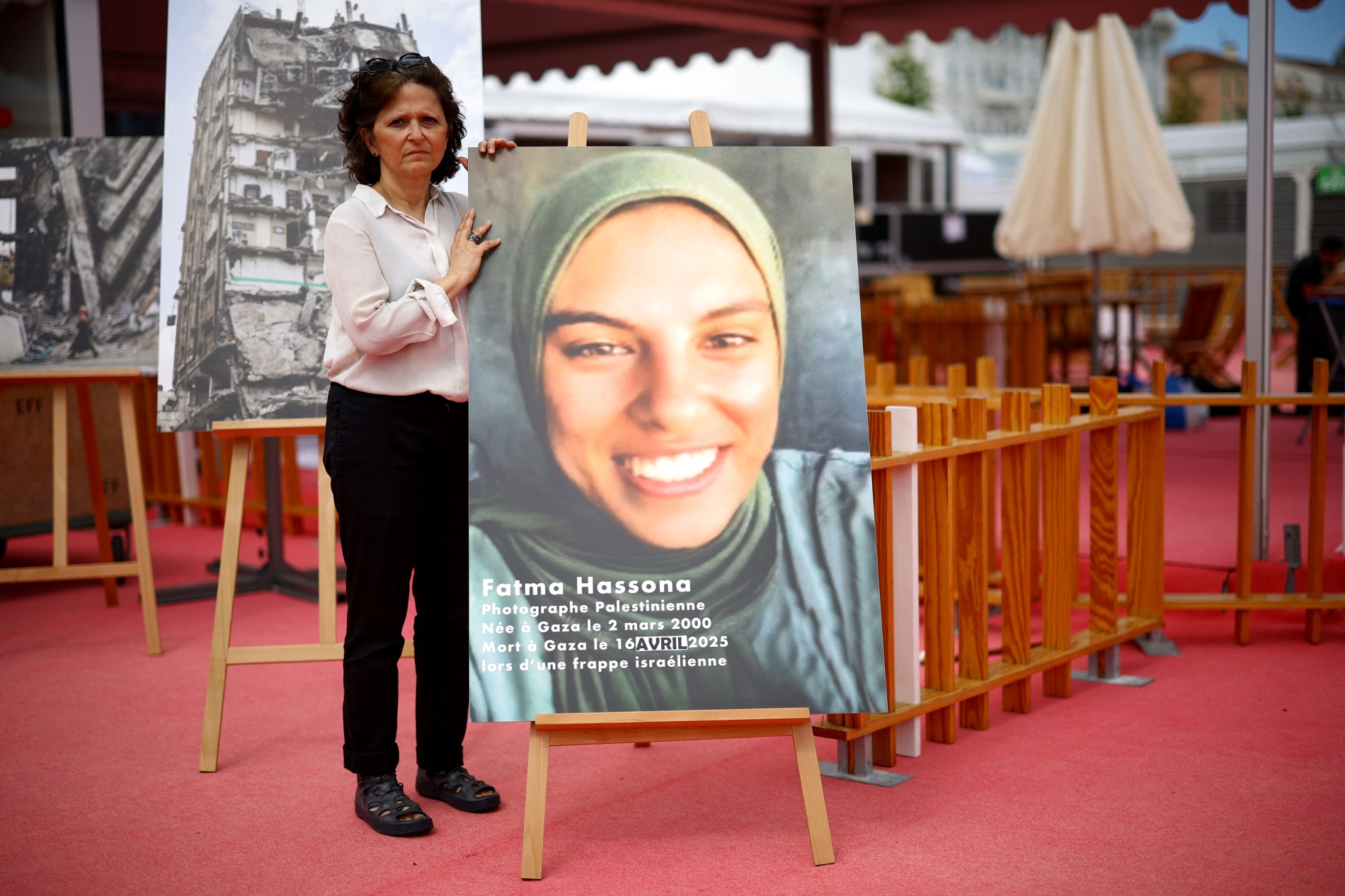
Sepideh Farsi, film director of the documentary film "Put Your Soul on Your Hand and Walk," stands next to a portrait of Fatima Hassouna, who was killed in an Israeli strike in Gaza in April 2025.

Remembering Fatima

She continues to follow former members who have found different ways to pursue literary and cultural activities. Other members, unfortunately, fell victim to Israel's war machine. One member was Fatima Hassouna, a Palestinian photojournalist whose work documented civilian life during the Gaza war, killed in an Israeli strike. Hassouna gained international recognition for her visceral documentation of war impacts and became the subject of the documentary film Put Your Soul on Your Hand and Walk, selected for the ACID film programme shown in parallel with the 2025 Cannes Film Festival.

font change