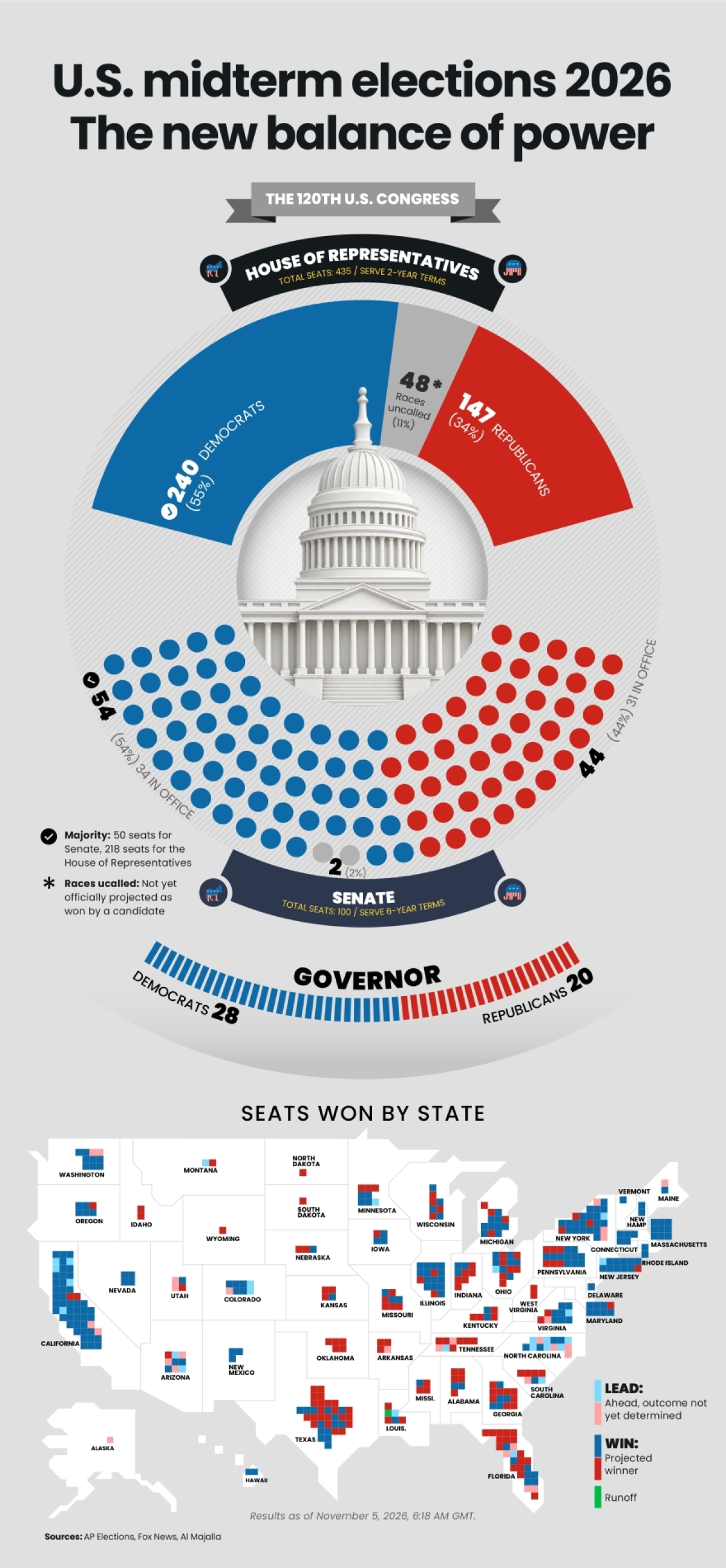

The US midterm elections on 3 November marked a major political shift, as Democrats succeeded in wresting control of both the House of Representatives and the Senate from the Republicans—a sweeping electoral defeat for the party that holds the White House. The results emerged against a backdrop of discontent over the rising cost of living, the repercussions of the war with Iran, and the trade policies of US President Donald Trump, effectively turning the elections into a referendum on his administration’s performance during the first two years of his second term.
The losses didn't just change the congressional majority; they crept into traditional Republican strongholds. Democrats secured key seats in states such as Kansas, Texas, and South Carolina—a shift reflecting the extent of dissatisfaction in the Republican Party. Nevertheless, some races—including Senate seats in Alaska and Mississippi—remain undecided, meaning the final scale of the Democratic majority has yet to be determined.
Trump sought to downplay the results, saying he was not on the ballot and that Republicans would have won in a landslide had his name appeared. He said he was willing to work with Democrats, while noting he would use his veto power against any legislation he opposes. He also attributed part of the loss to high fuel prices and certain Republican candidates, while acknowledging that the war with Iran influenced voters' choices.
Vice President JD Vance went further in diagnosing the reasons for the defeat, placing the primary responsibility on the war with Iran. He argued that the political cost of this conflict is inseparable from the Republicans' loss of control over the Senate for the next six years. This perspective reveals a divergence in how the Republican camp interprets the causes of the defeat, and it places the war—and foreign policy more broadly—at the heart of the debate regarding the party’s future and its leadership.
These results mean that the president will enter the second half of his term facing an opposition-controlled Congress—a sharp contrast to the previous two years, during which his party held both chambers, enabling him to pass legislation and secure appointments. Democrats will now be able to chair committees, launch investigations into the administration’s performance and decisions, subpoena officials and documents, and obstruct or delay the confirmation of the president’s nominees for government and judicial positions—including any potential vacancies on the Supreme Court.
Trump may also face pressure regarding the war with Iran, tariffs, federal spending, and immigration. The House of Representatives could, if it secures the necessary votes, initiate impeachment proceedings against the president; however, a conviction and removal from office would require a two-thirds majority in the Senate—a high political hurdle.