
The significance of the US midterm elections taking place on 3 November goes beyond filling seats in Congress and state legislatures. It is effectively a referendum on Donald Trump's performance and the direction the US president has chosen for the country. The results will determine the balance of power in Washington during the final two years of his term, and whether he can continue pursuing his agenda with relatively few obstacles or face a Congress more inclined to scrutinise his administration and challenge his policies.
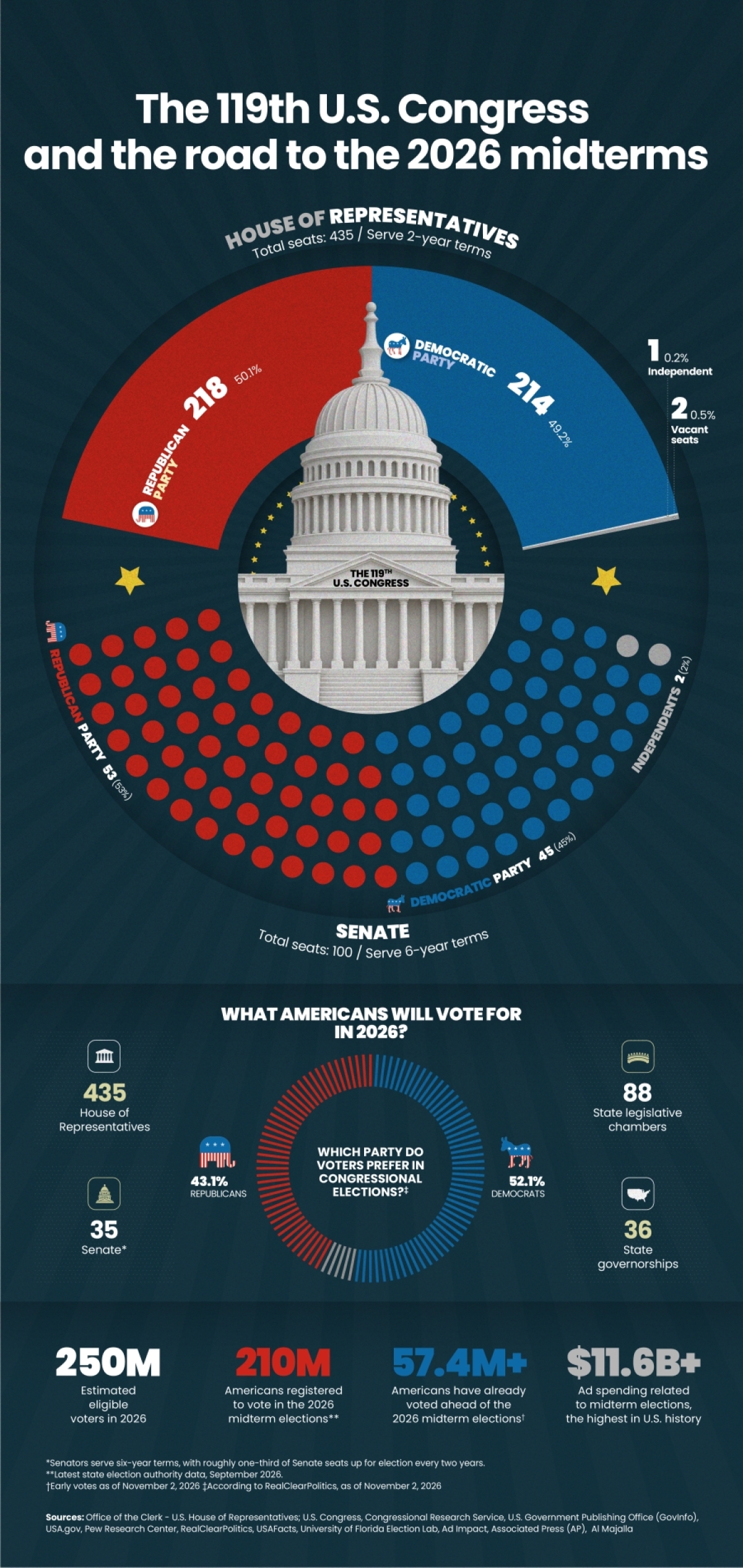
Both parties are contesting all 435 seats in the House of Representatives, while 35 Senate seats are also up for election. Republicans enter the race with narrow majorities in both chambers, making the loss of either politically costly for Trump. The outcome carries added significance because the party controlling Congress has greater power to set legislative priorities, oversee committee work, and influence spending and public policy.
Opinion polls point to an adverse electoral climate for Republicans. A Pew Research Centre survey found that Trump's approval rating had fallen to 30% while 44% of registered voters viewed their vote as a vote against him, compared with 19% who saw it as a vote in his support. RealClearPolitics' polling average also gave Democrats a lead of around nine points in the generic congressional ballot. This is accompanied by a gap in voter enthusiasm, with Pew finding that Democratic supporters were more likely to follow the election closely and mobilise to participate.
Economic concerns top voters' priorities, ranging from the cost of living and fuel prices to healthcare. Immigration, the future of democracy and foreign policy also feature prominently, particularly developments in the confrontation with Iran. According to Gallup, half of voters consider the economy and healthcare extremely important to their vote, while 47% attach the same importance to the situation in Iran.
One prominent Democratic challenger in the Republican camp is Abdul El-Sayed, the party's Senate candidate in Michigan, who is running against Republican Mike Rogers. A former public health official and progressive figure, El-Sayed represents the rise of a Democratic current advocating more assertive positions on healthcare and social justice. He secured his party's nomination despite substantial spending against his campaign, and if he wins, he will be the first Muslim senator in Congress.