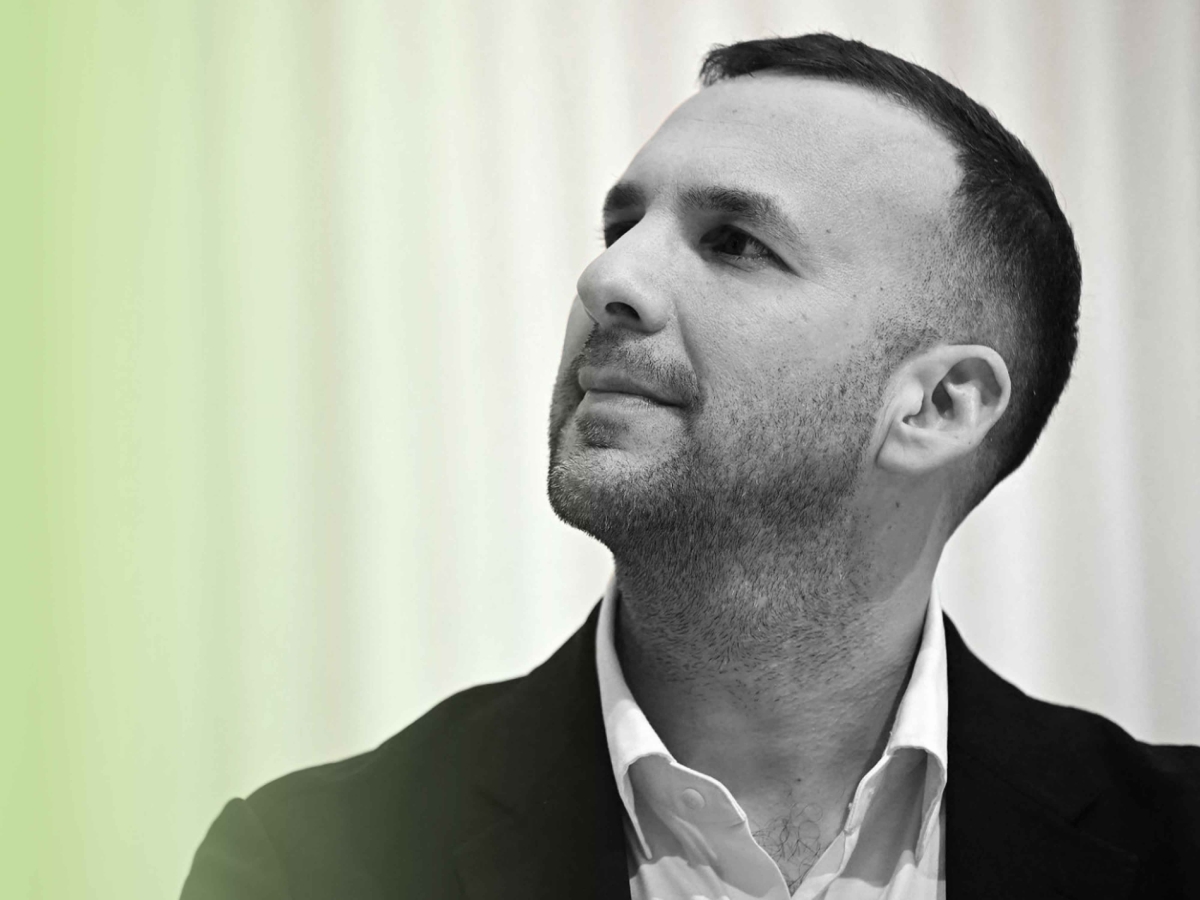

He is the leader of a national political party even though he has only ever been elected to a local council. Although he is the only Jewish leader of a major British political party, Israel has banned him from entering the country after party members adopted a motion declaring Zionism a form of racism.
Polanski said he would not have voted for the "imperfect" motion without an amendment; he said, "the displacement and genocide of the Palestinian people is clearly underpinned by a racist ideology".
Who is Zack Polanski and what explains his seemingly rapid rise from obscurity to political prominence? On the surface, there are parallels with Nigel Farage, leader of Reform UK, although on the opposite end of the political spectrum. Farage, however, played a prominent role in UK politics on Europe for decades before being elected as an MP and potentially as prime minister at the next general election. That is not the story of Zack Polanski.
Early life and career
His is a tale of reinvention, politically and otherwise, that stretches right back to his youth. Born in 1982 in Manchester during Prime Minister Margaret Thatcher’s early years in office, he was born David Paulden, which he legally changed at 18 to celebrate his Jewish roots. As a bulwark against antisemitism, Polanski’s ancestors had anglicised their surname when they arrived in the United Kingdom as immigrants from Eastern Europe. As a child, Polanski experienced discrimination not due to his Jewishness but because of his sexuality.
When it came to higher education, Polanski’s did not attend an institution normally associated with Britain’s political elite, namely Cambridge or Oxford. Instead, the young Mancunian set off to Aberystwyth University on the west coast of Wales. There he pursued a degree in sociology and drama and, at one point, considered a career in acting, later studying Shakespeare at an American university. Between 2007 and 2011, he appeared in four low-budget films.
Scrambling for employment brought him into an occupation that would later cause him considerable political embarrassment while aiding critics questioning his seriousness as a public figure. Polanski worked as a hypnotherapist, and in 2013 he was approached by a reporter for The Sun newspaper, with Polanski agreeing to attempt to increase the reporter’s breast size through hypnosis. Although he would later say he apologised for his participation in the scheme almost immediately, the BBC could find only an interview between Polanski and a local radio station six days afterThe Sun story in which he stood behind the claim.
Leftward drift
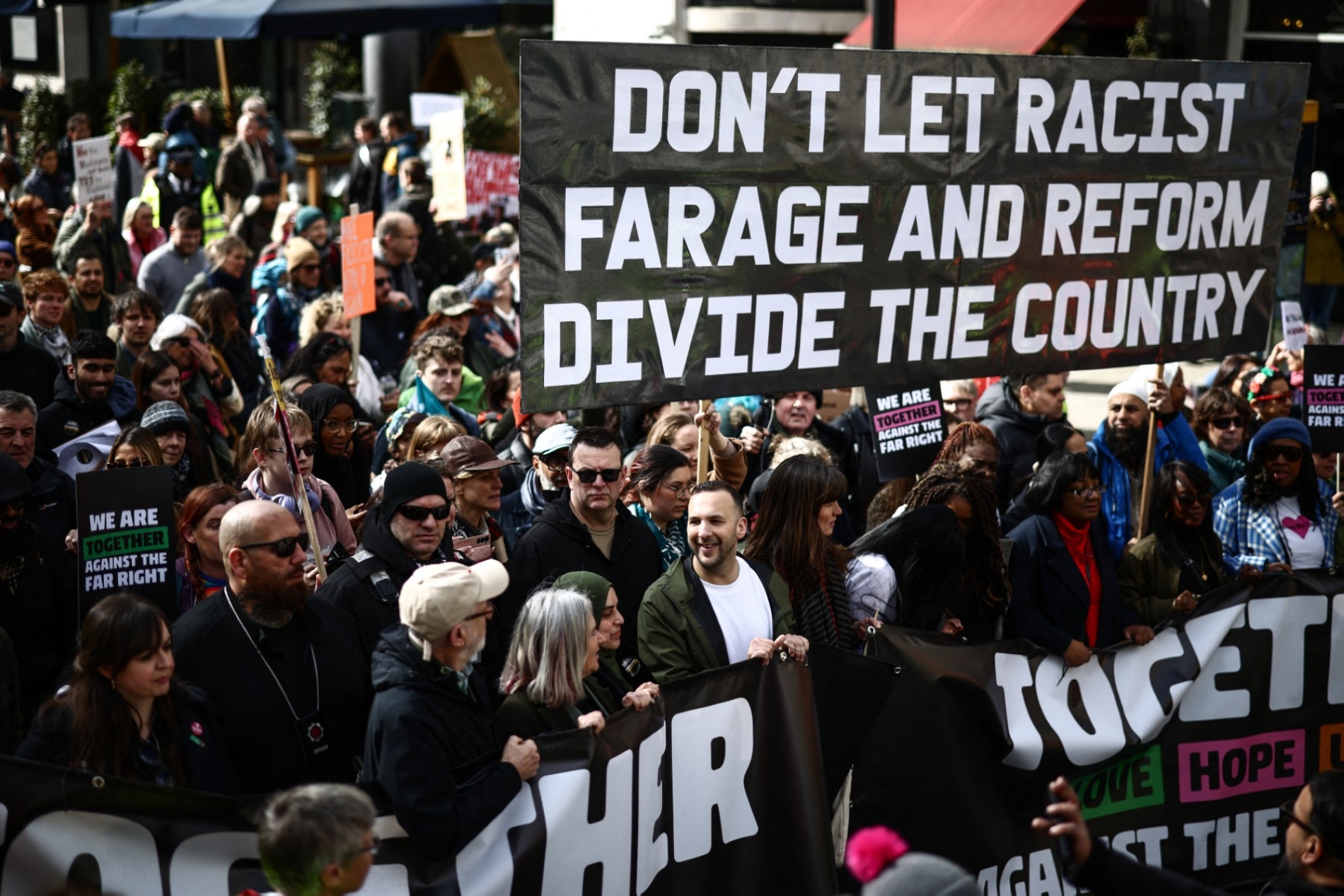
At that point, he had yet to find a home in the Green Party, although, ideologically, he began drifting leftward. His first political home was in the centrist Liberal Democrats, which he joined in 2015, remaining a member until 2017. During that period, he unsuccessfully sought elected office twice in local council elections. Although he would later claim to have become disenchanted with the Lib Dems over political policies, he unsuccessfully sought to be the party’s candidate in 2016 for a London parliamentary constituency and, when he failed to be selected, he complained repeatedly on social media about the party’s decision.
Whatever the reasons for his unhappiness with the Liberal Democrats, he joined the Green Party the year after his failed parliamentary candidate selection. That political entity in various forms had been around since the early 1970s, officially becoming the Green Party in 1990, and later the Green Party of England and Wales, although it would not elect an MP until Caroline Lucas in 2010 election, when Caroline Lucas was elected, and would not gain additional MPs until the 2024 election, when four in total were voted into office.
Polanski’s ascent to the pinnacle of the Green Party was a slow one. The year after joining the party, he failed to be elected to council for the City of Westminster and in the 2019 UK general election he finished fourth as the Green’s parliamentary candidate in the constituency of Cities of London and Westminster, garnering 1.7% of the popular vote.
In May 2021, he finally achieved elected office, in this case to the London Assembly. The next year, he sought to be deputy leader of the Green Party, emphasising his communication skills, and defeated three other candidates in a vote by party members. His new position afforded him greater public prominence and served as a stepping stone for his pursuit of the party’s leadership, which he decisively won in September 2025 with nearly 85% of the vote, defeating two sitting Green MPs in the process.
Polanski’s pursuit of the Green Party leadership and accompanying political positioning came at a fortuitous time, as unhappiness with the Labour government under Keir Starmer, particularly on the Labour left, often associated with former leader Jeremy Corbyn, surged. Polanski’s advocacy of what he called ‘eco-populism', with a stronger left-wing stance on economic and foreign policy issues and less emphasis on the environment, along with the pursuit of a mass membership party, aided his leadership victory.
Popularity surge
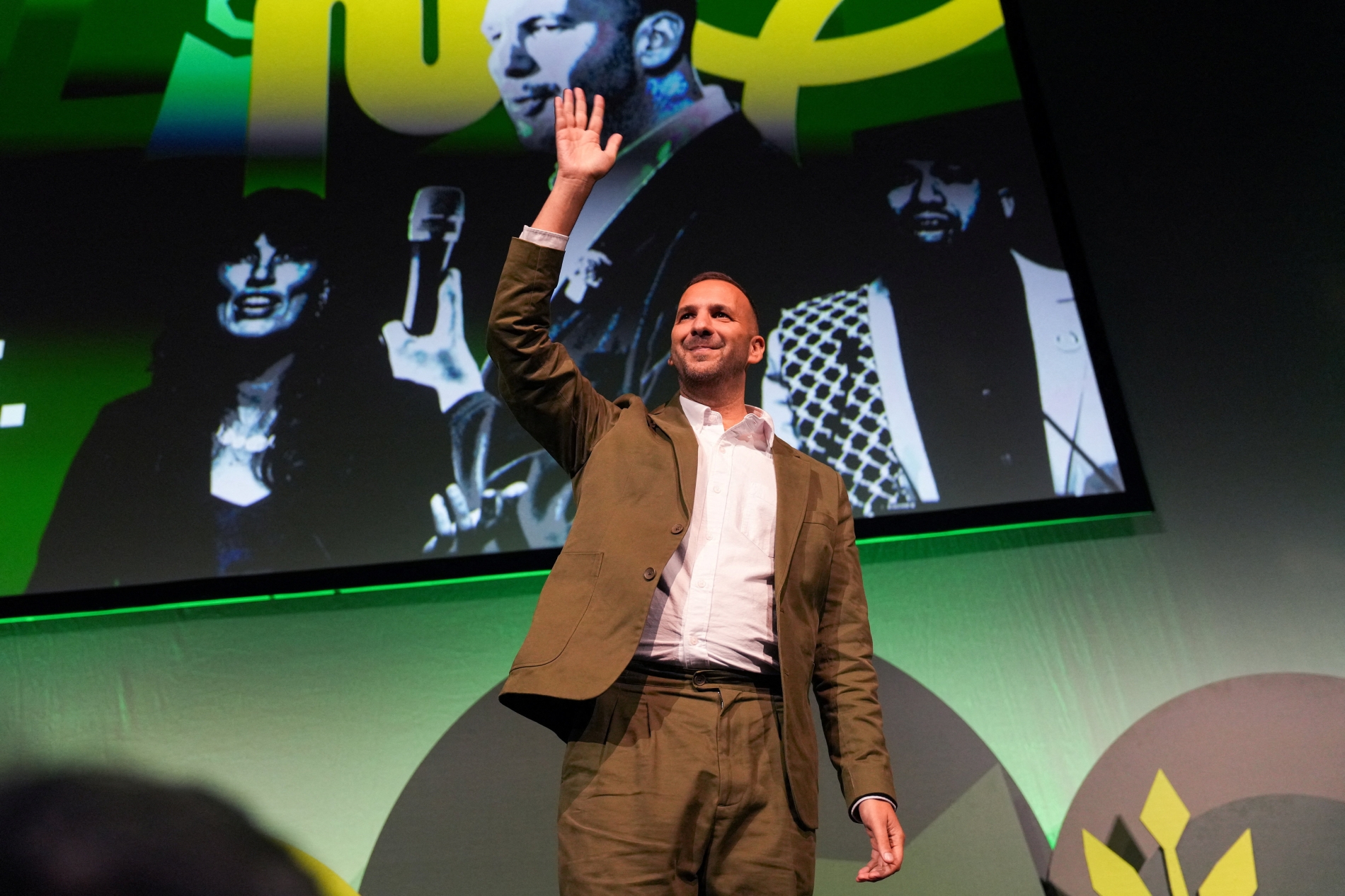
His approach, along with disillusionment with the Labour government, led to a surge in the polls for the Greens, with the party achieving a record high of over 17% across poll averages in March 2026, putting it in third place and, remarkably, ahead of the Labour Party.
Under Polanski, the Greens became a strong critic of Israel and its destruction of Gaza in the wake of the Hamas attack in October 2023. The party’s adoption of a motion earlier this month equating Zionism with racism, a position 4 of 5 Green MPs opposed, spoke to this new emphasis and led directly to Israel’s ban on Polanski from entering the country.
Undeniably an effective and charismatic communicator, Polanski has also repeatedly demonstrated what charitably could be described as a lack of political experience or, less charitably, misjudgments. Living on a canal boat in London, he failed to pay the required council tax and didn’t vote in local elections in 2026 because he didn't register by the deadline.
Earlier assertions by him also faced challenges. In 2019, Polanski claimed to be a spokesperson for a housing charity, which later was clarified as meaning he spoke at some of the organisation’s events. During his campaign for deputy leadership of the Green Party, he said he had worked as a spokesperson for the British Red Cross. Later, this was redefined as having been a host of events for the group.