
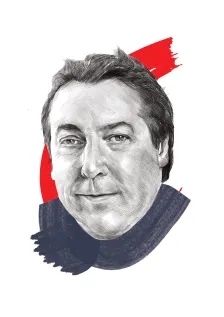
German spy claims rock Western intelligence agencies

Former head of Germany's BND, August Hanning, has been accused of sharing sensitive intelligence with an unnamed foreign power, which may have compromised US and UK intelligence as well

German spy claims rock Western intelligence agencies

It is not simply the reputation of Germany’s BND foreign intelligence service that finds itself under scrutiny following the dramatic arrest of August Hanning, the organisation’s former head, on suspicion of espionage and treason. The biggest spy scandal to hit German intelligence in decades also raises concerns about whether the 80-year-old former spy chief’s activities have compromised the security of the Western alliance.

Hanning was arrested following accusations that he had been illegally collecting classified documents for 16 years through a co-conspirator named Manfred D and selling secret material to an unnamed foreign power. Hanning’s co-conspirator has subsequently been identified by German media as 64-year-old Manfred Dankesreiter, his former chief of staff.

After setting up a private consultancy firm, Hanning is accused of receiving an estimated 2,000 documents from Dankesreiter over a period of 16 years in return for payment, including classified files such as briefing papers for the BND’s leadership before weekly intelligence briefings in the German Chancellery—a secret meeting during which important world issues such as the Ukraine war and Iran’s nuclear programme would be discussed.

German media has reported that some of the information included details of the Iranian nuclear programme, the Russian military and classified material from foreign partner agencies, such as America’s CIA and the UK’s MI6.

Commenting on the arrests, Martin Jäger, the current president of the BND, said the agency had “initiated comprehensive internal investigations at an early stage and without delay. These have confirmed the suspicion”. He added: “For the BND and for me, there can be no compromises when it comes to internal security. None of my goals or priorities is being called into question by this incident.”

A statement issued by federal prosecutors said many of the documents passed to Hanning “contained classified information to be used exclusively by the federal intelligence service for internal purposes, particularly for executive intelligence briefings”, it said. The information was then used by Hanning in his private consulting work, according to the prosecutor’s office.

“On one occasion, Hanning used classified intelligence provided by Manfred D to draft an analysis for an officer of a foreign intelligence service,” the statement said. Prosecutors also allege that Hanning was in “close contact with a representative of another foreign intelligence service”.


Released details have prompted a frenzy of speculation in the German media about which foreign powers were likely to be the recipients of the stolen information

Speculation frenzy

While Hanning's lawyers insist the former spy chief is innocent of the accusations made against him, details so far released by federal prosecutors have prompted a frenzy of speculation in the German media about which foreign powers were likely to be the recipients of the stolen information, with Russia, China and Iran emerging as potential candidates.

One German outlet claimed that investigators suspected that Hanning may have been supplying information to Azerbaijan's intelligence service, prompting fears the information may have been passed to Russia,  given the two countries enjoy close ties.

The accusations relate to Hanning's participation in a human rights forum in Baku in 2011, and the fact he later became a board member of the German-Azerbaijani Forum, a lobbying association.

Hanning's lawyer denied the allegations, telling Der Spiegel that, while his client had confidential documents, it was untrue he passed on "information to the detriment of the Federal Republic of Germany", let alone in return for payment. The fact that Hanning has a reputation as being a hawk on Russia would also suggest that he would be reluctant to provide sensitive intelligence to Moscow.

Other speculation concerning Hanning's possible ties with foreign powers includes German press reports that the former BND chief had been in "close contact" with a Chinese former general. Hanning is said to have passed him confidential "political information" partly based on the BND files over several years.

Der Spiegel has identified the contact that the German public prosecutor's office described as "a representative of another foreign intelligence service" as being Wang Jianzheng.

Wang, who is said to have been in contact with Hanning for several years, works at the military-aligned China Institute for International Strategic Studies and spent 23 years as a military diplomat in Germany, Austria and Switzerland. He was first posted to East Berlin from 1987 to 1990 and returned twice after its reunification, most recently from 2009 to 2013.

Hanning appears to have met Wang—considered one of the foremost experts on Germany in China—at conferences, and the latter thanked him for his "hints and explanations" in the foreword to a book published in 2007. The pair also sat on a board of advisers for a German-Chinese eco park in Qingdao, a port city in eastern China.

Going forward, the BND will have to work hard to restore its reputation as a trusted ally within the Western intelligence community

Serious breaches

The BND scandal has sent shockwaves through the Western intelligence community, particularly after German security officials indicated that some of the sensitive intelligence acquired by Hanning may have originated from long-standing intelligence-sharing arrangements between major Western powers, raising the prospect that both American and British intelligence may have been compromised.

There are also concerns that, if this information falls into the hands of hostile powers, it could lead to the identification of secret agents and informants working for Western intelligence agencies, whose lives may be in jeopardy as a consequence.

The arrests in Germany have already prompted British intelligence agencies to investigate whether their classified information or spies may have been compromised as a result of the intelligence leaks.

MI6 and the UK's GCHQ top-secret communications centre have launched urgent reviews of any information passed to German intelligence which may have been compromised as a result of the spy scandal. Numerous US intelligence agencies are undertaking similar checks, with the main focus being to identify any sources who may risk exposure as a result of any intelligence leaks. Going forward, the BND will have to work hard to restore its reputation as a trusted ally within the Western intelligence community.

font change