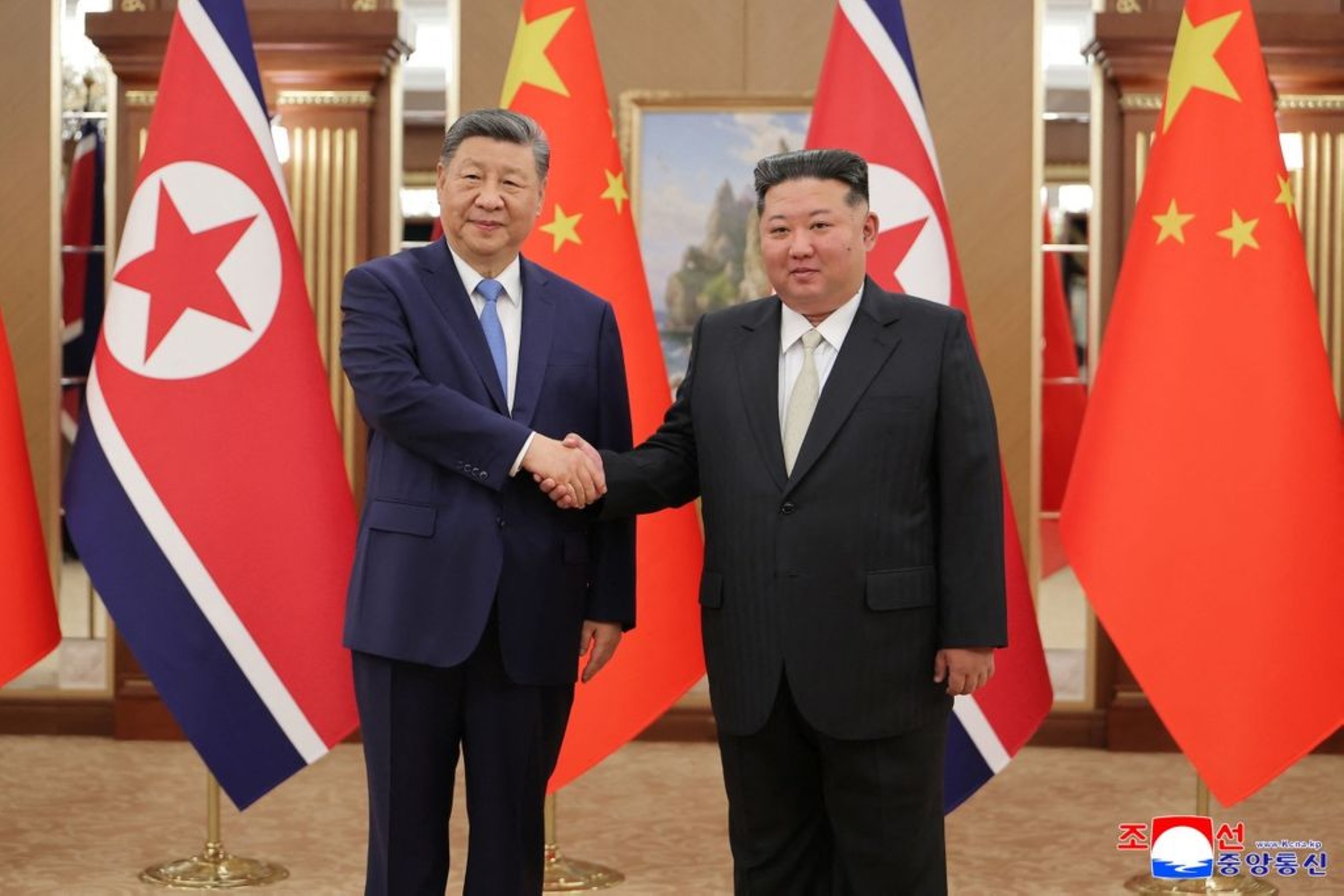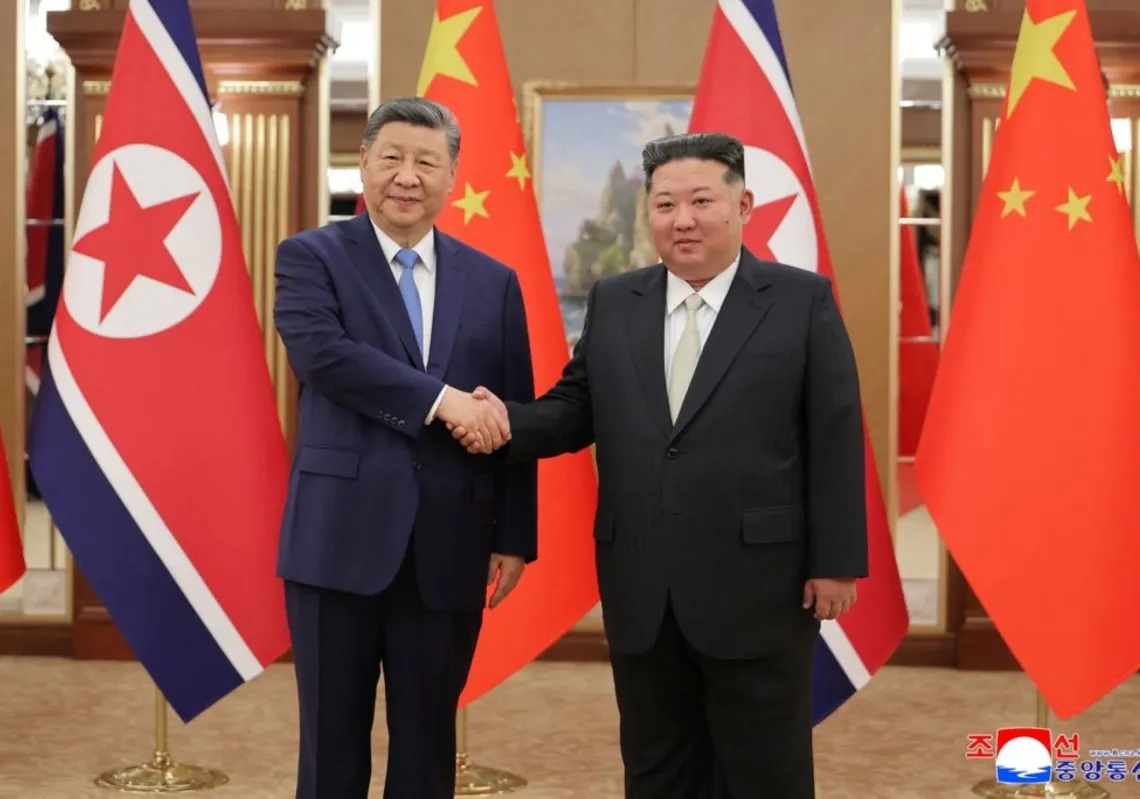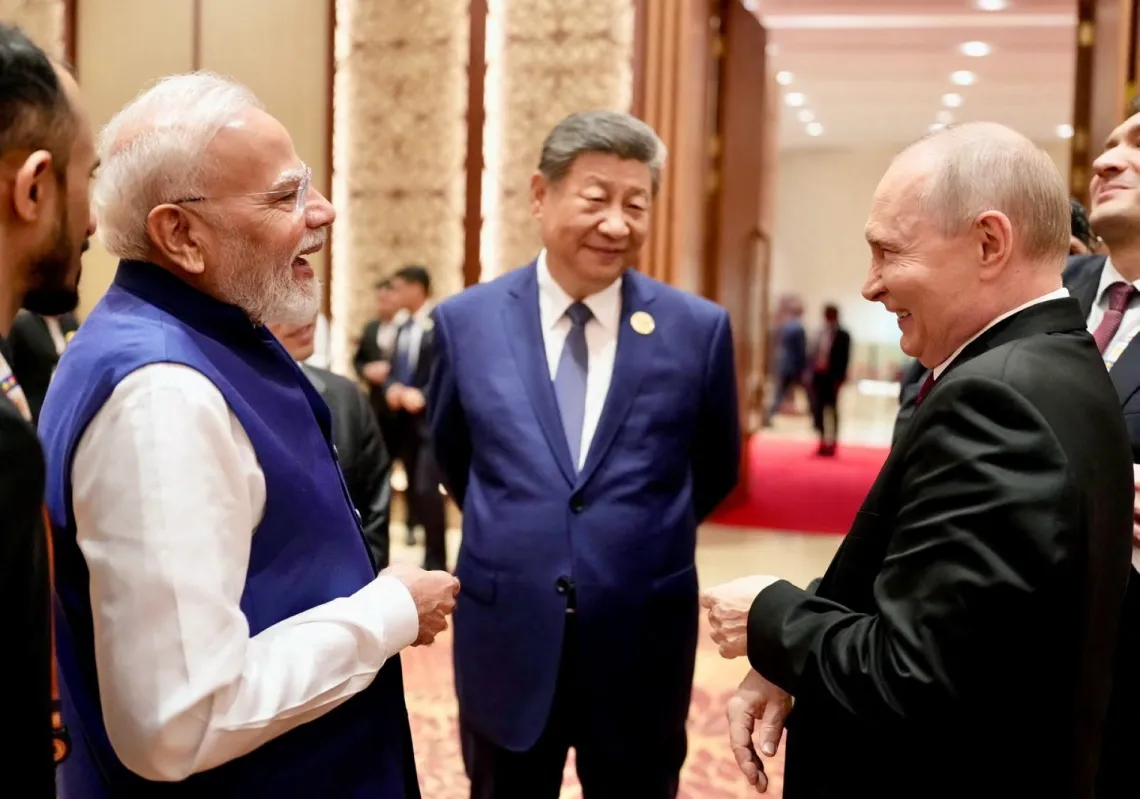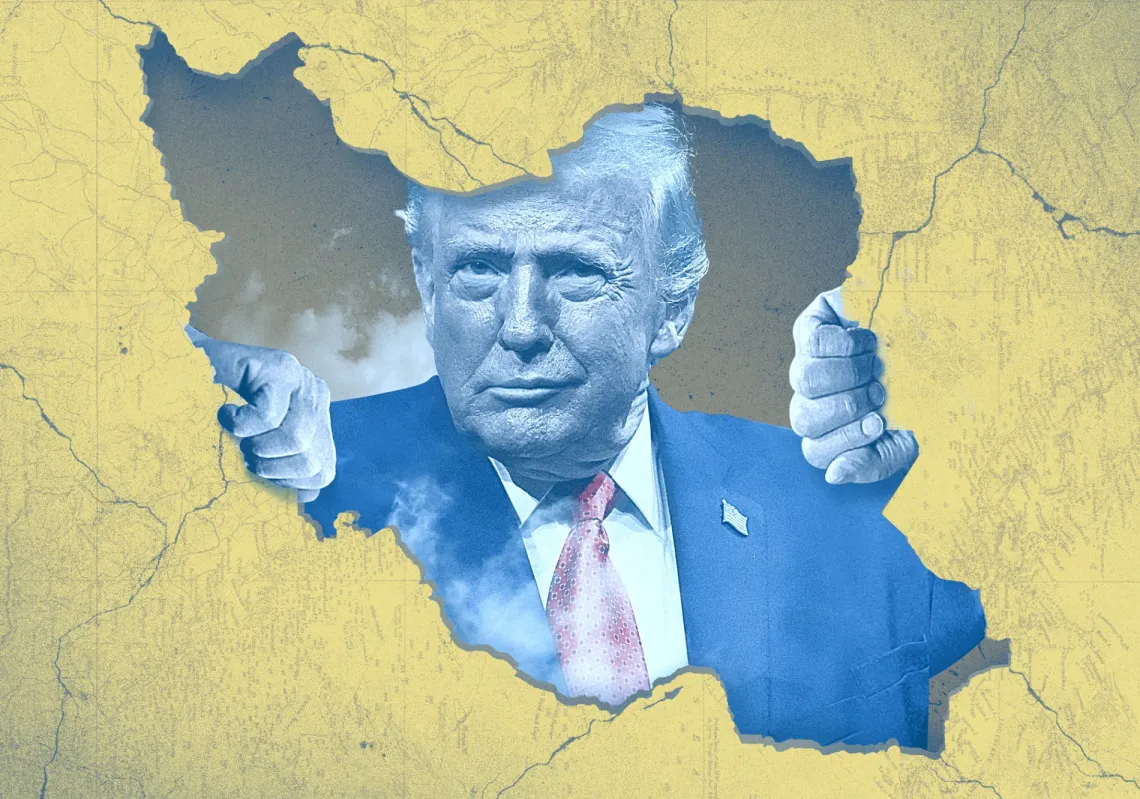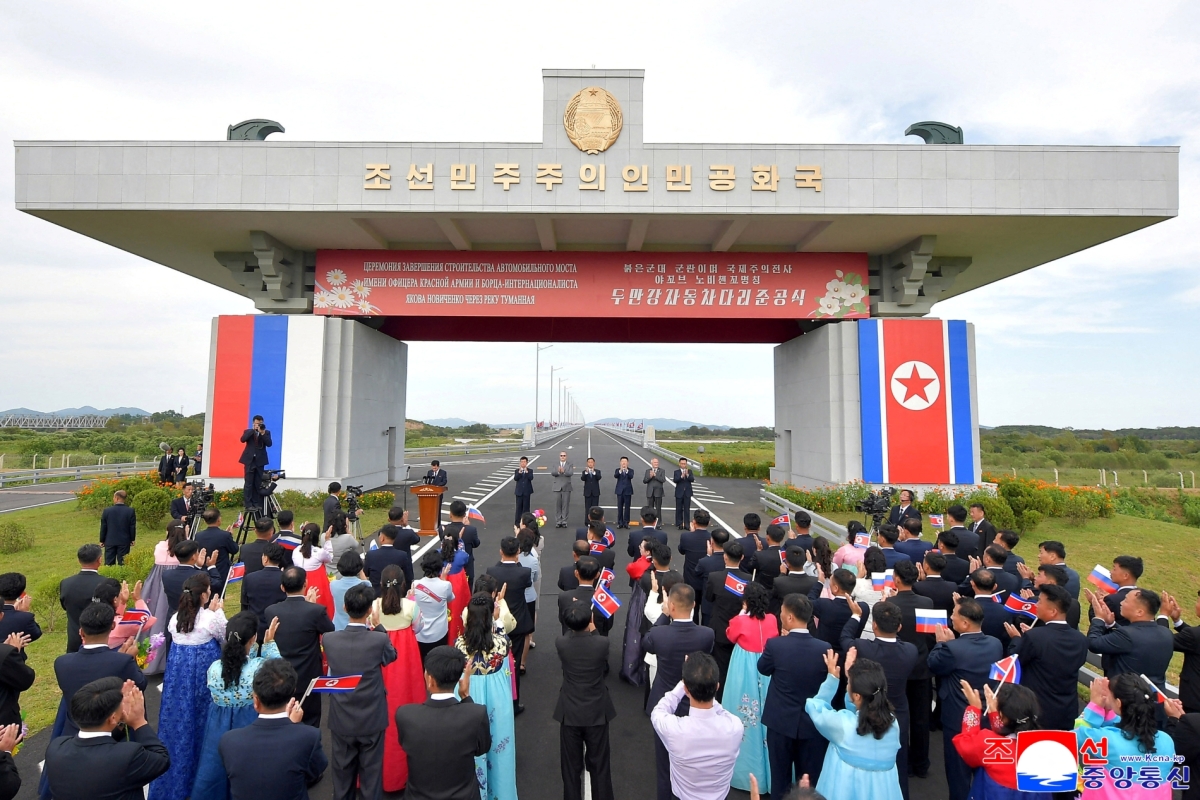

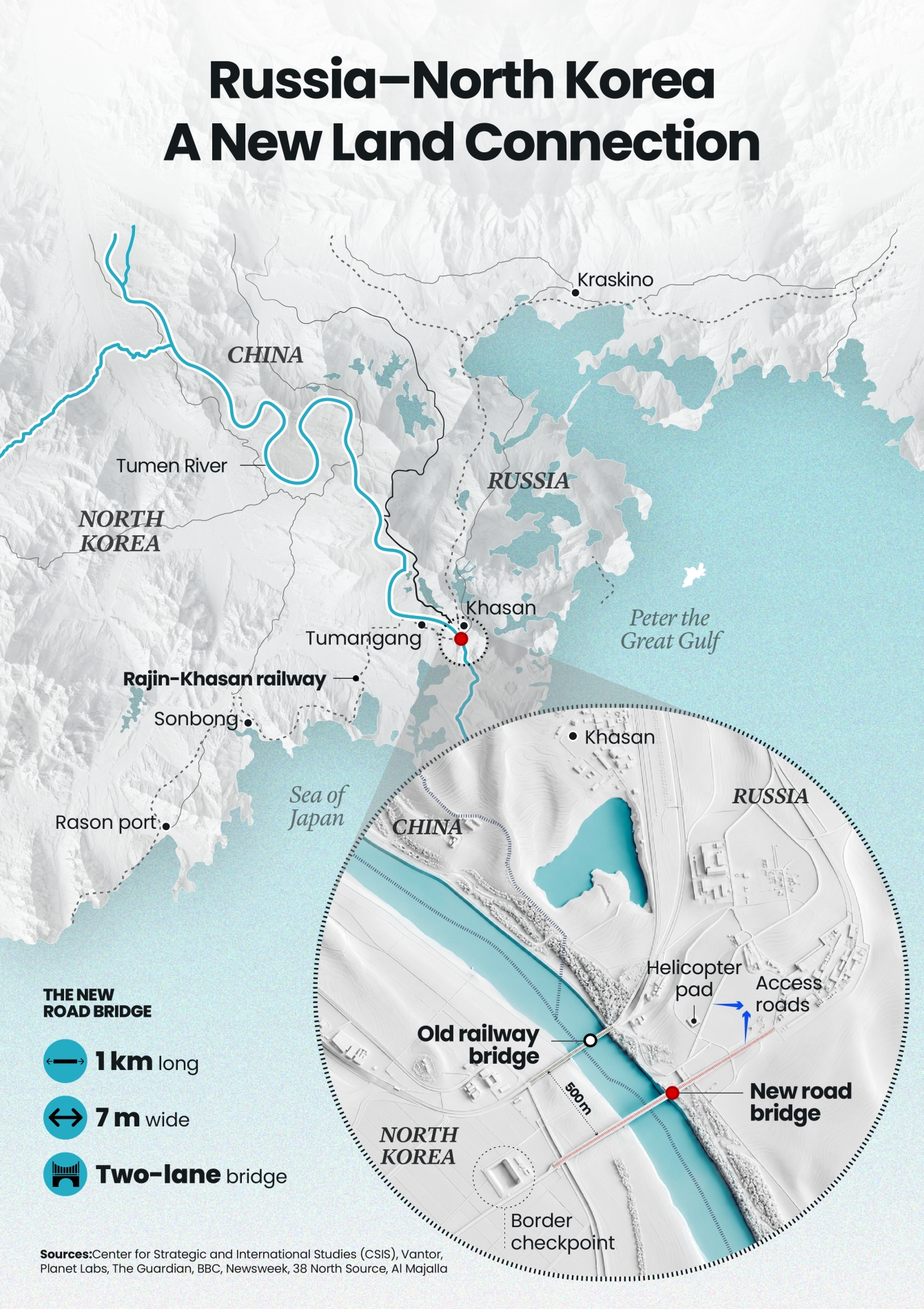
On 7 September, Russia and North Korea opened traffic on a new road bridge across the Tumen River, connecting the Russian settlement of Khasan in Primorsky Krai with the North Korean town of Tumangan. For the first time in history, the two neighbouring countries are now linked by road. In the 1950s, temporary wooden road bridges were periodically erected across the river, but since 1959 the only link has been the Friendship Bridge, which serves the railways.
The newly opened road bridge over the Tumen River has been named the Yakov Novichenko Bridge, after a junior lieutenant of the Soviet Union’s Red Army who took part in the war with Japan. In North Korea, Novichenko is held in special esteem. In 1946, he saved the founder of the republic, Kim Il Sung, from assassination, sustaining severe wounds and losing an arm after using his body to cover a grenade thrown at the president during a rally. He is the only non-Korean to receive the Hero of Labor award, North Korea’s highest accolade.
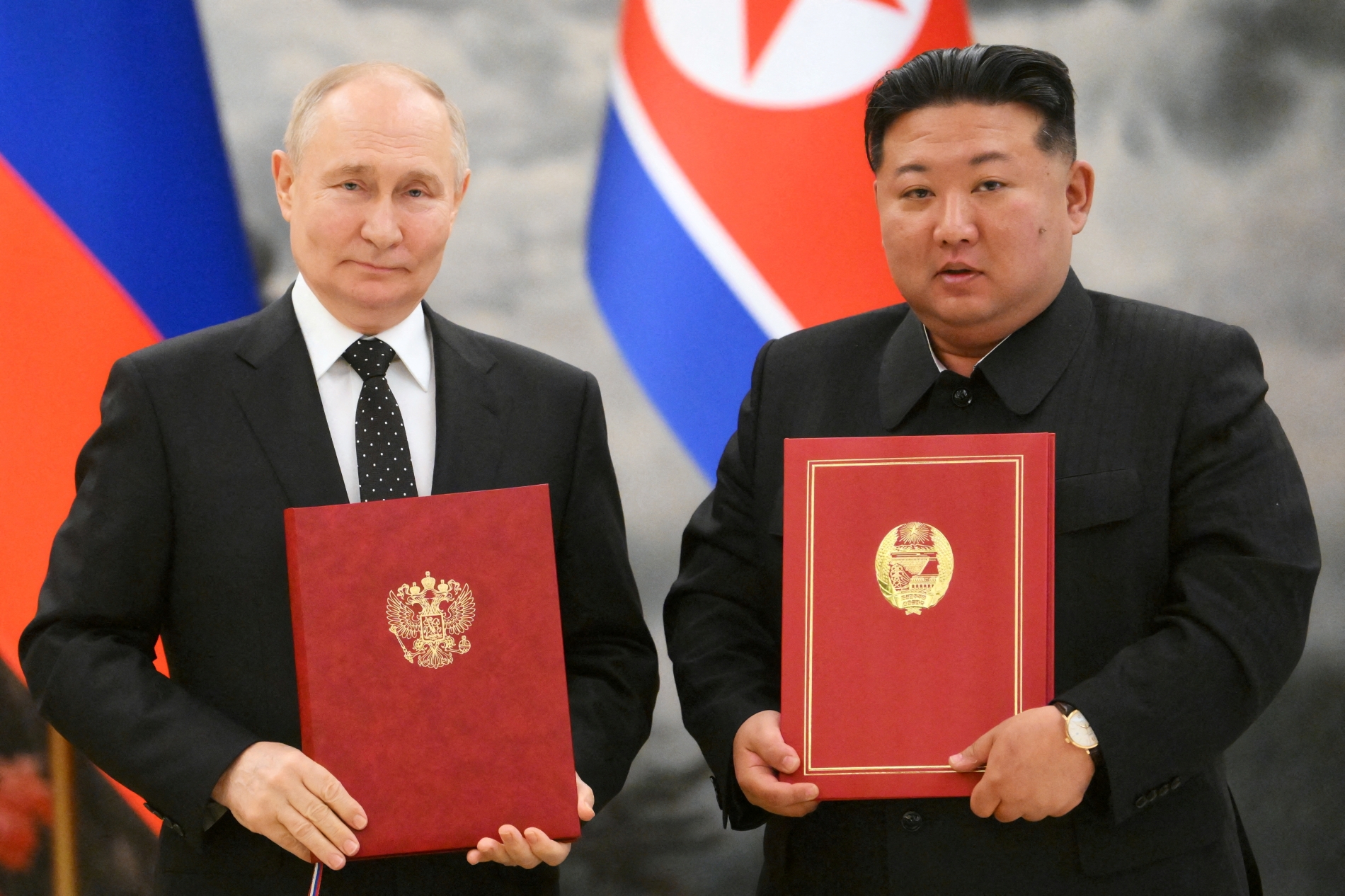
The new bridge gives North Korea road access to Eurasia, but whilst an immediate increase in freight traffic is not expected, the new route creates conditions for logistical diversification. Although the bridge had long been considered, a final decision was only made in 2024, during Russian President Vladimir Putin's visit to North Korea to sign the Treaty on Comprehensive Strategic Partnership, which resulted in North Korean special forces fighting against Ukrainian troops who had invaded Russia’s Kursk region.
Turning point
Until Russia's war on Ukraine, bilateral relations between Moscow and Pyongyang had largely been cool. Russia sided with Western countries at the United Nations in their condemnation of its development of nuclear weapons. North Korea saw this as a snub and a break from the Soviet era, when relations were better. Pyongyang sought to mend fences by recognising the Ukrainian peninsula of Crimea as Russian in 2014, but this brought no practical dividends from Moscow. But when Russia needed help in its 2022 war on Ukraine, it began to warm up to North Korea, now led by Kim Jong-un, whose grandfather had been saved by Novichenko.
Threatened by the efforts of the United States, South Korea, and Japan to create a military alliance, the Russian leadership began to pursue a more independent policy towards North Korea, starting with a veto of American initiatives at the UN to tighten sanctions on Pyongyang after it carried out several missile launches. Russia blocked the extension of a mandate for a UN panel of experts on sanctions against North Korea, and adapted its rhetoric on matters concerning the Korean Peninsula.
The Treaty on Comprehensive Strategic Partnership radically changed bilateral relations. Russia effectively became North Korea’s permanent priority partner, alongside China. Interestingly, the treaty's wording differs from the provisions of the document signed by Russia and Iran: the former provides for military assistance in the event of an attack, whereas the latter includes no such obligation.
A Russian diplomatic source explained that the Moscow-Pyongyang agreement was a tough and unambiguous military-political union, whereas the Moscow-Tehran treaty was a multi-vector partnership that does not presuppose automatic entry into a conflict. “If the treaty with North Korea is tilted toward a military-political bloc and a direct exchange of technologies or resources, then the Russia-Iran agreement has an economic basis primarily,” they said.
An unspoken military alliance
Russia and North Korea avoid defining their relations as a military alliance, and full assistance under Article 4 of the Treaty must be provided only in the event of an official declaration of war. Nevertheless, the decision to send North Korean soldiers to Kursk was significant. It was the first time that Pyongyang had provided military assistance to another country since the US war in Vietnam. Nevertheless, the decision to send North Korean soldiers to Kursk was significant. It was the first time that Pyongyang had provided military assistance to another country since the US war in Vietnam.
During the Second World War, the Soviet Red Army liberated the northern part of the Korean peninsula from the Japanese. The Soviets and Chinese later helped the North Koreans in the war against the US and its allies. All of this is remembered in Pyongyang, which continues to help Russia in Ukraine by supplying military cargo, including artillery rounds, propellant charges, and KN-23 missiles.