Desalination plants and strategic reservoirs are becoming sovereign assets, but this also makes them vulnerable to attack
FAYEZ NURELDINE / AFP
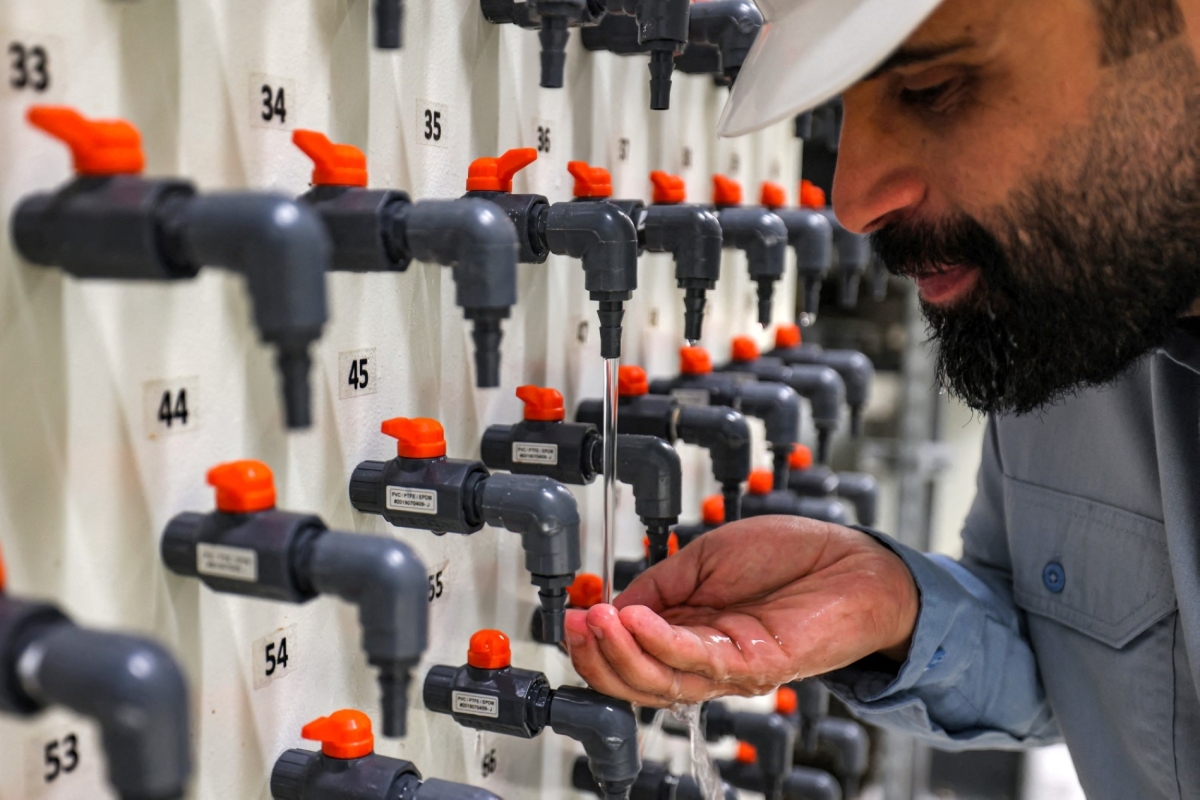
The general manager of the Ras al-Khair water desalination plant inspects drinking water from a tap at the facility in eastern Saudi Arabia on 30 March 2023.
Among all the challenges across the Middle East, water security seldom makes the headlines, yet it can keep policymakers awake at night. The Gulf states are among the world’s highest consumers of water per capita but endure some of the most acute water scarcity on the planet. According to the World Bank, daily water consumption in the Gulf is close to 550 litres (compared with around 120 litres in countries like Germany), yet its renewable freshwater resources amount to less than 100 cubic metres per person annually, less than a fifth of its usage.
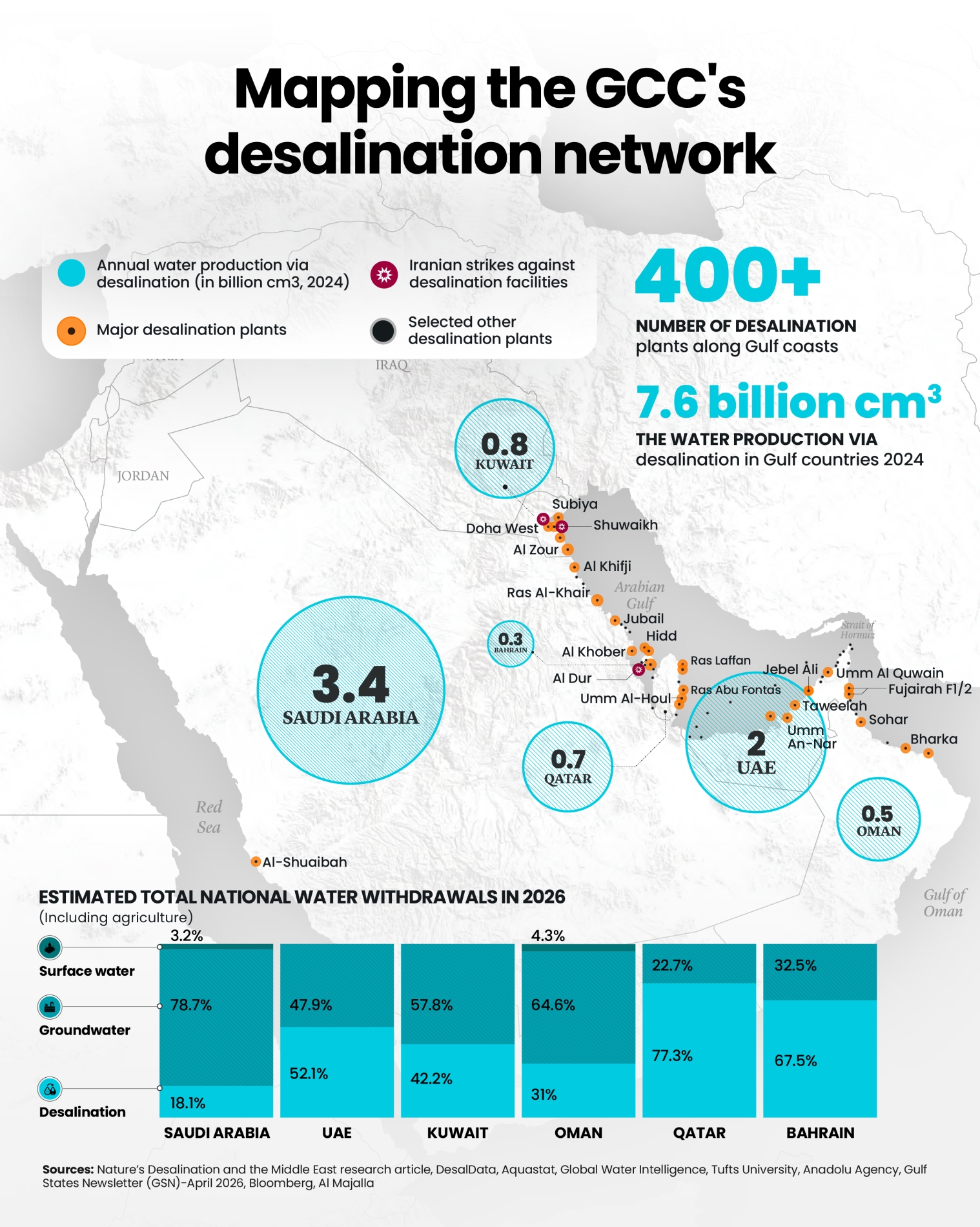
Seawater desalination is therefore the Gulf states’ main source of water. Together, they account for more than half of the world’s desalination capacity and produce almost 40% of its desalinated water through more than 400 plants. Saudi Arabia produces about 20% of the world’s desalinated water, making it the largest producer globally. About half of the water supplied to Saudi residents comes from desalination, while in the United Arab Emirates, around 80% of its drinking water is desalinated. The figure is even higher in Oman (86%), Kuwait (90%), Bahrain (more than 90%), and Qatar (99%).
Gulf states’ need sustainable water supplies, and most have built this into their long-term planning. Under the Gulf Cooperation Council’s 20-year Unified Water Strategy, member states aim to ensure that, by 2035, at least 10% of their total desalination capacity uses technology that is locally owned and manufactured. The goal is to become self-sufficient and ‘localise’ desalination. In this special report, Al Majalla looks in more detail at how each state is progressing.
Saudi Arabia
Water is firmly embedded in Saudi Arabia’s forward-planning Vision 2030 document, and this is evident in its score on the integrated water resources management indicator rising from 57% to 83%, a rapid rate of progress that led the United Nations to recognise the country as a case study in how to address challenges relating to clean water and sanitation. Riyadh will host the World Water Forum in 2027, where it will showcase it extensive desalination systems.
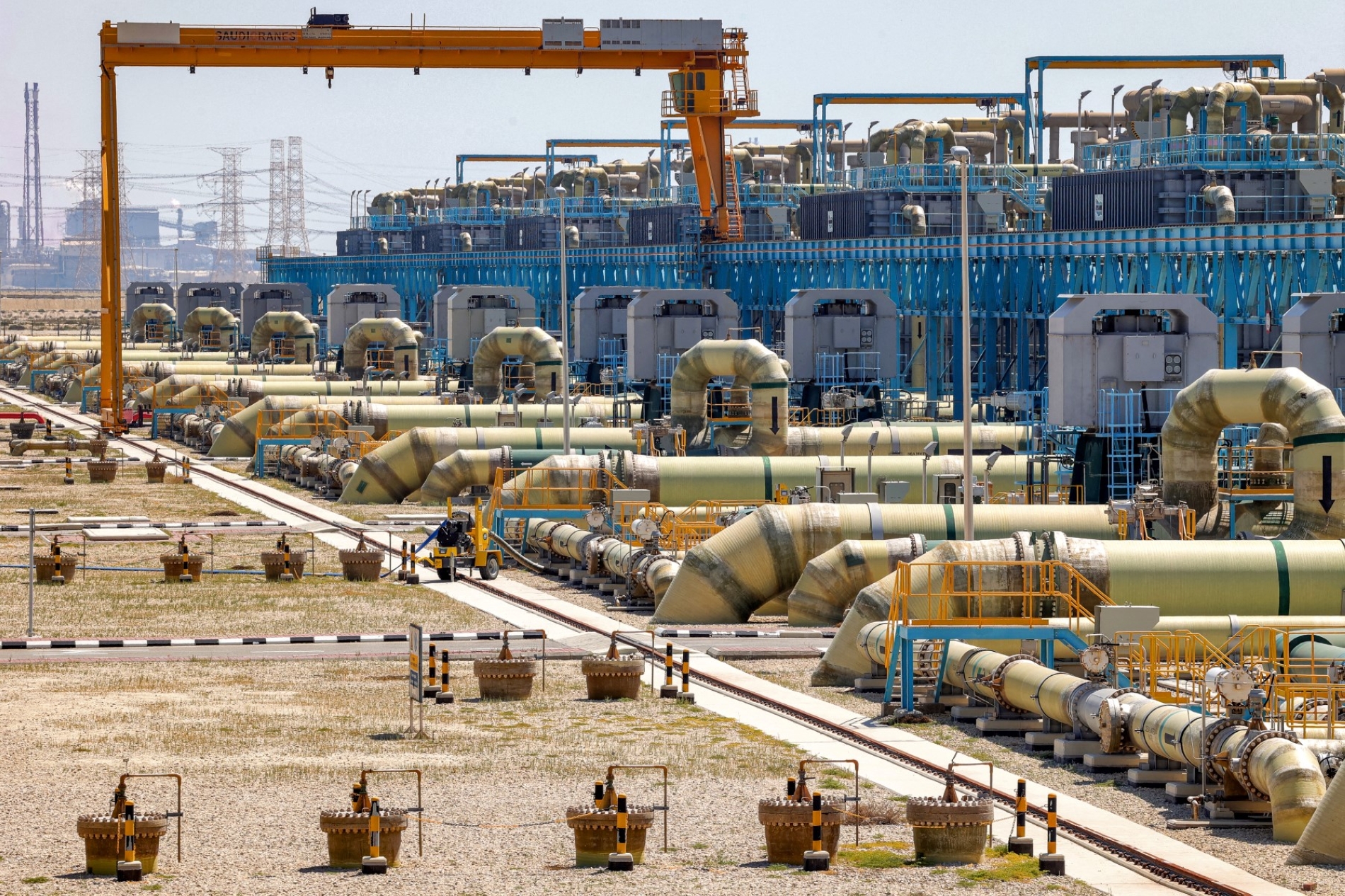
A flagship facility is the Ras Al-Khair plant, which produces more than one million cubic metres of desalinated water every day (cm/d). The plant combines reverse osmosis, which accounts for 30% of its output, with multi-stage flash distillation, which provides the remaining 70%. Reverse osmosis works by forcing salt water under high pressure through semi-permeable membranes, which filter out salts and other impurities. The resulting low-salinity water is then remineralised and distributed. Additional treatment stages may be introduced to improve efficiency and water quality.
Multi-stage flash distillation is a thermal process in which seawater is heated and channelled through a succession of low-pressure chambers. In each chamber, a portion of the water evaporates almost instantaneously. The vapour is then condensed to produce fresh water. Efficiency in this system comes from repeatedly recovering and reusing heat, but the Saudi Water Authority (SWA) favours reverse osmosis, whose lower energy requirements make it much more efficient overall.
Leading the world
The SWA brought forward the decommissioning of its Shuaiba system, which used crude oil, to save $1.1bn, cut emissions by 45 million tonnes, and reduce annual oil consumption by more than 22 million barrels. Advanced Saudi desalination systems now operate in Al-Khobar, Jubail, Yanbu, and Al-Khafji. Together, they produce around 11.5 million cm/d, alongside the world’s largest desalination plant at Ras Al-Khair, which pumps out three million cm/d.
The country also boasts the world’s largest covered drinking-water storage tank, the Briman Strategic Reservoir in Jeddah, the Riyadh Strategic Reservoir (4.79 million cubic metres), a 14,200km system of pipelines for transporting desalinated water (carrying more than 19.4 million cm/d), the largest mobile desalination plant (50,000 cm/d), the largest multi-effect distillation unit at Shuaiba (91,200 cm/d), the largest network of drinking-water reservoirs (almost 9 million cubic metres), and the lowest recorded energy consumption for desalination. Production units are based in Duba, Umluj, Jeddah and Al-Aziziyah.
The United Nations has recognised Saudi Arabia as a case study in how to address challenges relating to clean water and sanitation
In July 2026, the national water company expanded its strategic reservoir network by inaugurating five reservoirs in western Riyadh. They give 180,000 cubic metres of storage capacity, with a pumping station capable of handling 125,000 cm/d. The number of dams has also risen to 574, holding 2.6 billion cubic metres, while strategic water-storage capacity has increased to 21.8 million cubic metres. Any future Saudi civil nuclear programme could further lower emissions from desalination and water-treatment facilities, improving efficiency.
The country has developed an urban water supply and demand plan to 2050. This aims to provide 21 million cm/d by expanding desalination capacity to meet residents' needs. To date, there has been $58.7bn of investment in the Saudi water sector, of which around $16bn came from abroad.
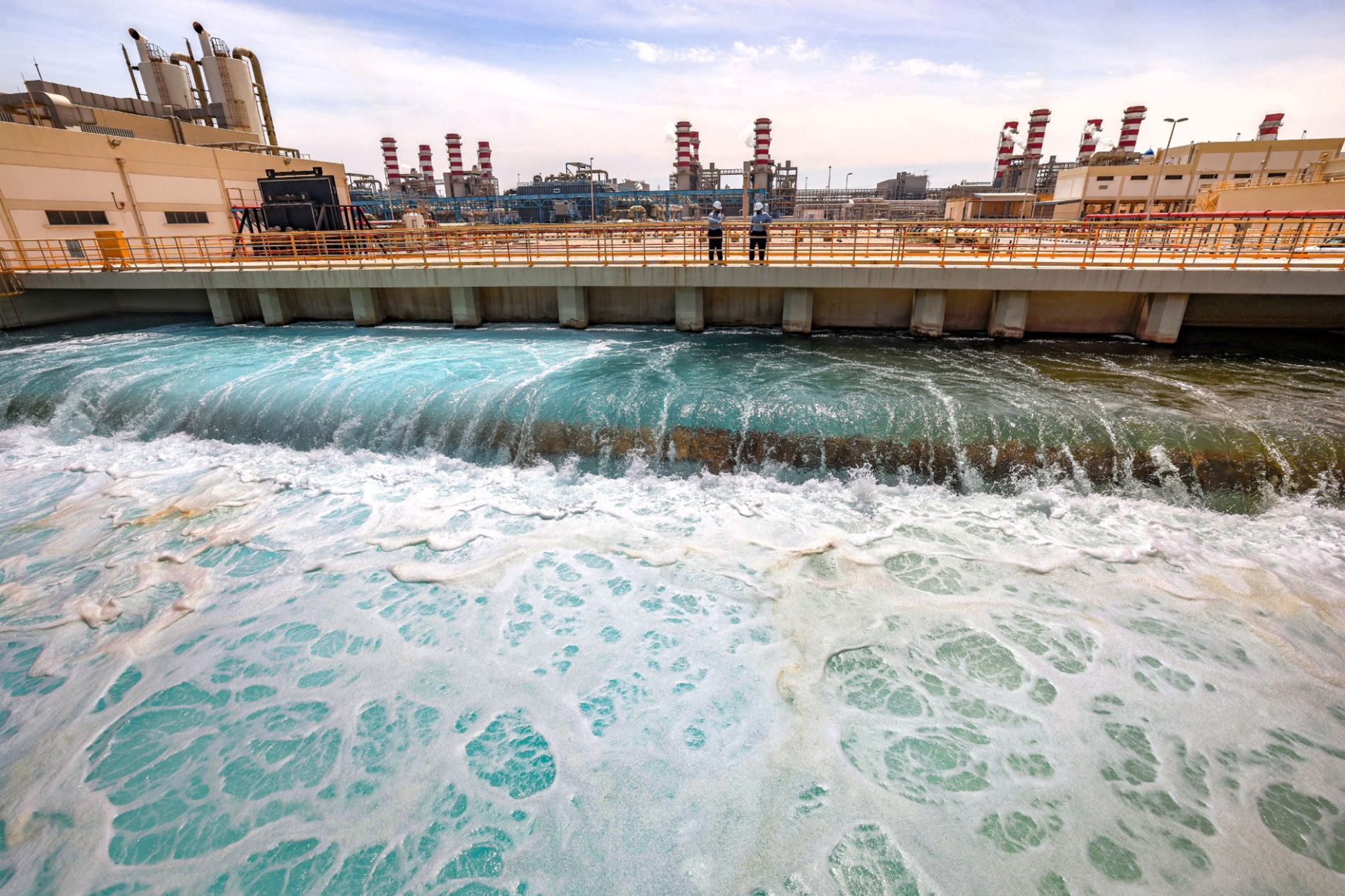
The largest water desalination plant in Ras Al-Khair, eastern Saudi Arabia, on 30 March 2023.
United Arab Emirates
The UAE operates around 70 desalination plants, which provide 42% of the country's total water requirements. Together, these plants account for about 14% of global desalinated-water production. The Dubai Electricity and Water Authority is also undertaking the world's largest project to store and recover desalinated water in underground aquifers. The plan is to store surplus desalinated water which could then supply the emirates for around 90 days in emergencies.
The UAE's Water Security Strategy 2036 aims to increase the reuse of treated water to 95% and expand storage capacity to secure water supplies. The strategy also provides for the establishment of six interconnection points between water and electricity networks across the country, improving the flexibility and reliability of supply.
The UAE government hopes this will save more than $20bn while reducing carbon dioxide emissions from desalination by about 100 million tonnes. Emirati desalination plants have a combined production capacity of around 8.4 million cm/d, while annual output reached 1.85 billion cubic metres in 2025. The country is developing new reverse-osmosis projects to add more than 2.5 million cm/d, increasing total production capacity by 30 million by the end of 2027.
Dubai has awarded a $79mn contract to develop the water transmission network serving the Hassyan plant, while Etihad Water and Electricity also signed a $285mn contract to build Fujairah's first reverse-osmosis desalination plant. The Environment Agency Abu Dhabi received accolades for its solar-powered desalination system and projects designed to improve the efficiency of irrigation-water use.
The UAE is working with China's Institute of Seawater Desalination on new water technologies, in a sector that continues to attract investment. The Dubai Electricity and Water Authority, for instance, drew in more than $11.7bn, including on the Hassyan seawater desalination plant ($920mn). This project is being developed in partnership with Saudi Arabia's ACWA Power under a 30-year water purchase agreement. Dubai's 2040 Urban Master Plan aims to keep pace with the rapid growth in water demand while increasing reliance on clean-energy technologies. One goal is to raise Dubai's desalinated-water production capacity by around 50% by 2030.
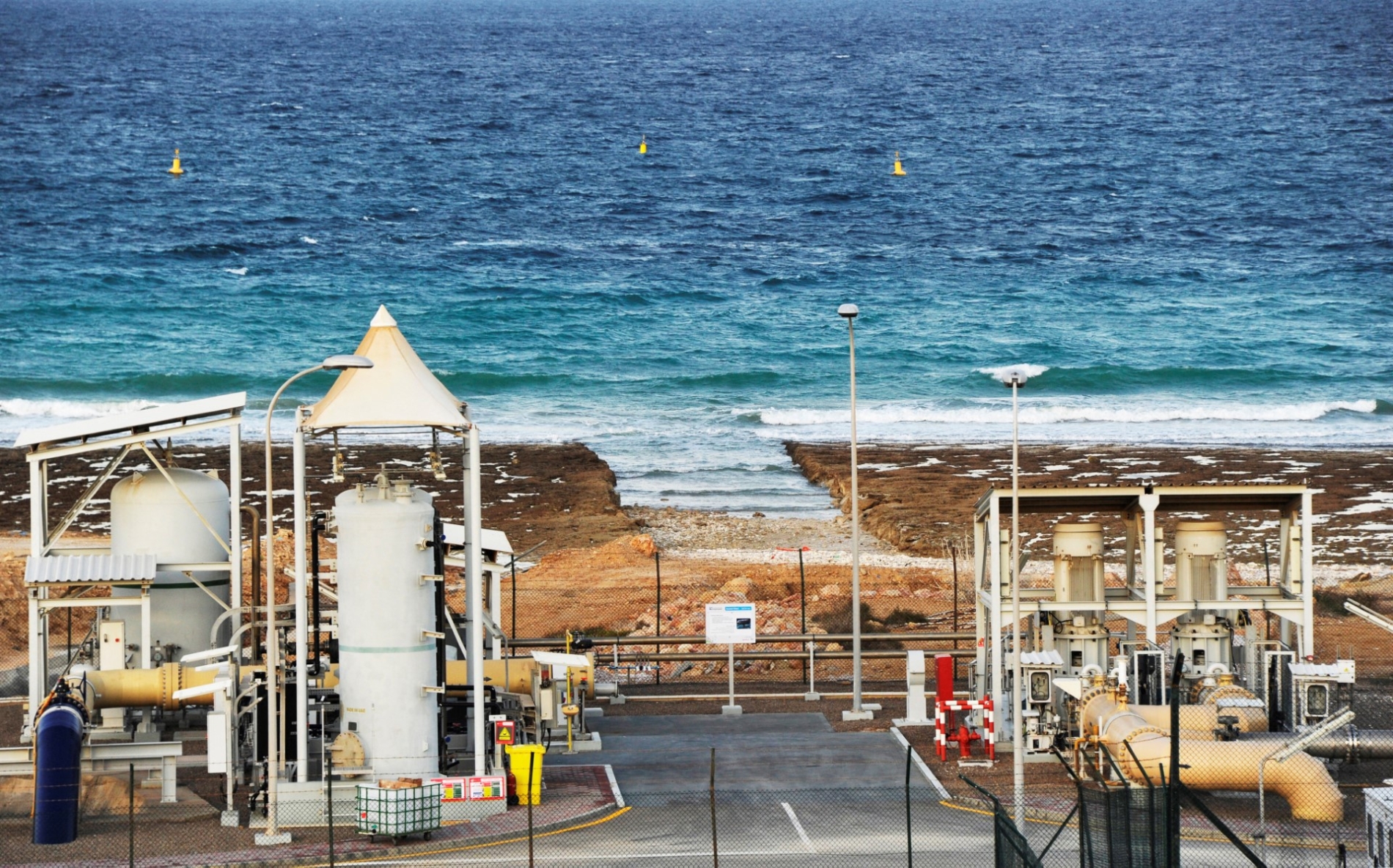
A view of a desalination plant in the Omani port city of Sur, south of the capital Muscat, on 27 November 2019
Oman
With its long coastline along the Arabian Sea and the Gulf of Oman, the Sultanate of Oman relies on seawater desalination for drinking water, and increased its operational water-production capacity to 1.41 million cm/d last year. Desalination plants now provide up to 90% of the water supply, while groundwater accounts for the rest. Oman's Five-Year Plan for 2026-30 aims to expand water infrastructure, anticipating an annual 3% growth in demand.
Current Omani projects include the development of water and wastewater services in Dhofar ($260mn) and the Wadi Dayqah Dam water-treatment plant in the Wilayat of Qurayyat ($143mn), which will produce around 65,000 cm/d. Just over half of this will be drinking water, while the rest will be used for agriculture. Completion is scheduled for March 2027.
Oman is attracting investment into its water infrastructure. Among the biggest projects under construction is the $325mn third phase of the huge Al-Ghubrah desalination plant, covering more than 70,000 square metres. Nama Power and Water Procurement is developing the project with a consortium comprising Spain's GS Inima, Saudi Arabia's Aljomaih, and SOGEX Oman. The plant will use reverse-osmosis technology and produce 300,000 cm/d from early 2027.
Kuwait
Kuwait is among the world's highest per capita consumers of water and depends almost entirely on seawater desalination from nine plants, six of which use multi-stage flash distillation, while three use reverse osmosis. Together, they produce 3.1 million cm/d, but Kuwait wants to increase this to 4.1 million cm/d by 2030.
According to data from MEED Projects cited in a report by Kamco Invest, the water sector accounted for more than 45% of the total value of projects awarded in Kuwait during the first quarter of 2026, worth approximately $3.7bn. The scale of this investment reflects the priority of water in Kuwait's Vision 2035.
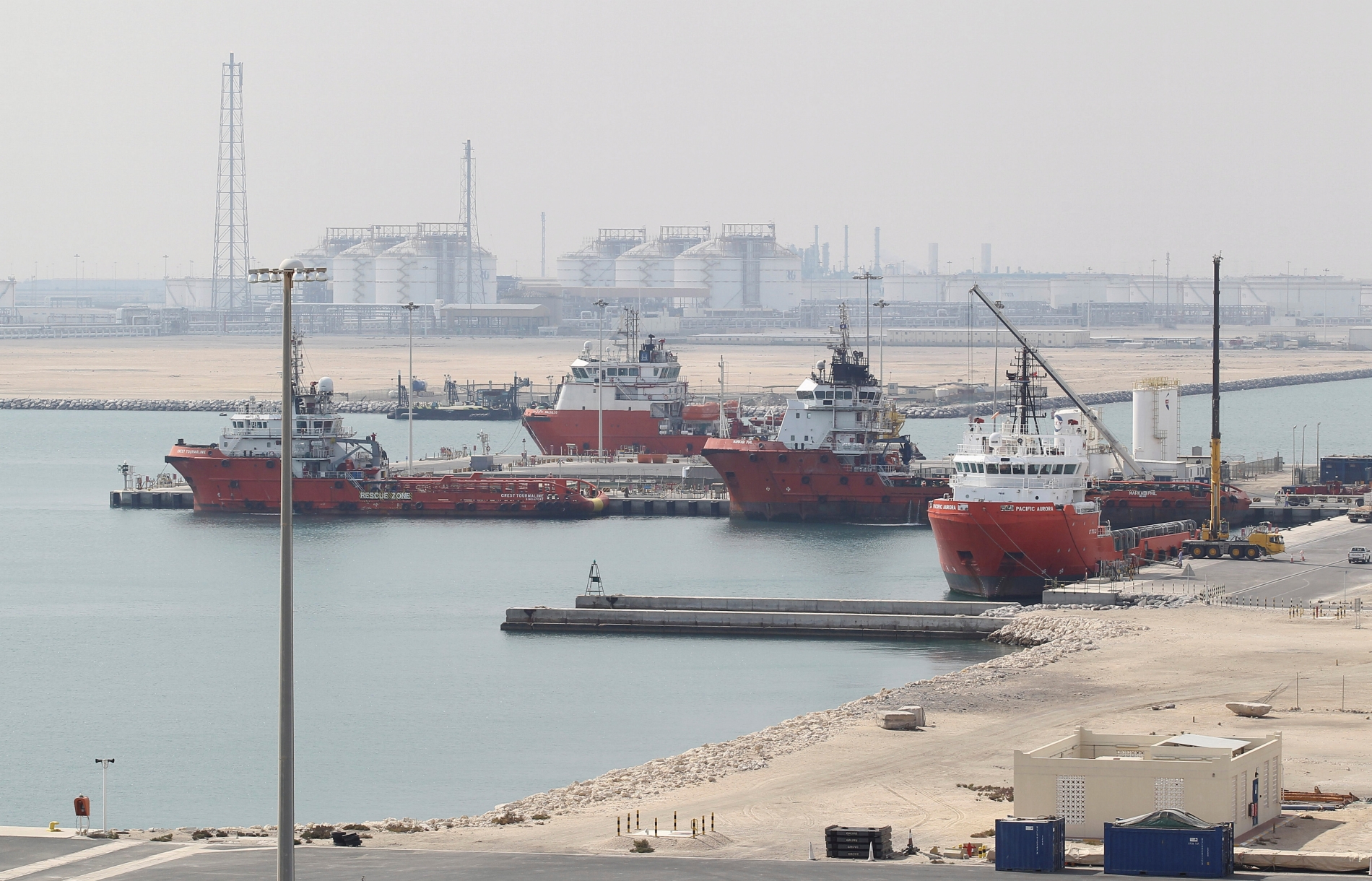
Ras Laffan Industrial City, north of Doha, Qatar, on 6 February 2017.
Qatar
Qatar is strengthening its water security through a series of initiatives, foremost among them a huge $4bn strategic reservoirs project to increase the country's water-storage capacity by 150%. Inaugurated in 2018, it is the largest drinking-water storage project of its kind in the world, storing water across 24 immense reservoirs in places like Umm Baraka, Umm Salal, Rawdat Rashid, Abu Nakhla and Al Thumama, connected by 650km of pipelines taking water from any desalination plant to any reservoir in the country. Subsequent phases will extend its capacity beyond 2036.
The state is expanding its desalination infrastructure, following the enlargement of the Umm Al Houl facility and the new Ras Abu Fontas plant, known as Facility E, which is scheduled to begin operations in 2028. The Qatar General Electricity and Water Corporation is also developing a project to store desalinated water in underground aquifers, creating a 90-day emergency reserve, while updating transmission and distribution networks and introducing smart meters.
In parallel, Qatar is amending legislation to promote the sustainable management of water resources, such as by strengthening the sector's legal framework through Water Law No. 23 last year. This regulates the management of water resources (under both normal and emergency conditions), governs the production and distribution of desalinated water, protects groundwater reserves, and promotes the wider reuse of treated wastewater.
Bahrain
Another Gulf state expanding its modern desalination facilities is Bahrain. At the forefront of its efforts are the new Al Hidd plant and the Sitra Independent Power and Water Project, which is expected to become operational in 2029. Other projects include the Hawar Islands plant and the Hamala project. All form part of the National Water Strategy 2030.
Since 2016, Bahrain has relied almost entirely on desalinated water to meet its drinking-water needs, while continuing to draw on local groundwater reserves. These reserves are replenished by shared aquifers (extending geologically from eastern Saudi Arabia to Bahrain, carrying water naturally beneath the seabed and through underground formations) and are kept for emergencies.
A low-lying island state with no permanent rivers or major valleys, the country's geography offers little scope for dams to create reservoirs, so it relies to a large degree on seawater desalination, the reuse of treated wastewater, and the careful stewardship of groundwater resources, with water demand having risen steadily over the past 15 years. Bahrain's average daily consumption increased by 27% from 2009 to 2024.
The Ras al-Khair water desalination plant, owned by the Saudi government's Saline Water Conversion Corporation, along the Gulf coast in eastern Saudi Arabia, on 30 March 2023.
Dependence on desalination
Across the Gulf, water security has become a pillar of national security, intimately bound to the stability of states and the resilience of their economies, as recent threats to Gulf desalination plants highlight. Governments are investing ever greater sums to protect their water resources and secure its uninterrupted supply, but a report by the Centre for Strategic and International Studies warns that heavy dependence on desalination leaves Gulf water systems vulnerable to attack, including cyber attacks.
Damage to power stations, transmission lines, or seawater intakes could also interrupt water production. Iran and others could exploit this dependence, even though international law prohibits attacks on civilian water infrastructure. The so-called 'Tanker War' during the Iran-Iraq War (1980-88), followed by Iraq's invasion of Kuwait (1990), has already prompted extra investment in water.
Qatar's Prime Minister Sheikh Mohammed bin Abdulrahman Al Thani has warned that an attack on Iranian nuclear facilities overlooking the Gulf could contaminate Qatari waters and imperil its desalinated-water supplies, adding that Qatar would recently have run out of water within three days had it not built its strategic reservoirs, after Iran targeted Ras Laffan Industrial City and a reservoir belonging to the Mesaieed power plant.
Some of the Gulf's desalination plants serve more than one million people, so any attack could have far-reaching consequences, both physical and psychological. While some states have expanded strategic storage, others remain exposed, and much of the Gulf lacks sufficient water reserves to withstand a prolonged disruption of the kind that the Middle East is all too familiar with.