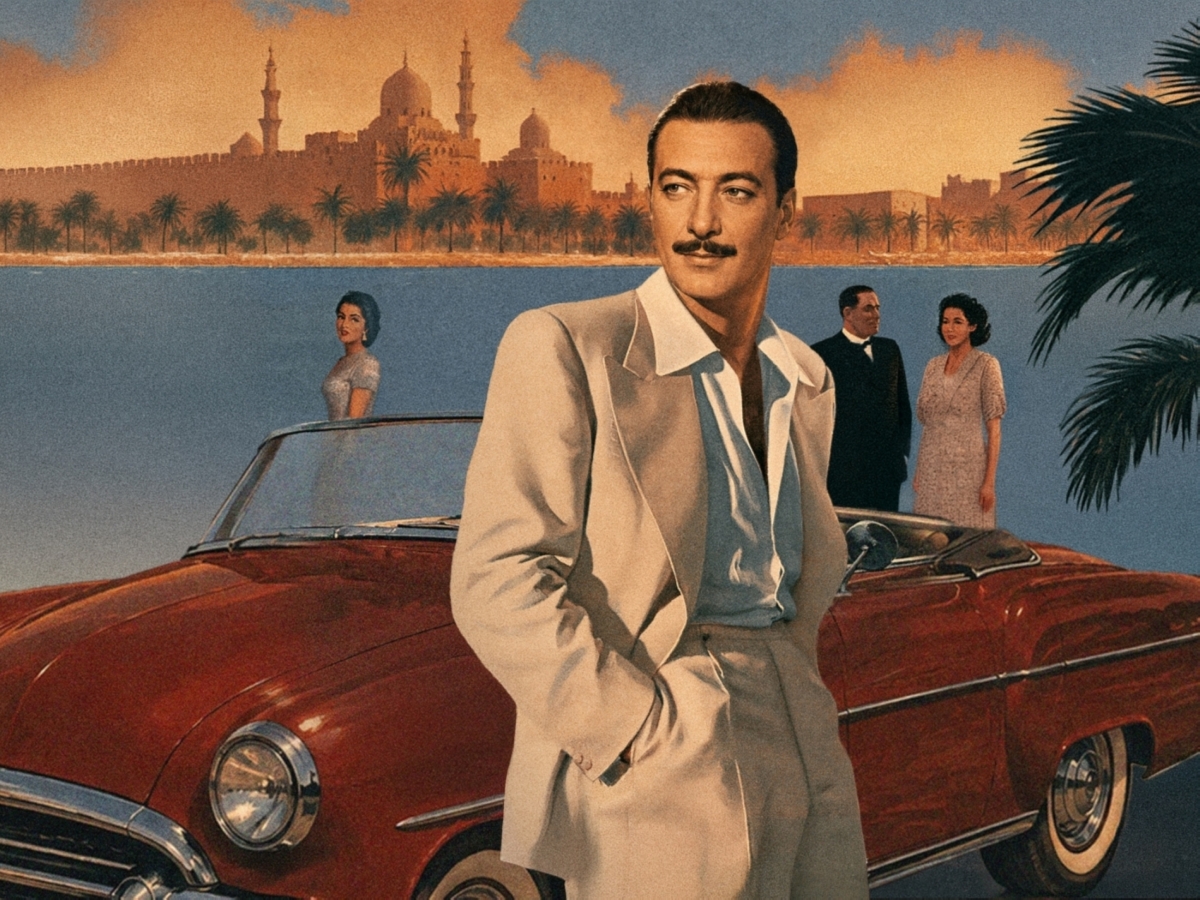

Rushdy Said Hassan Baghdadi Abaza, known simply as Rushdy Abaza, the celebrated Don Juan of Egyptian cinema, was born on 3 August, 1926, which means if he hadn't died on 27 July 1980 of brain cancer, he would be 100 years old today.
More than three decades of his life were spent working in cinema, during which he appeared in over a hundred films of widely varying artistic merit. Yet his singular place in Arab popular culture rests on more than the roles he left behind. It also lies in the legendary image he fashioned beyond the screen, or that was fashioned around him.
Arab audiences have long invoked Souad Hosny’s name whenever speaking of irresistible femininity. In the world of men, the popular expression "He thinks he is Rushdy Abaza" conveys the exceptional stature Abaza attained. Together, the two became the most familiar emblems of femininity and masculinity in Arab cinema. Other actresses, including Hind Rostom and Shadia, shared Souad Hosny’s status to varying degrees. Rushdy Abaza, however, remains the most singular case in the history of Egyptian cinema.
Whether compared with his predecessors, such as Emad Hamdy, once Egyptian cinema’s foremost leading man, or with contemporaries such as Ahmed Ramzy, Shukry Sarhan and Ahmed Mazhar, or even with the new generation of handsome stars who emerged in the 1970s, among them Hussein Fahmy, Mahmoud Yassin and Mahmoud Abdel Aziz, Abaza still stands alone at the summit. His death did little to diminish that standing. He moved beyond the confines of the screen and became a popular measure of masculine allure, a phenomenon for which it is difficult to find a parallel among the stars of Arab cinema. In a rare distinction, he inspired the admiration of men and women alike.
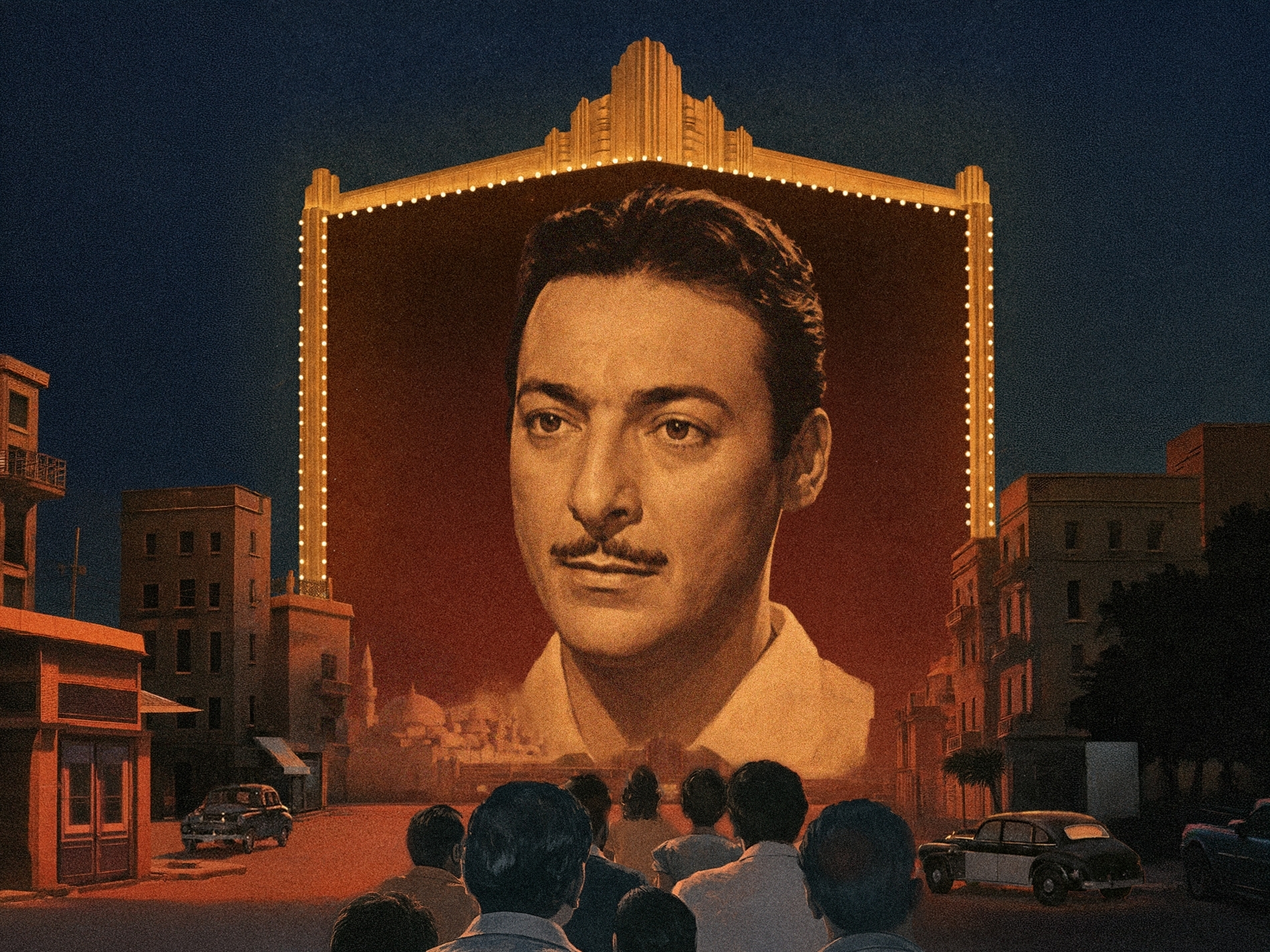
The legend of Rushdy Abaza began before he himself was born. His upbringing planted the first seeds of the phenomenon. He belonged to a prominent aristocratic family long present in Egypt’s literary, political and economic life. His Italian mother’s marriage to his father, a police officer, proved brief, and she returned to her homeland. Rushdy was sent to a boarding school in Alexandria, where academic study held little appeal for him. He preferred sport, particularly boxing and bodybuilding, and excelled in both, earning recognition in local competitions.
Although some accounts suggest that Abaza never completed his studies at the Faculty of Commerce, he mastered several languages, including English, Italian, French and Spanish, in addition to Arabic. His command of these languages later helped bring him under consideration for several foreign productions.
His mother’s fleeting marriage to his father can seem, in retrospect, like a dramatic interlude written solely to bring him into the world. That sense of a passing figure entering his life almost solely to advance his story would recur more than once during his career, notably in the case of a film director whose name is often confused with Henry Barakat’s.
Billiards had reached Egypt in the early 19th century, but the game became particularly fashionable in the late 1940s, especially among the wealthy and society figures. Rushdy, then barely into his twenties, frequented a celebrated billiards hall on 26 July Street. Over the years, it hosted many fiercely contested matches and witnessed the discovery of several future film stars, including Omar Sharif. Directors often visited in search of new faces.
Foray into film
It was there that the director Kamal Barakat noticed Abaza and offered him a career in cinema. He cast him in the leading role opposite Faten Hamama, who was herself still at the beginning of her career, in The Little Millionairess (1948), now regarded as one of Egypt’s lost films.
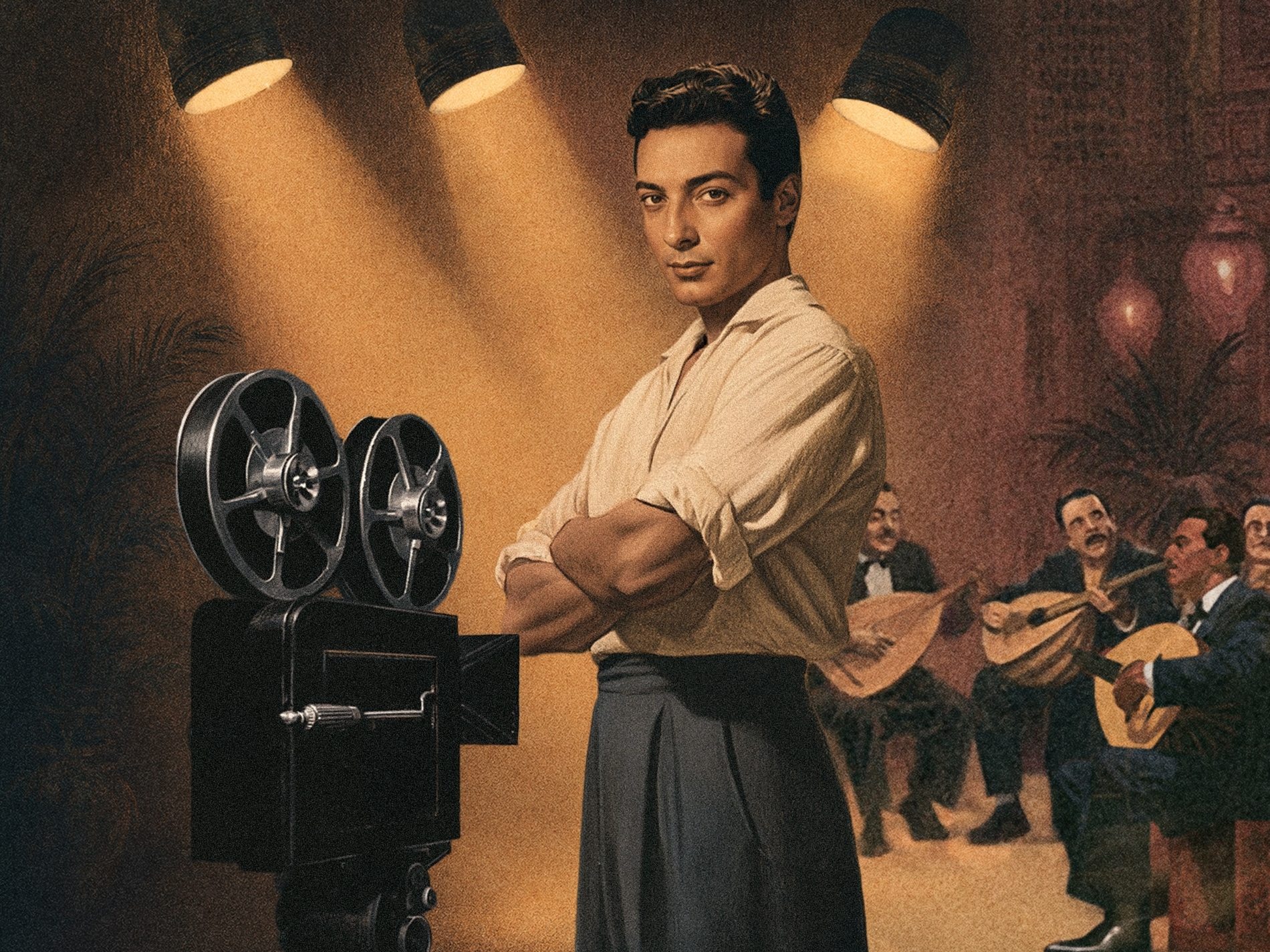
The film failed commercially. Barakat repeated the experiment only once or twice before leaving Egypt and spending the rest of his life in film distribution. Rushdy Abaza, meanwhile, found himself stranded. His father refused to accept that his son should work in entertainment, a profession he considered beneath the family’s standing, and expelled him from the house.
Their estrangement lasted for years. Abaza returned home only for the engagement of his eldest sister, after his siblings pressed their father to invite him. Their schoolmates, friends and neighbours could scarcely believe that he was really their brother. By then, Abaza had appeared in several films and was beginning to attract public attention. Many guests attended the engagement chiefly for the chance to see him, crowding onto the balcony as they waited for his arrival, according to his younger sister, Mounira.
Remarkably, despite his striking presence, Abaza remained confined for nearly a decade to supporting or marginal roles. Most actors of his generation entered cinema as leading men and retained that position. Even those who began with smaller parts, such as Ahmed Ramzy in Our Beautiful Days (1955), soon moved into principal roles.
During those years, Abaza nevertheless delivered several memorable performances. He played Hassan in Hussein Fawzi’s Tamr Henna (1957), then the French officer Bigeard in Youssef Chahine’s Jamila (1958). The latter production gave rise to an early and revealing episode in Abaza’s dealings with directors.
Chahine was renowned for stamping almost every actor he directed with his distinctive style, including Mahmoud El Meliguy. Rushdy Abaza resisted that mould. The two remained at odds throughout filming over his manner of performance, and they never worked together again.
Cinematic breakthrough
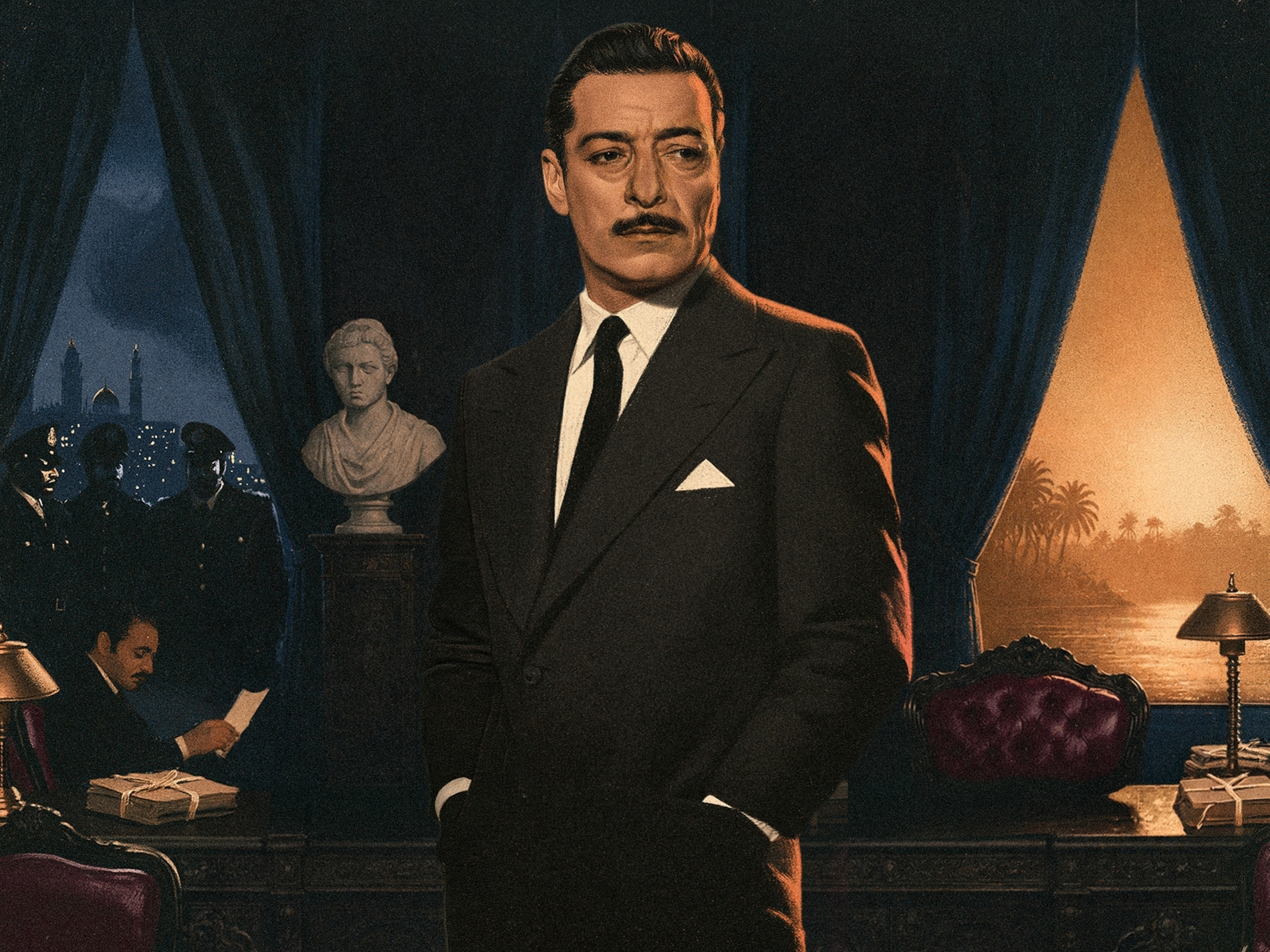
Abaza’s true breakthrough came in two stages, both under the direction of Ezz El Dine Zulficar. It began with A Woman on the Road (1958) and reached its height in The Second Man (1959), in which he gave one of his most accomplished screen performances as the gangster Esmat Kazem.
The film assembled a formidable cast, yet Abaza, in the language of filmmakers, stole the camera in every scene he entered. That quality remained with him throughout his career. Faten Hamama once remarked in an interview that he could draw the viewer’s attention even when the camera showed him only from behind.
Atef Salem’s Struggle on the Nile (1959), in which Abaza appeared alongside Hind Rostom and Omar Sharif, also merits special attention. From its opening scene onwards, the film continually foregrounds the distinctive physique of its leading man.
As the scholar Yvonne Tasker observes in The Man on Screen, stars in films of this kind depend heavily on their physical prowess, until the body itself becomes, in her phrase, "the primary object of spectacle." The film begins with Mujahid demonstrating his skill in tahtib before a group of foreign tourists in the courtyard of Karnak Temple, while the women among them compete to photograph him beside the statues of his Pharaonic ancestors.
Abaza deserves credit for the seriousness with which he prepared for this film and for the earlier Tamr Henna. He spent long periods among practitioners of tahtib, absorbing their natural movements and manner of performance. The result was an uncommon spontaneity on screen, making his character appear a genuine product of his environment.
Smashing stereotypes
The 1960s marked the most mature and accomplished phase of Rushdy Abaza’s career. During that decade, he freed himself decisively from the confines of the handsome leading-man stereotype and moved with assurance among widely differing roles. His good looks and charisma accounted for only part of his presence. His real distinction lay in his powers of characterisation.
Ezzat, the thief in Kamal El Sheikh’s Angel and Devil (1960), stands among the clearest examples. The screenplay rests on the fraught relationship that develops between an abducted child and her captor, turning the confrontation between innocence and criminality into a moral struggle in which the boundaries between good and evil become increasingly blurred.
Remarkably, the original idea came from Abaza himself. His ambitions extended beyond acting into writing, and he supplied the stories for several other films, including The Devil’s Road and Ashour, the Lionheart. He also produced some of them.