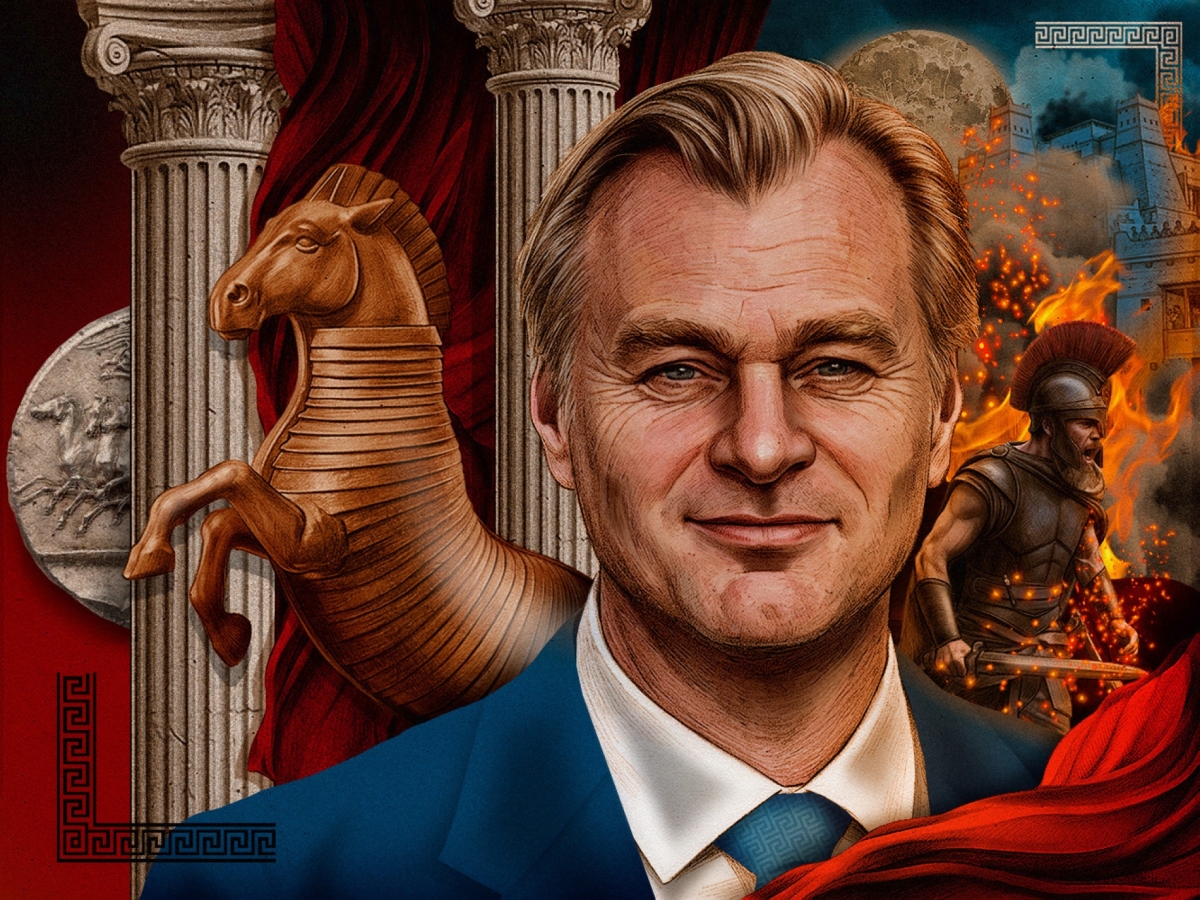
Christopher Nolan’s The Odyssey: Homer reborn in IMAX

The journey from spoken word to written form to giant cinema screens taken by this 3,000-year-old story in some ways matches that of its protagonist

Sir Christopher's Nolan's 2026 film 'The Odyssey' is the latest step on an epic journey for Homer's 3,000-year-old poem.
Axel Rangel García
Sir Christopher's Nolan's 2026 film 'The Odyssey' is the latest step on an epic journey for Homer's 3,000-year-old poem.

Christopher Nolan’s The Odyssey: Homer reborn in IMAX

In its earliest form, Homer’s epic poem The Odyssey came from the mouth of a storyteller, not from the hand of a writer. It belonged first to the spoken word, before it was captured in writing and, later still, imagery. It is heir to humanity’s continuous and inherited tradition of storytelling, carried from tongue to tongue before books preserved it and technology fashioned it into pictures.

The tale, at once both story and myth, travelled through generations before settling into written form between the 8th and 7th centuries BCE, around 2,600 years ago. The text arose from a collective tradition of oral performance that addressed a contemporary world largely shaped by war. It influence other epics including One Thousand and One Nights (sometimes known as The Arabian Nights), a collection of Middle Eastern folktales originally written in Arabic. Likewise, traces can be discerned in the adventures of Sinbad the Sailor.

Oral and visual

The British director Sir Christopher Nolan opens his 2026 film The Odyssey with a man standing on a table in the middle of a banqueting hall, recounting a story to an astonished audience. The scene recreates the epic’s foundational moment: the oral performance that preceded every act of writing.

The narrator is played by the musician Travis Scott, who also co-wrote and performed the music heard over the closing credits. His presence establishes a metaphorical bridge between contemporary rap, as an heir to traditions of oral performance, and the Homeric epic, which existed as a sonic archive before becoming a written one and inspiring the myths of later worlds.
AFP
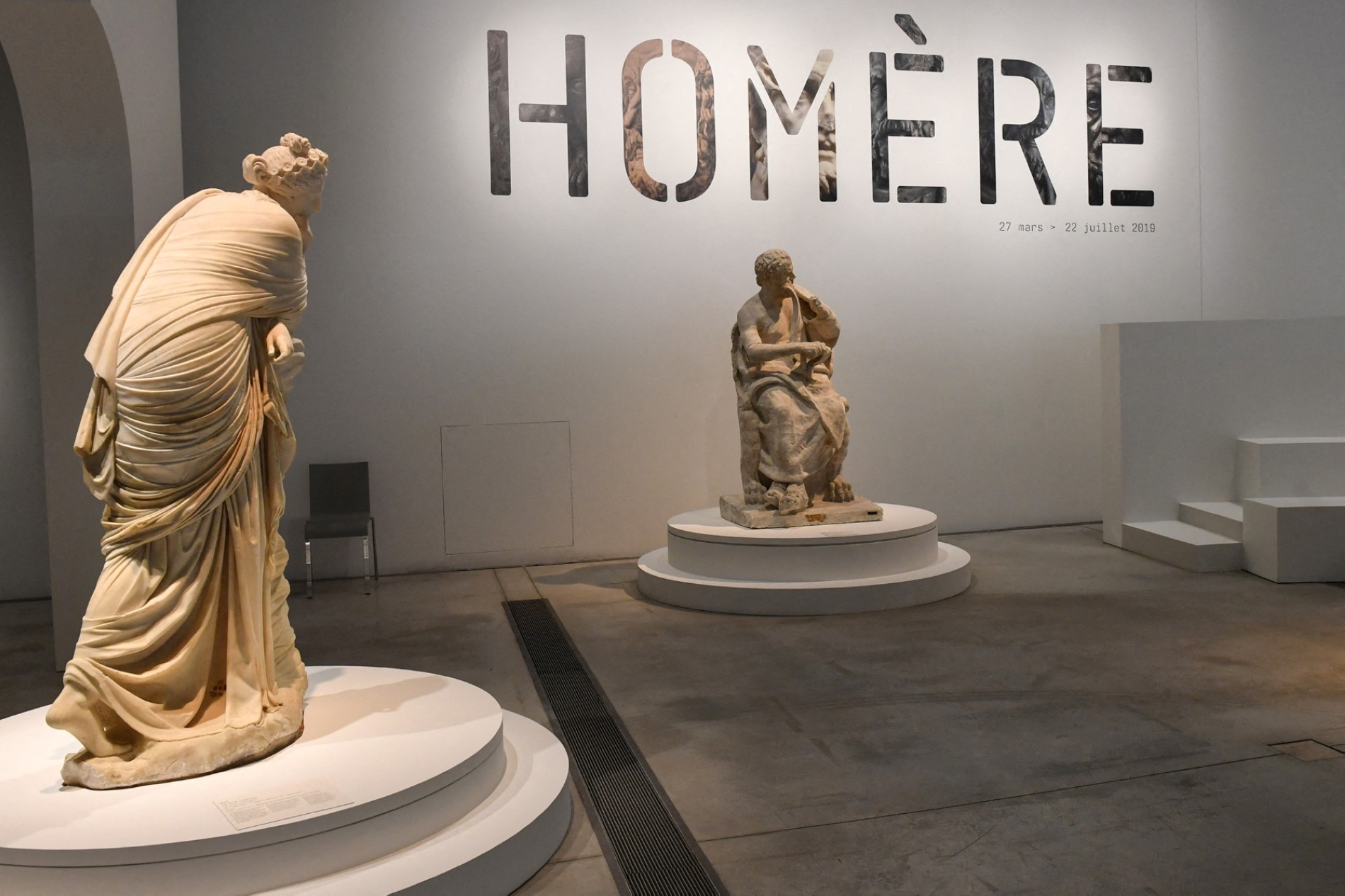
Homer's epic was originally passed on and performed through word of mouth, only later being committed to text.

The choice places the film at the heart of a question central to the study of how stories move between media: what happens when a narrative structure originally fashioned for the ear and collective memory enters a technological visual medium built around 70mm film and the monumental IMAX screen, the sheer scale of which becomes an aesthetic force in its own right?

Audience experience

IMAX compels the eye to adopt a mode of attention quite unlike that required by a conventional cinema screen or a domestic streaming platform. On this scale, the image changes the conditions in which an audience experiences the story together. The act of viewing acquires an almost ritual quality, recalling the circle of oral performance from which the original text emerged.

Nolan has said that he was searching for a space in film culture that had yet to be occupied, one associated with the mythological inheritance that shaped his cinematic childhood through the films of Ray Harryhausen, yet had never been granted a scale of production commensurate with the Hollywood’s resources and IMAX technology. His remark places the film self-consciously within the history of cinematic mythmaking.

It marks a passage from the stop-motion aesthetic that distinguished films of the 1950s and 60s to the hyperrealism made possible by contemporary digital cinematography and analogue 70mm film. Such a profound cinematic transformation raises a central question about the relationship between myth in its oral and written forms and the visual interpretations it acquires in our own age: what remains of the original tale when it encounters the formidable power of the contemporary cinematic image?

Narrative structure

Since his earlier film Memento (2000), time has preoccupied Nolan more persistently than any individual plot. In most of his films, the narrative clock abandons a single linear course and opens into a web of simultaneous possibilities, with past, present and future sharing the same plane of dramatic immediacy. The same temporal sensibility is evident in Oppenheimer.

In Homer’s The Odyssey, Nolan finds fertile ground for this enduring preoccupation. The original epic begins midway through the voyage before turning back through Odysseus’s account of his adventures to his Phaeacian hosts. Nolan draws on this original interplay of anticipation and recollection, then enlarges it through editing. The material becomes an unbroken narrative current in which rapture and suffering flow side by side, allowing the viewer to contemplate several questions at once.
Universal Studios
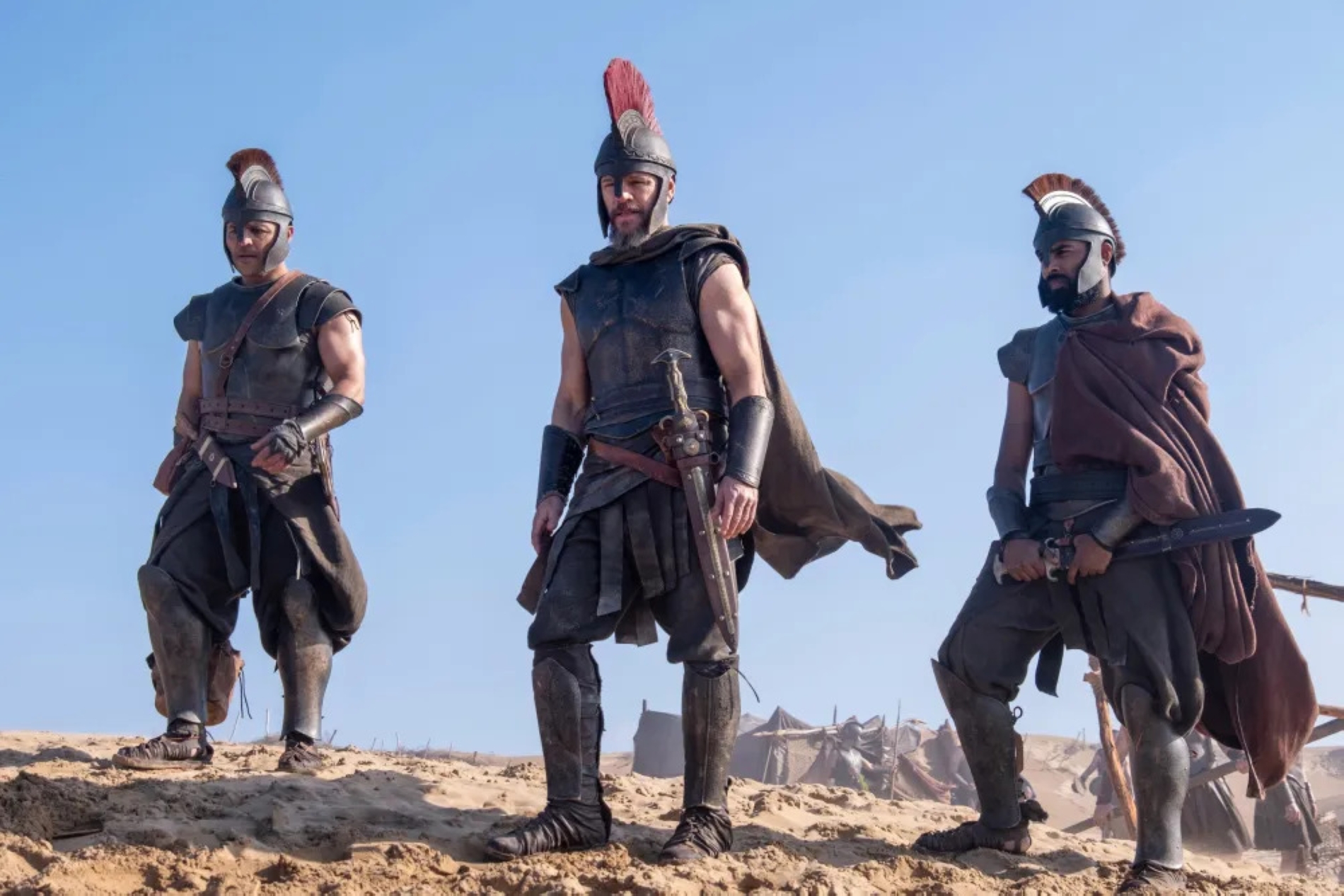
A scene from Sir Christopher Nolan's 2026 film 'The Odyssey' starring Matt Damon (C).

This interweaving of time shapes Nolan’s portrait of Odysseus. Matt Damon’s performance as the protagonist reveals a Homeric hero who remains a fixed legend in his homeland of Ithaca, yet emerges during his voyage as a fallible man, at times arrogant, impetuous, and hard-hearted. The tension between an immutable mythical image and a human figure in continual transformation recalls Nolan’s recurring exploration of masculine hubris in his protagonists from Inception to Oppenheimer. They imagine themselves capable of mastering time or controlling the consequences of their actions, yet events gradually expose the fragility of that conviction.

Visual translation

From another narrative perspective, the film’s principal techniques of anticipation and retrospection (or prolepsis and analepsis) offer useful ways of understanding Nolan’s treatment of the Homeric material. The film goes beyond a cinematic rendering of the original text’s structure, reproduced through cross-cutting or through the conversion of an ancient literary device into a contemporary visual technique.

Nolan returns to the foundations of the Odyssean myth and reinterprets them through cinema. His reading is personal and distinctly subjective. It preserves the story’s essential narrative elements while bringing them into closer accord with his own cinematic idiom. Its intimacy, above all its attention to the man behind the mythical hero, gives the film its emotional force, despite a running time of more than 2.5 hours.
The Odyssey begins with a man standing on a table in the middle of a banqueting hall, recounting a story to an astonished audience. It recreates the epic's foundational moment: the oral performance that preceded every act of writing

This intricate handling of time nevertheless creates certain critical tensions. The film's repeated return to scenes from the Trojan War, roughly every 15 minutes, risks drawing the narrative away from the Homeric text's central concern with journey and homecoming and towards a broader cinematic reimagining of Greek mythology.

The objection remains partial, yet it opens a legitimate aesthetic debate about the limits of fidelity and betrayal whenever a work passes between media, from oral and written narrative into cinematic image. Should a film's faithfulness to its literary source be measured by its adherence to the source's literal structure, or by its ability to recover its symbolic essence and recast it in a language belonging wholly to cinema?

Cinematic image

The wide IMAX screen offers a Platonic spectacle of the world, before which we witness the unfolding of a story, whether myth, reality, biography or fiction. Here, Nolan turns the technological eye into an instrument of narration, an active presence woven into character, performance, event, visual effect, music, editing, and direction.

AFP
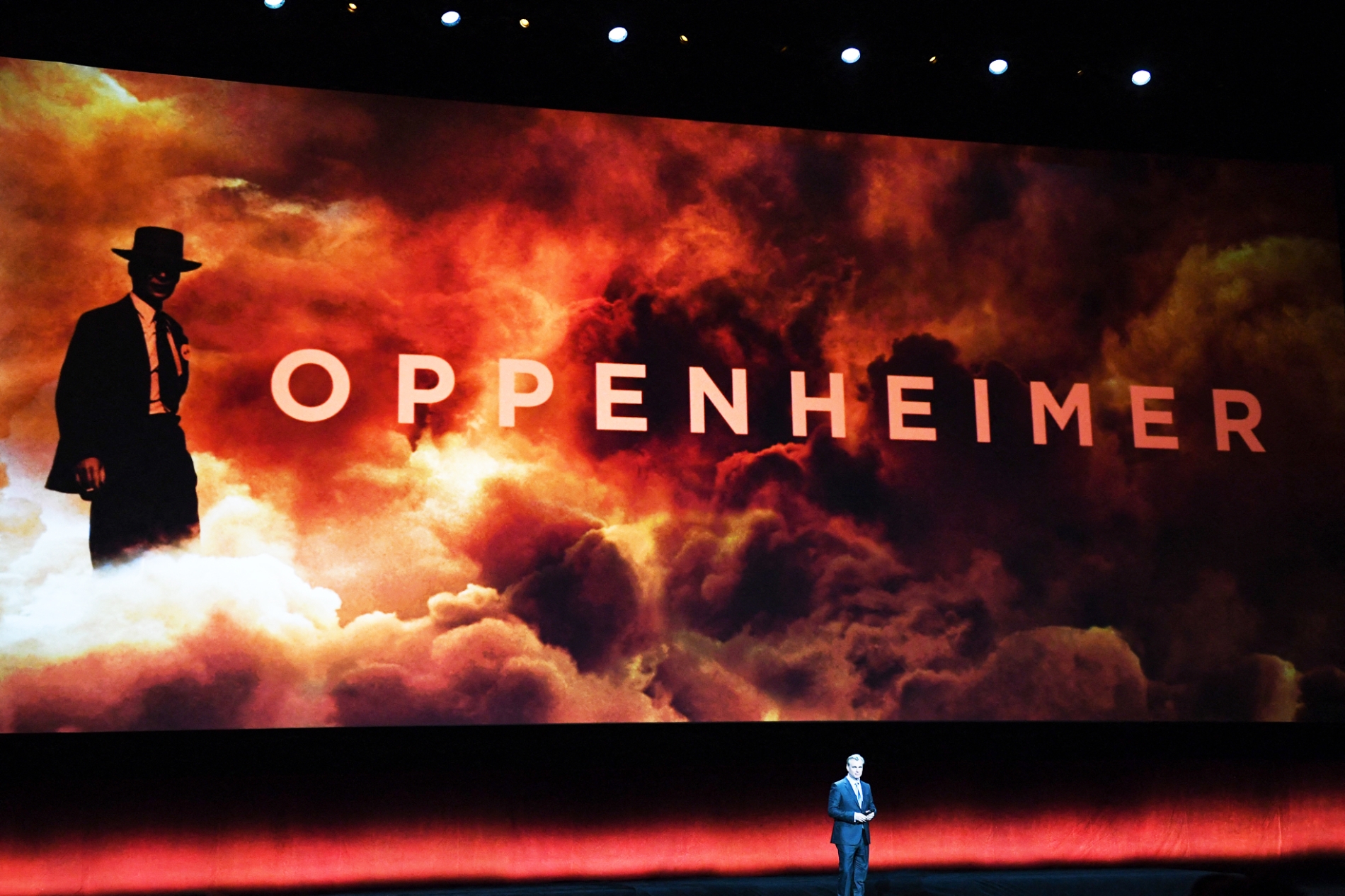
Sir Christopher's Nolan 2023 film 'Oppenheimer' was shot partly for the IMAX screens, but 'The Odyssey' is the first film to be shot completely in IMAX.

Across his previous 13 films, he imagined the world as a rational structure, open to comprehension and interpretation. He is known for his attachment to the solid, the tangible, and the sensuous, yet in The Odyssey, he perceives it through a mythic realm inhabited by gods, monsters, and miracles. To do so, he adopts an approach that is measured and restrained, both rational and psychological.

For instance, in representing gods and supernatural beings, he grants the monsters a more immediate presence than the deities themselves. The choice makes Nolan's interpretation clear: he presents the sacred as a psychological and perceptual trace taking shape within the consciousness of his characters, closer to an anxious human apprehension of the world than to any declared theological certainty.

On a technical level, filming the work entirely in IMAX and on 70mm, under the eye of famed cinematographer Hoyte van Hoytema, alters the relationship between screen and spectator in a fundamental way. The sea, the landscapes, and the mythical creatures acquire an almost overwhelming scale on the giant screen. Much of this effect arises from the physical immediacy of images captured on the open sea, in the desert, and within real natural environments.

Aesthetic paradox

Shooting the film entirely in IMAX became a visual and narrative experiment. The camera merges with the act of storytelling, and this fusion reshapes the act of viewing. Nolan appears to be pursuing André Bazin's idea of the 'myth of total cinema,' the enduring technological desire to approach an absolute realism in which the distance between spectator and filmed world dissolves.

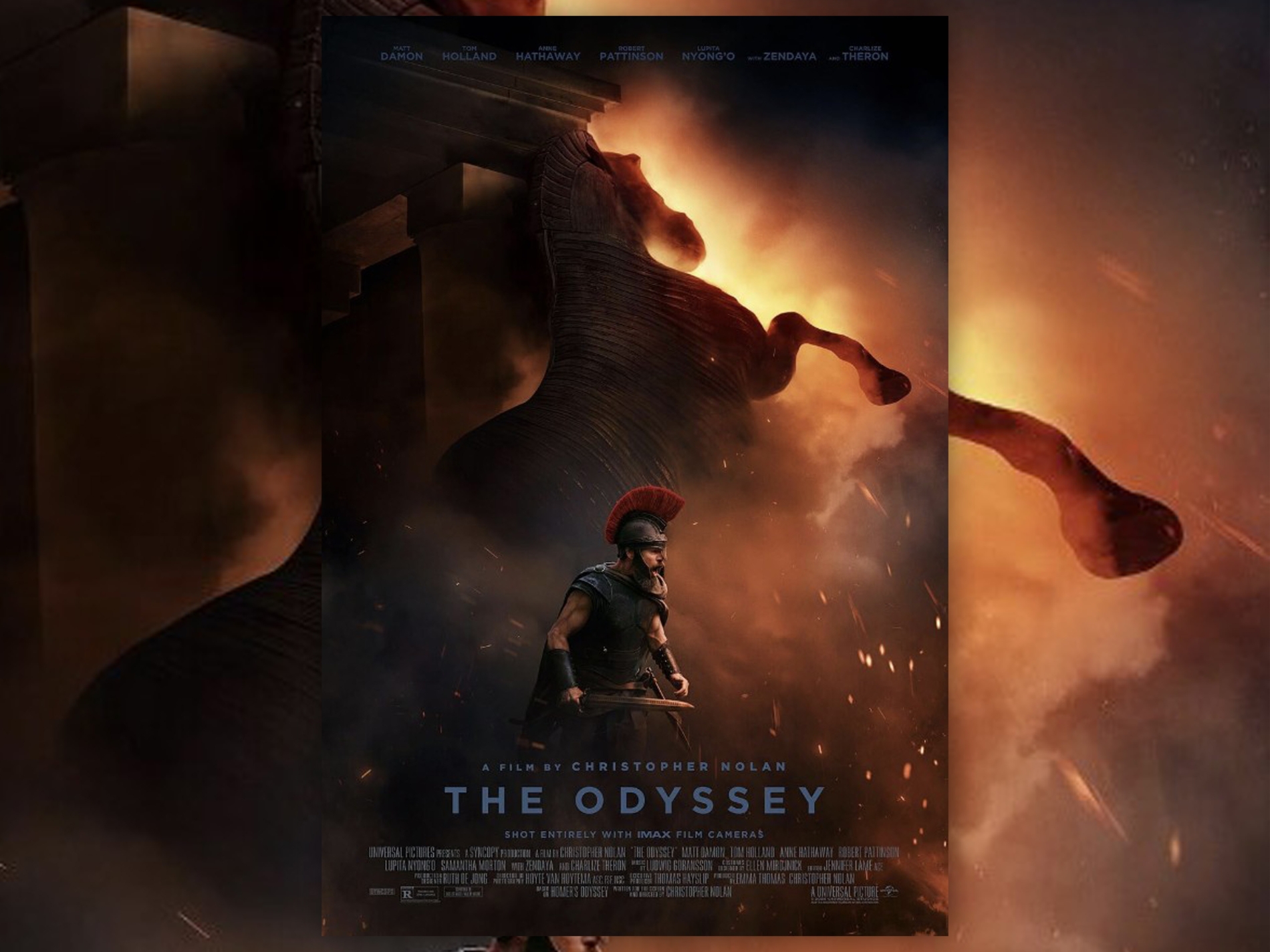
A poster for Sir Christopher Nolan's 2026 film 'The Odyssey,' based on Homer's 3,000-year-old epic poem.

Yet The Odyssey contains a striking aesthetic paradox. It employs extreme technical realism to portray material that is wholly marvellous. The film uses one of cinema's most precise instruments, the exceptional clarity of the IMAX image, to render some of literature's least realistic elements: monsters, magic and divine intervention. This tension between the means of representation and the subject represented evokes the idea of the 'digital sublime'.

Technical precision becomes a source of wonder in its own right. The clearer and purer the image grows, the stranger and more astonishing its subject appears. Extreme definition reveals the monster or the miracle with such sharpness that its impossibility acquires a more vivid presence. A technological instrument devised to reproduce the visible world faithfully therefore becomes a witness to the point at which such representation proves impossible, whenever it confronts what lies beyond.

Rendering the story

Sir Christopher Nolan's The Odyssey treats Homer's epic as living material, capable of assuming new forms as it moves between artistic media. Homer's poem belongs to an oral tradition founded upon rhythm, repetition, and public recitation. Nolan carries it into a visual culture shaped by IMAX scale, cinematic movement and enveloping sound. Through this transformation, the story becomes less concerned with recovering the past and more intent upon creating a new sensory experience, drawing upon cinema's ability to construct time, space and emotion.

 Dimitrios Kambouris / Getty Images via AFP
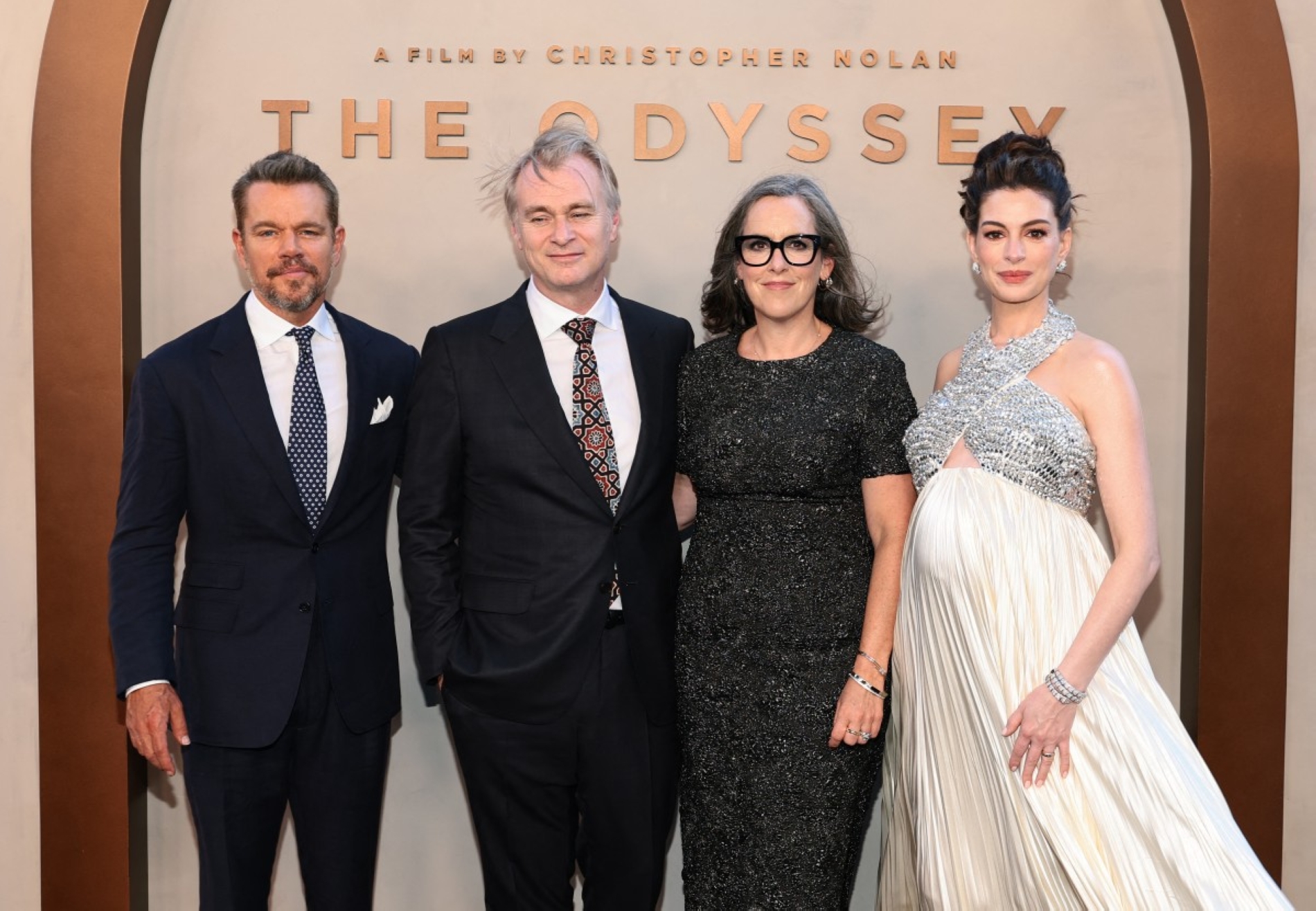
The cast and crew of the 2026 film 'The Odyssey,' from left: Matt Damon (who played Odysseus), director Sir Christopher Nolan, producer Dame Emma Thomas, and Anne Hathaway (who played Penelope, Odysseus's wife).

The film is therefore closer to a reinterpretation of the epic than to a direct rendering of its events as preserved in the classical tradition, although it remains faithful to that tradition to a considerable degree. The differences between Homer's and Nolan's versions emerge most clearly in the nature of their narrative construction. The Greek text rests upon recitation, digression, genealogies, ritual description and the direct intervention of the gods in human destiny, whereas Nolan's favours concentrated action, a more intricate experience of time, and characters endowed with distinctly human psychological and philosophical dimensions.

Odysseus consequently shifts from an epic hero governed by the balance between divine will and traditional heroism into a figure confronted by questions of identity, memory and human choice. This transformation has encouraged some viewers to interpret the film through the lens of contemporary war. It reflects the distance between a world in which gods openly direct human fate and a modern sensibility that seeks the sacred within memory, fear and choice.

font change