Marine Le Pen’s presidential candidacy causes France to reassess

The French far-right leader was convicted of embezzlement, but her prison sentence was suspended, and she is allowed to run next year. Opponents are busy reconfiguring their strategies

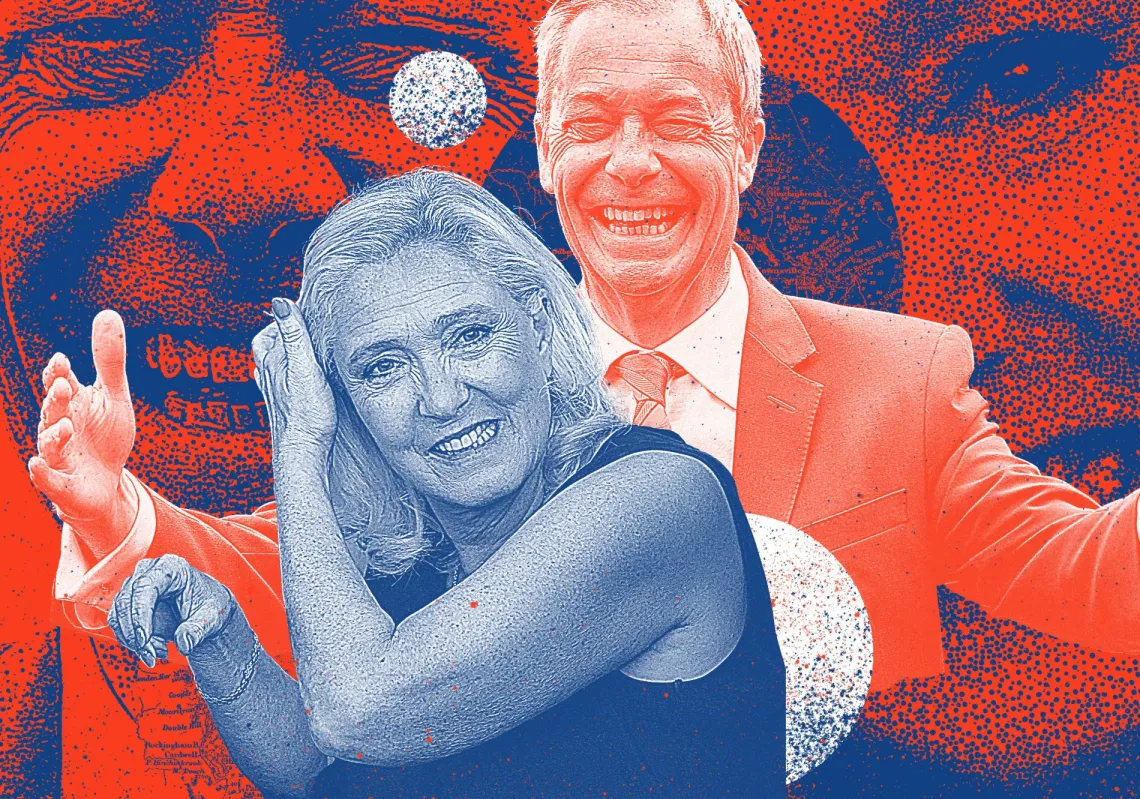
Marine Le Pen of National Rally has been given permission by the French courts to run in next year's presidential election.
Al Majalla
Marine Le Pen of National Rally has been given permission by the French courts to run in next year's presidential election.

Marine Le Pen’s presidential candidacy causes France to reassess

After a recent French court ruling allowed far-right leader Marine Le Pen to run in the presidential election next year, the country’s political landscape has changed. When the polls open on 18 April 2027, the current French President Emmanuel Macron will not be a candidate, having served the two terms allowed under the constitution, so analysts are busy trying to work out whether Le Pen will enter the Elysee Palace.

The election debate will focus on fiscal policy, pension reform, immigration, security, the European Union, and support for Ukraine, to name but a few. After a decision by the Paris Court of Appeal on 7 July, Le Pen can take part, despite her conviction in the European Parliament money laundering case, a suspended prison sentence, and a requirement to wear an electronic bracelet (the latter is being appealed).

Le Pen leads National Rally, the successor party of the one founded by her father, Jean-Marie, whose slogan was “clean hands and heads high”. In 2013, she proposed a lifetime ban on holding public office for elected officials convicted of embezzlement of public funds, something her critics have recently pointed out.

Assessing the scene

This will be Marine Le Pen’s fourth presidential campaign and her conviction could cast a shadow over it. Jordan Bardella, a young National Rally leader, would likely have run for president had Le Pen been barred from doing so. Tensions between the two are rumoured to be on the rise.
Reuters
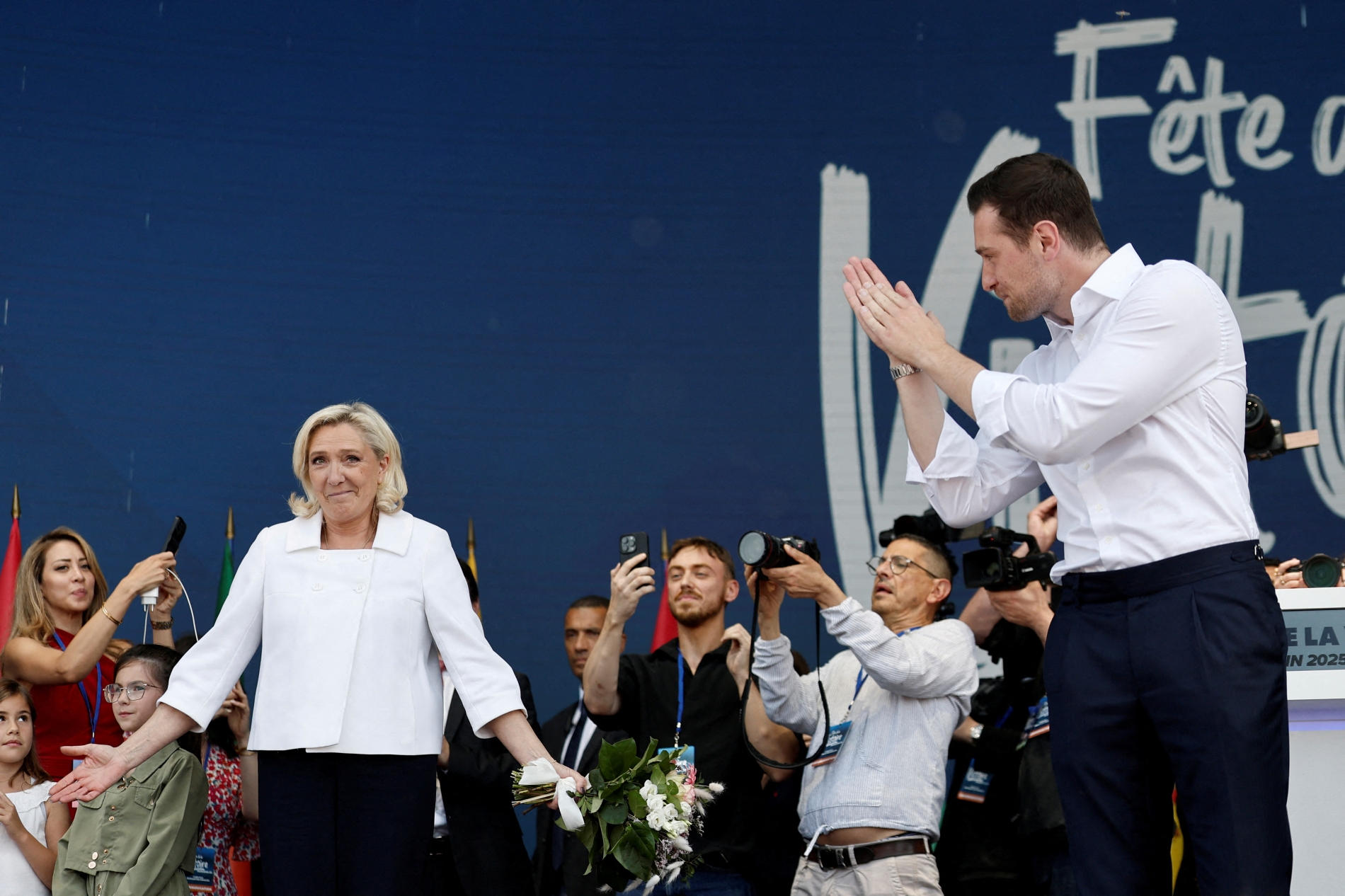
Marine Le Pen is applauded by Jordan Bardella, president of the National Rally since 2022.

In light of the judicial ruling, centrist and left-wing parties have been reassessing their electoral strategies to counter the National Rally, which is polling well. Seen as the front-runner, it has a solid electoral base, and in Le Pen it has an experienced operator at the helm. If the party has an Achilles’ heel, it is economics, say observers, citing examples such as an inability to unify its position on pension reform. Some consider the party a threat to French democracy.
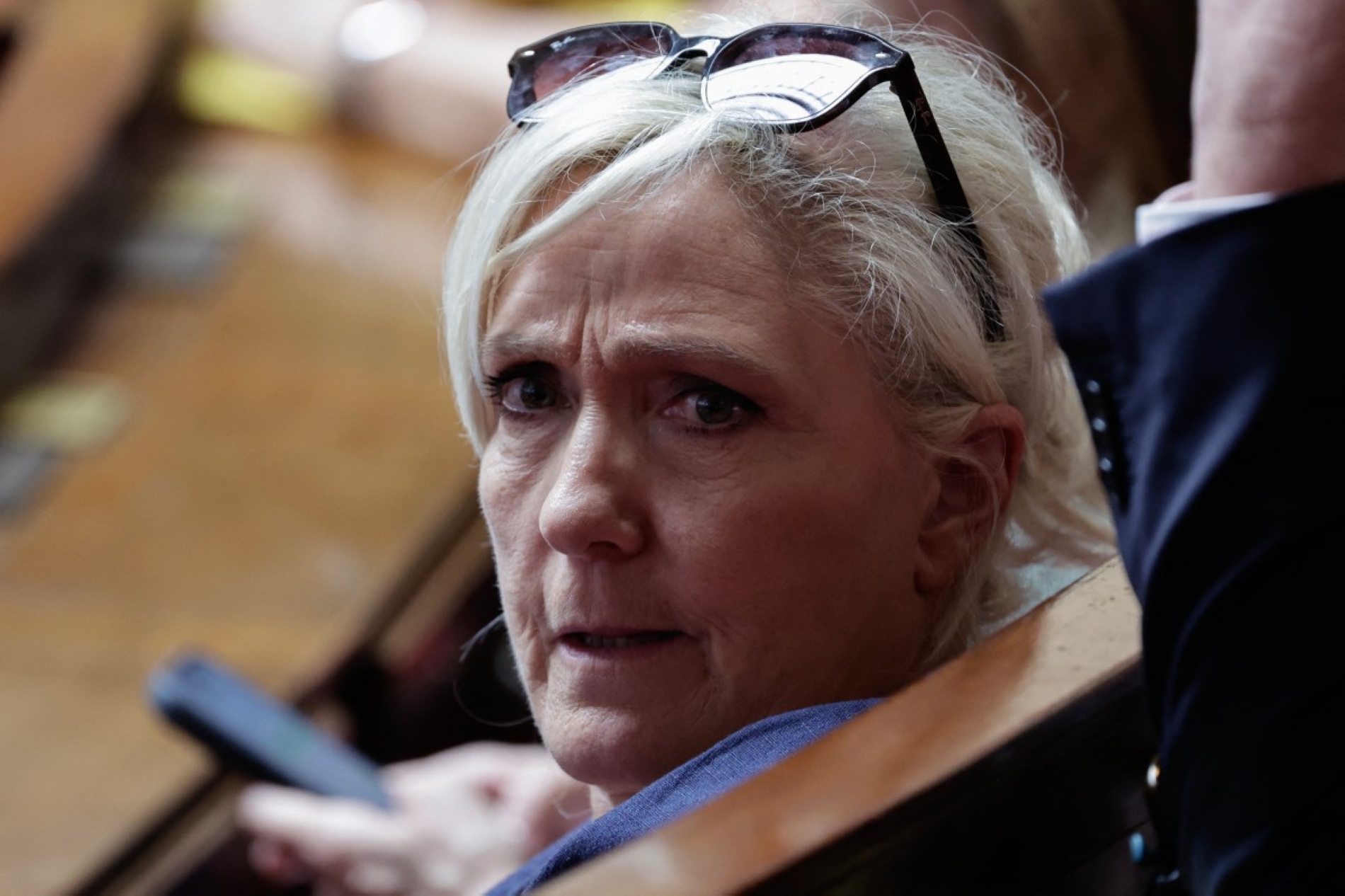
This will be Marine Le Pen's fourth presidential campaign and her conviction could cast a shadow over it

The world's richest man, Elon Musk, recently called Le Pen "France's last hope". He supports a host of anti-immigration parties around Europe, including Restore Britain in the UK, whose main policies include mass deportations. French Foreign Minister Jean-Noël Barrow said Musk "should review his position," adding: "There is a French saying that only fools don't change their minds."

Jostling for position

The latest polls by the IFOP Institute and the ELABE Foundation point to Le Pen leading in the first round with 34-36% of the vote. Former Prime Minister Edouard Philippe is ahead of the most prominent potential centre-right candidates (15-20%) and the far-left Jean-Luc Mélenchon (14-16%). The second-round predictions point to Marine Le Pen winning in all the scenarios tested by the pollsters.

AFP
Marine Le Pen currently tops polling with just over a third of the vote, but the elections are still nine months away.

The elections are still nine months away and Macron has advised that early polling indication could easily change as the months go by. There is a fragmented political landscape on the traditional right, and among Republicans in particular, with the emergence of former Interior Minister Bruno Retaio as a candidate.

Choice of extremes

Centrist such as former prime ministers Édouard Philippe and Gabriel Attal, and socialists such as former President François Hollande, share the stage with the far-left (like Mélenchon) and the far-right (like National Rally). If Mélenchon makes it through to the second round, France could have a presidential choice between the far-left and the far-right.

Political observers note the difficulty of shaping a broad coalition of centrist, centre-right, and centre-left parties, yet the prospect of a far-right win would send shockwaves throughout France and beyond. Marine Le Pen aspires to follow the example of Prime Minister Giorgia Meloni in Italy and attract a wide range of voters on the right and centre, but French politics accustomed to last-minute surprises and upheavals. Watch this space.

font change