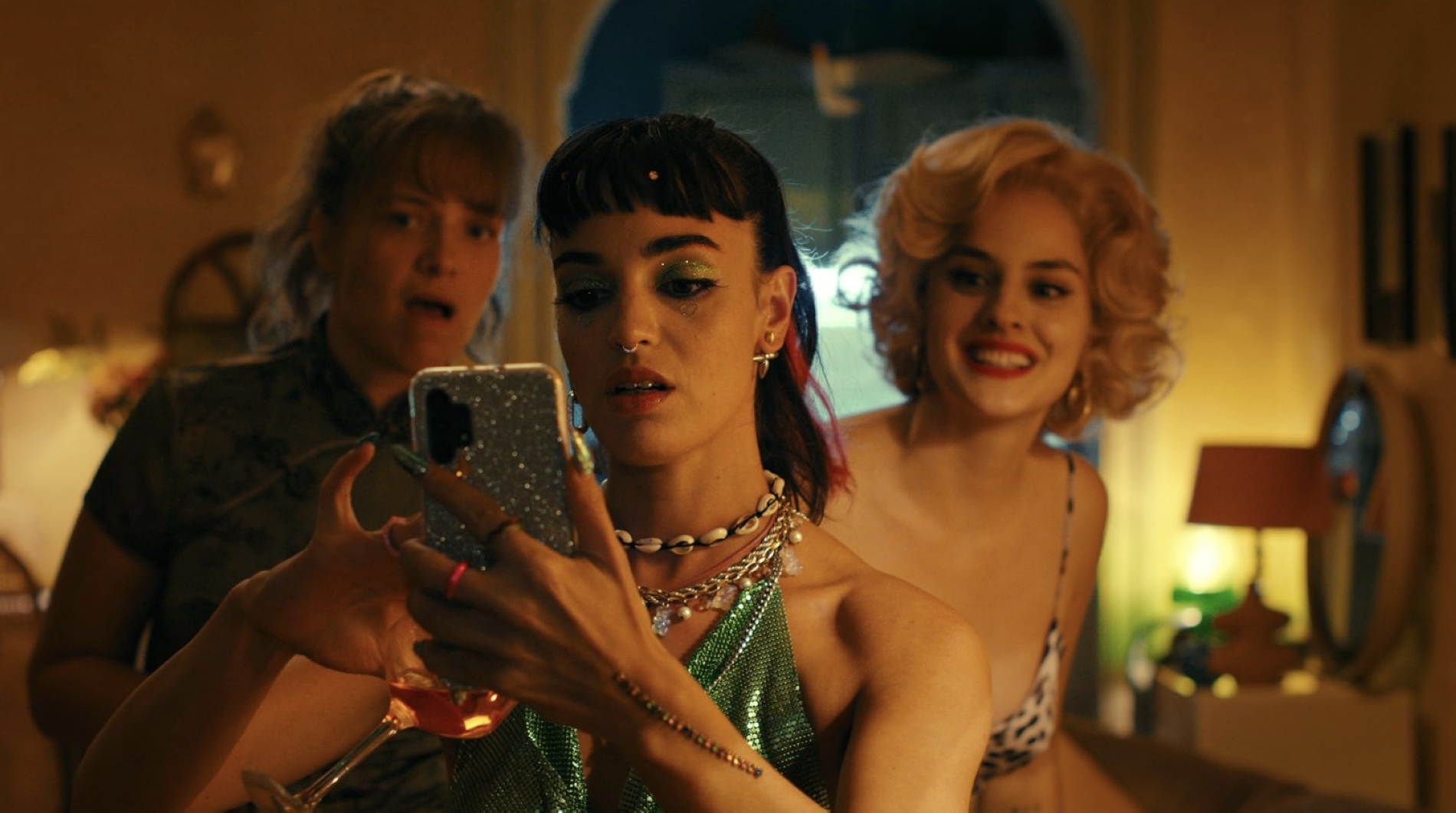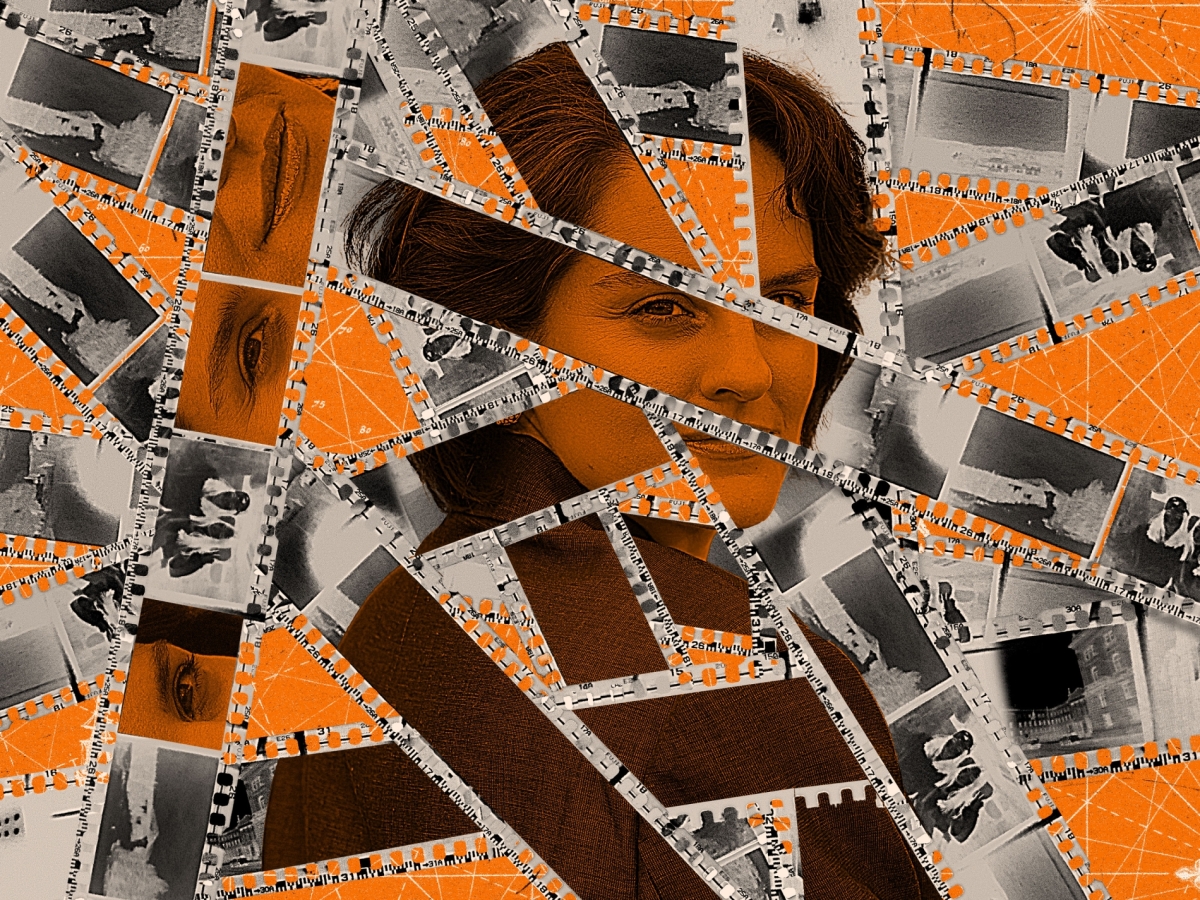

French actress and director Noémie Merlant returned to the Cannes Film Festival this year with comedy-drama Roma Elastica, director Bertrand Mandico’s fourth feature film which co-stars Marion Cotillard. A few steps from La Croisette, the legendary 3km boulevard and promenade in Cannes, Al Majalla met Merlant and Mandico away from the festival’s clamour to discuss the film.
Set in a decaying Cinecittà, a theme park in Rome, this baroque sci-fi tale casts Merlant as Valentina, the devoted assistant and make-up artist to Eddie, an ageing film star (Cotillard) on the verge of collapse, who goes to the Italian capital to shoot what may be her last film. By coincidence, Valentina is the name of Merlant’s two-month-old daughter (who slept peacefully in her mother’s arms while we spoke).
“I had no name in mind at all,” Merlant recalls, when the name comes up. “When we began looking for one, we said, ‘Valentina would be a beautiful name.’ Then I realised that my character in Roma Elastica had the same name. I suppose the film had stayed somewhere in my subconscious.”
For Merlant, the shoot was as exhilarating as it was joyful. “There was an almost mad sense of freedom. The shoot itself was very fast, yet it was immensely enjoyable. It was swift and intense, with no pressure whatsoever. Everything centred on play, experimentation and working on the character. We were allowed to go beyond the edges.”
More than an image
Such freedom speaks directly to her attraction to characters who resist prevailing conventions. “I love it when we are able to go very far and embrace something vulgar or trivial, when women are allowed to be more than an image.” Merlant accepted the project without hesitation, partly because of her longstanding admiration for Mandico, whom she considers a rare filmmaker.
“Even my agent did not know how deeply I admired his films. For me, this is cinema. There are very few directors like him. Perhaps (Spanish filmmaker Pedro) Almodóvar? He exists entirely outside the system. He has no interest in fitting into it. He seeks truth and authenticity. I cannot be as free as he is, even though I consider myself very free. He is a pure artist. You could encounter one of his films without knowing it was his and recognise his signature immediately.”
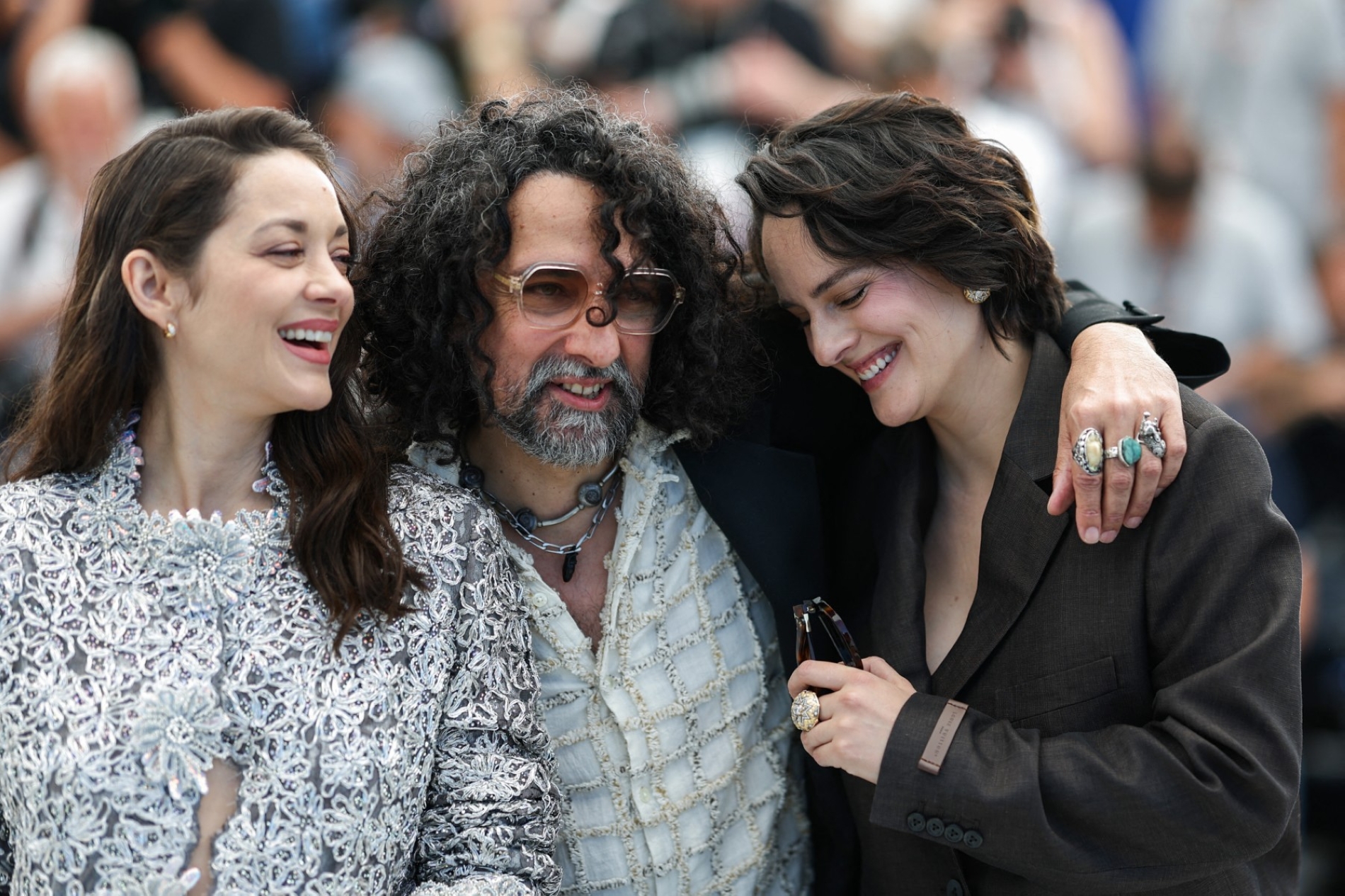
What fascinates her most is the way he creates his worlds. “He draws everything: the costumes, the sets, the shots. Everything is prepared in advance. Paradoxically, that gives the actors enormous freedom. You work within a very strong framework, and that is precisely what allows you to go much further. As an actress, I find that deeply reassuring.”
Merlant admits that she had initially imagined Mandico as someone closer to the wild and extravagant energy of his films. “I thought he would be rather untamed, perhaps even harsh,” she says. “In reality, he is extraordinarily gentle and remarkably composed. It makes me think there is something cathartic in his work. He pours all his madness, violence and obsessions into his films, while in life he is completely at peace.”
An oxygen mask
Roma Elastica reunited Merlant with Cotillard, an Oscar winner who she first met while working on Lee, a biographical war drama from 2023 starring another Oscar winner, Kate Winslet. “We spent 15 days together in a place where there was nowhere else to go,” she says. “We saw each other constantly. We had dinner by the water. It was magical. She is magical. We shared the stories of our lives with great spontaneity and naturalness. She is very approachable and entirely unassuming in everyday life, and she is an extraordinary listener. She loves actresses and gives excellent advice.”
Several French and international actresses have expressed similar sentiments about Cotillard’s generosity and personality, and Merlant says the encounter became important to her. “When I met Marion Cotillard, I was going through an extremely difficult period,” she explains. “In some way, I clung to her. She was my oxygen mask when I was suffocating.” In Roma Elastica, Merlant plays a woman deeply devoted to a legendary actress (with occasional blurring between fiction and reality), so she was portraying, she says, “a character I admire, love, and devote myself to. In the end, it all came very naturally”.
Croisette to Hollywood
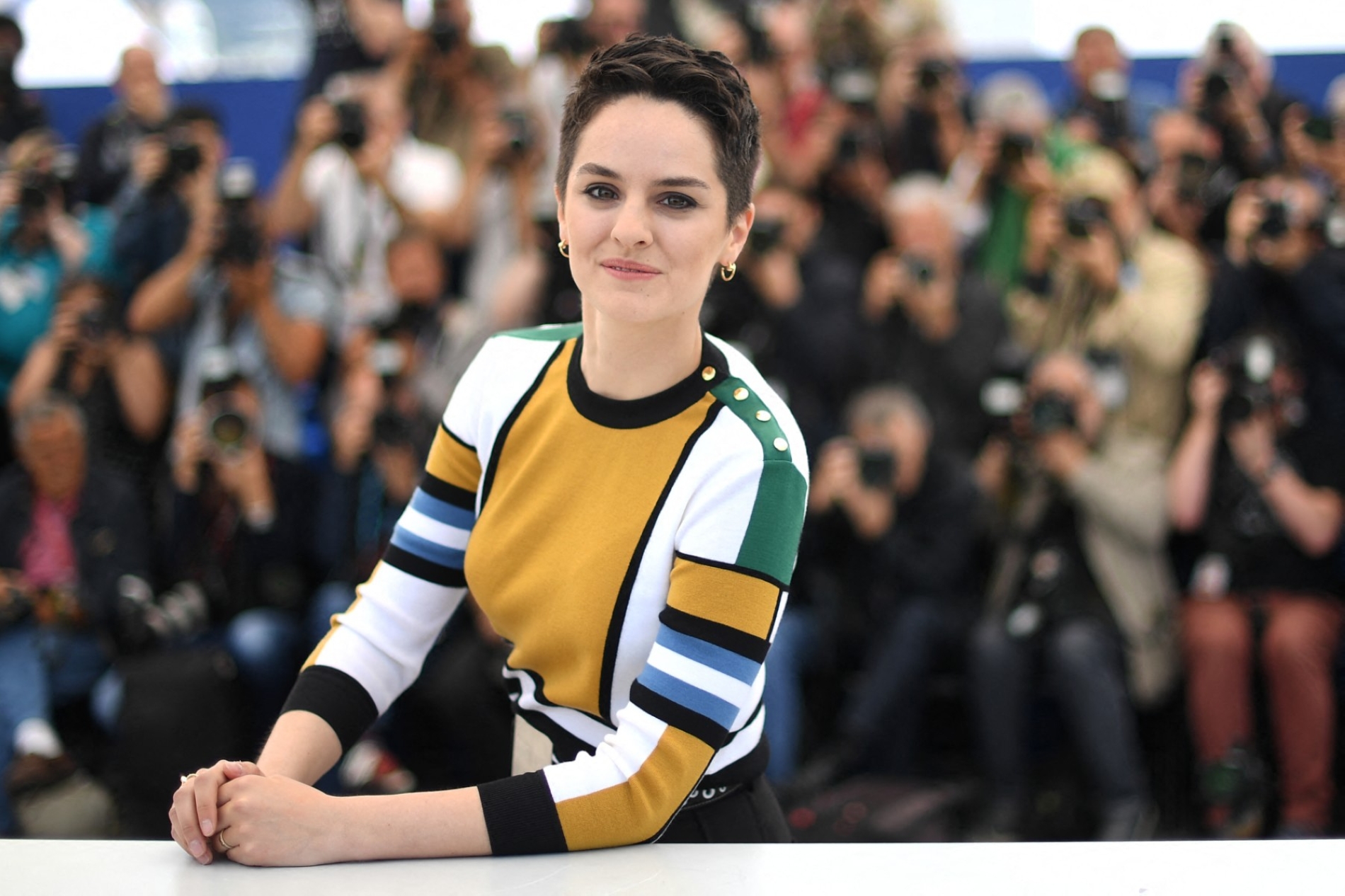
Merlant’s appearance at Cannes this year is merely her latest. From Céline Sciamma’s Portrait of a Lady on Fire to Jacques Audiard’s Paris, 13th District, followed by her own directorial venture, The Balconettes, she has become one of the festival’s most familiar faces. An in-demand actress and increasingly recognised filmmaker, Merlant continues to shape a career that moves freely across genres, forms and artistic disciplines, but Cannes remains her cherished home ground.