
Billions of dollars in frozen assets have emerged as one of the most significant issues in the latest round of US-Iran negotiations, with Tehran seeking access to long-restricted funds in exchange for discussions on its nuclear programme. While Iranian media have reported that up to $24bn could be released during the negotiation period, US officials have not confirmed the figure.
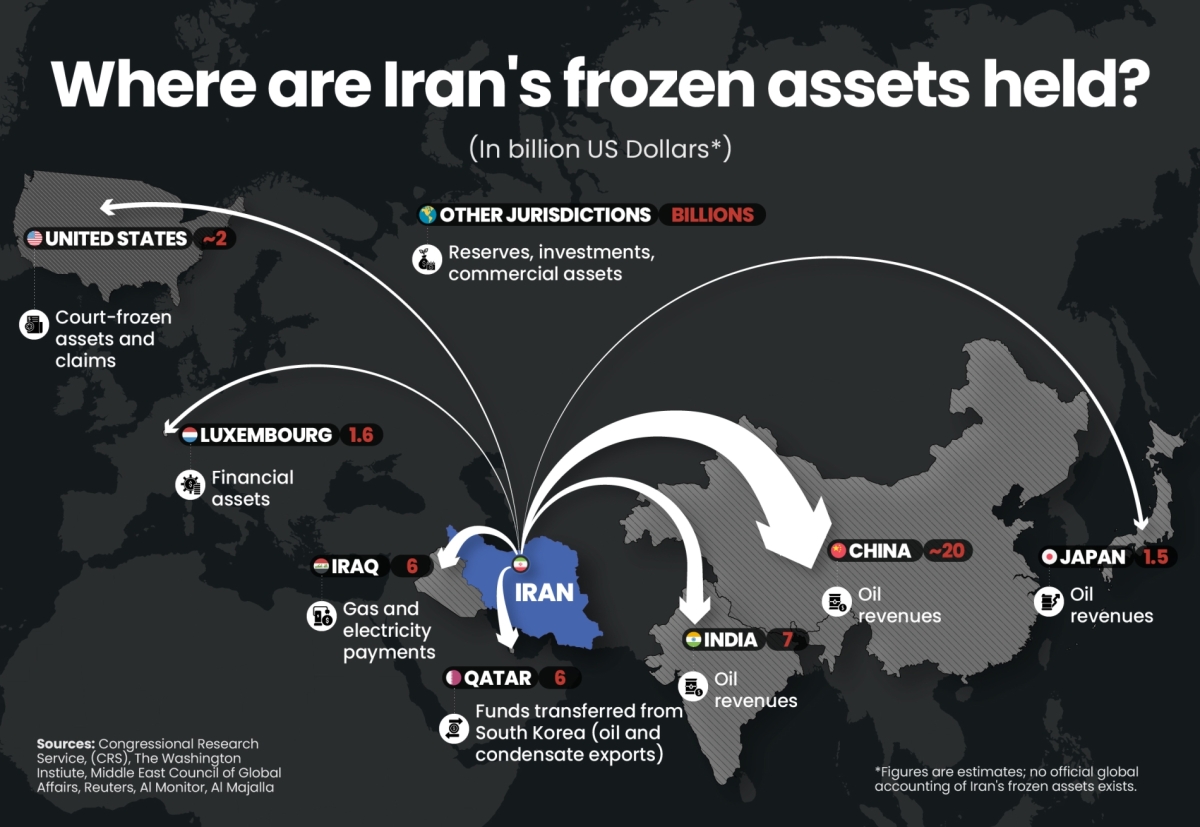
The exact value of Iran’s frozen assets remains uncertain. Estimates from research institutions and media reports range from roughly $50bn to more than $100bn worldwide, depending on whether restricted oil revenues, investments, commercial assets, and legal claims are included. At the upper end of estimates, Iran's frozen assets exceed one-quarter of the country's annual economic output.
Most of these funds were blocked under sanctions linked to Iran’s nuclear programme and broader financial restrictions imposed over several decades. However, only a portion is likely to become accessible under any future agreement.
Iranian assets are believed to be held across multiple jurisdictions, including China, India, Iraq, Japan, and several European financial centres. China is thought to hold the largest share, followed by significant sums in India and Iraq, while the United States directly controls only a small fraction of the total.
Frozen assets have long served as a powerful bargaining tool in US-Iran relations. Following the 2015 nuclear agreement (JCPOA), some Iranian funds were released. In 2023, about $6bn in Iranian oil revenues held in South Korea were transferred to restricted accounts in Qatar under a US-approved prisoner-swap arrangement. However, the funds remained subject to strict controls and were intended solely for humanitarian purchases.
After the outbreak of the Gaza war in October 2023, access to the funds was effectively re-frozen, leaving the money in Qatar but unavailable to Iran. Critics within President Donald Trump’s political camp have opposed broader asset releases, arguing that they could indirectly support Iran’s military capabilities or regional proxy networks.
With Iran seeking economic relief and Washington using sanctions as leverage, frozen assets have emerged as one of the most valuable chips on the negotiating table—making their fate a key test of whether any future agreement can endure.