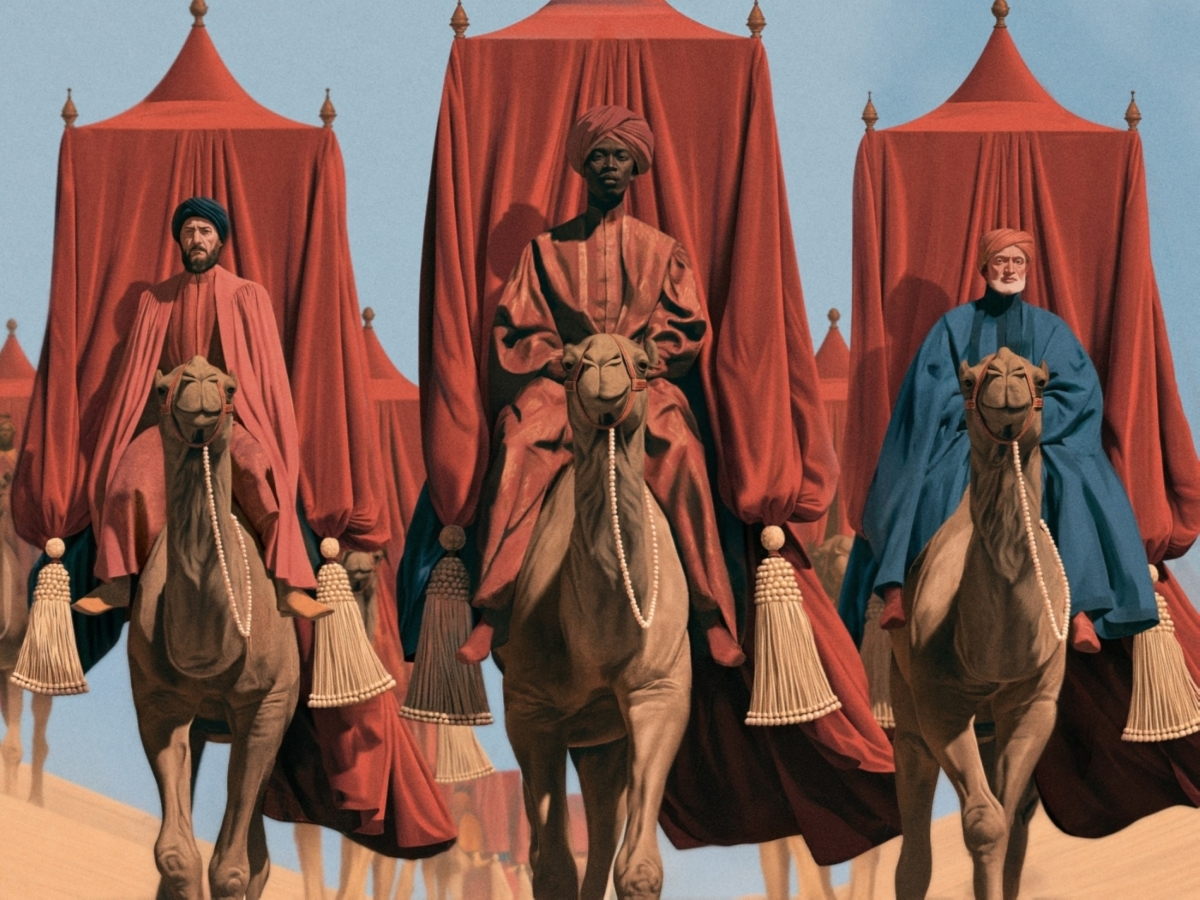
The extravagant Hajj caravans of the sultans’ wives

Through extravagant processions led by palace women, the Mamluk state projected a message of power and prestige at home and abroad, turning the Hajj obligation into a soft-power tool

Lina Jaradat

The extravagant Hajj caravans of the sultans’ wives

Many historians agree that the first sultana of the Mamluk state in Egypt was Shajar al-Durr, who ruled after the death of her husband, Sultan as-Salih Najm al-Din Ayyub. Along with her remarkable intelligence, she was known for her association with the mahmal procession. A mahmal is a ceremonial, passenger-less camel litter covered with intricately embroidered textiles that accompanied historic Hajj pilgrimage caravans.

Although it is unclear whether Sultana Shajar al-Durr performed the Hajj, her presence in the history of the Egyptian pilgrimage looms large, and she is the only sultana of the Mamluk era linked to the formation of lasting religious and political traditions. Biographies credit her with dispatching the decorated howdah (a large, often canopied carriage or seat strapped to the back of a camel) that became a symbol of Egyptian sovereignty and the state’s authority in safeguarding the Mecca-bound pilgrim caravans.

Her influence also extended to the institutional and charitable spheres. Accounts attributed to the traveller Evliya Çelebi point to her role in establishing major religious waqfs (permanent, irrevocable religious endowments in Islamic law) devoted to preparing the Kiswah of the Holy Kaaba and dispatching it from Egypt. This approach later became a practice of the Mamluk court.

Stories continued to cast her as a patron of pilgrims’ affairs, meeting their needs through these endowed institutions. In fact, the linking of Shajar al-Durr’s name to the mahmal tradition—which later became firmly established as an official practice during the reign of Sultan al-Zahir Baybars—was no mere historical coincidence. It reflected the pioneering role played by elite women in religious and social life, and it expressed a popular sensibility that insisted on granting this exceptional ruler a singular status, one that fused the majesty of sovereignty with the sanctity of the rite.

Journey in comfort

As time passed, medieval Egyptian historian and biographer al-Maqrizi notes that Khawand Tughay Umm Anuk, the wife of Sultan al-Nasir Muhammad ibn Qalawun, held such an exalted place in his heart that he remained devoted to no one else. He adds that she was his most important wife, surpassing his other wife (the daughter of Sayf ad-Din Tankiz) in rank and standing. Striking, too, is his account of the Hajj journeys she undertook in her own right, those who accompanied her, and the comforts provided to her along that arduous route.

He writes: “Judge Karim al Din took her on Hajj and made elaborate arrangements for her. He had fresh greens carried for her in clay containers on the backs of camels, and he procured milch cows for her, which travelled with her along the entire route so that she would have fresh milk, and cheese could be made. He would fry cheese for her at lunch and supper. Just consider this: if she were provided with greens and cheese every day, humble fare though it is, what must have been provided beyond that? When the caravan halted, Judge Karim al Din, the Amir Majlis, and several other amirs would dismount, walk before her litter, and kiss the ground for her, as they do for the sultan. Then Amir Bashtak took her on Hajj in the year 739 AH.”
 Amir MAKAR / AFP
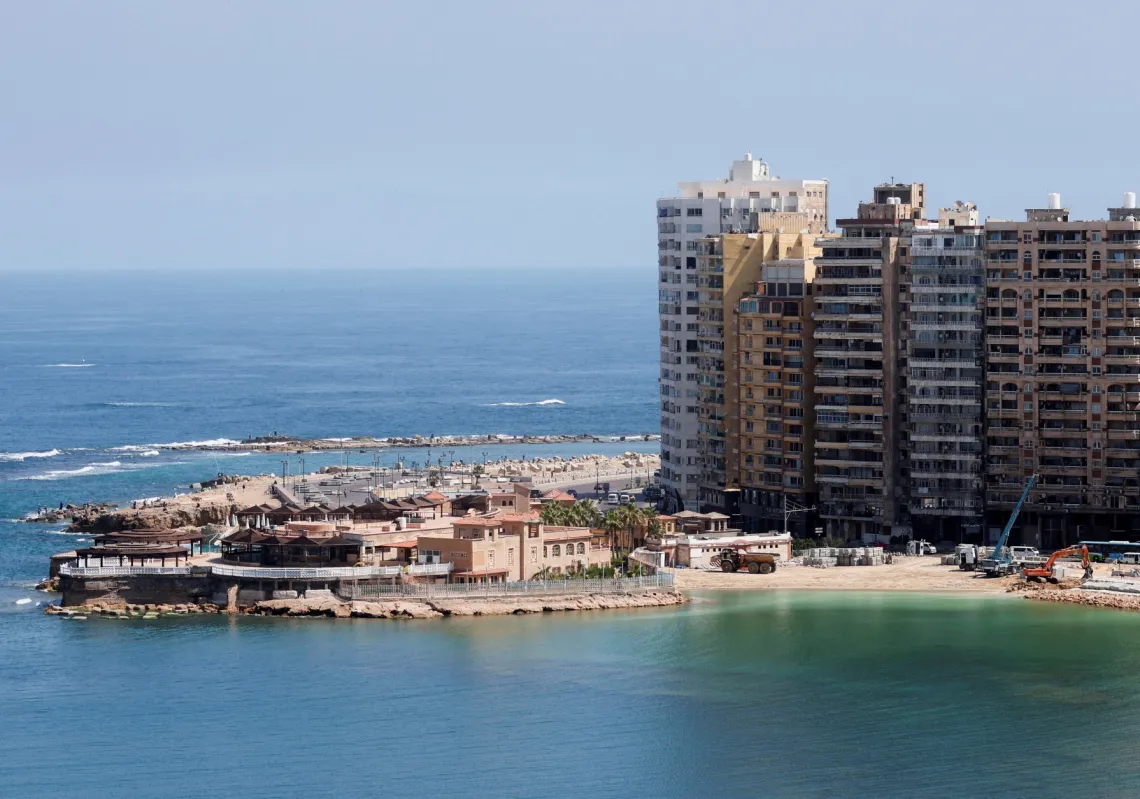
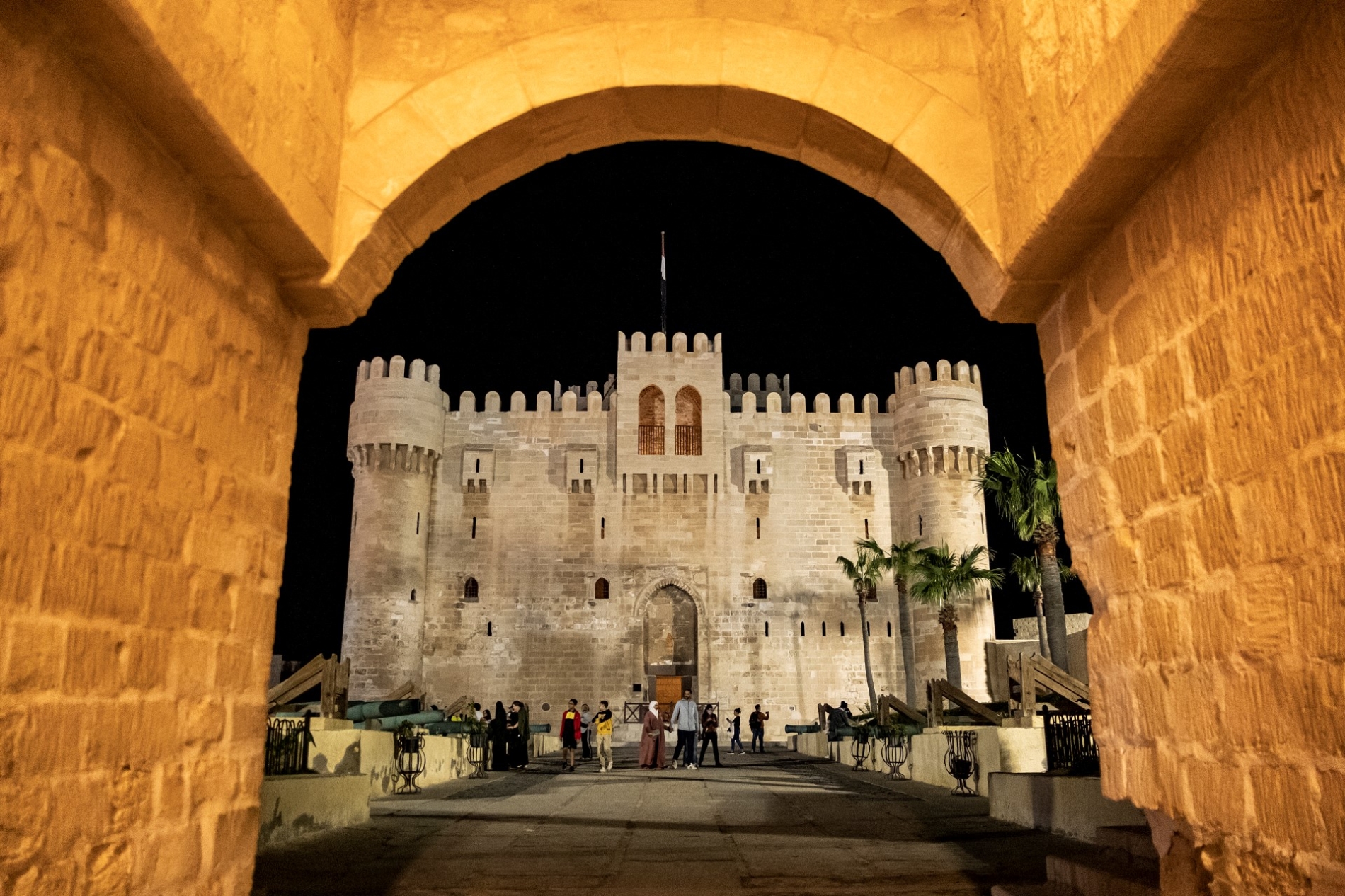
Visitors at the Qaitbay Citadel in Alexandria at night, 2023.

Al-Maqrizi adds that the sultan himself would receive her on her arrival at the Citadel. It was also said that her intercession with Sultan al-Nasir was immediately effective, to the point that, for her sake, he abolished the wheat levy that had been imposed on Mecca. Tughay retained the same awe and standing among the Mamluk amirs even after her husband Sultan al-Nasir's death, until her own death.

Beyond the veil

The Mamluks are often portrayed as harsh, severe, and brutal. Evidence of their domestic lives is scarce, so popular memory tends to assume these qualities extended to their women as well, casting them as helpless figures confined to the harem. In reality, Mamluk women at times enjoyed a wider social presence and played a real part in bolstering the sultan’s authority. That space expanded further under the Circassian Mamluks (the Burji Mamluks), and the Hajj was one of its clearest expressions.

In a research paper titled Family Matters: The Family-In-Law Impulse in Mamluk Marriage Policy, published in a journal of the French Institute for Oriental Archaeology in Cairo, the researchers challenge the conventional view of the Mamluk state as a slave polity governed by a patriarchal order in which women had no role. Rather than treat Mamluk history as a succession of disconnected conflicts and coups, they identify an underlying current of political continuity sustained by court women through a range of social processes, including marriage alliances, and through social and religious roles, foremost among them the Hajj.

The Hajj of the khawands (a Persian term used for both men and women, meaning lord, prince, or ruler, though in the Mamluk era it was best known as a title for the prominent wives and concubines of Mamluk sultans) was not merely a religious rite. It became a highly developed political and diplomatic instrument, designed above all to reinforce authority and consolidate the foundations of sultanic legitimacy in the eyes of subjects and the wider world.
AFP
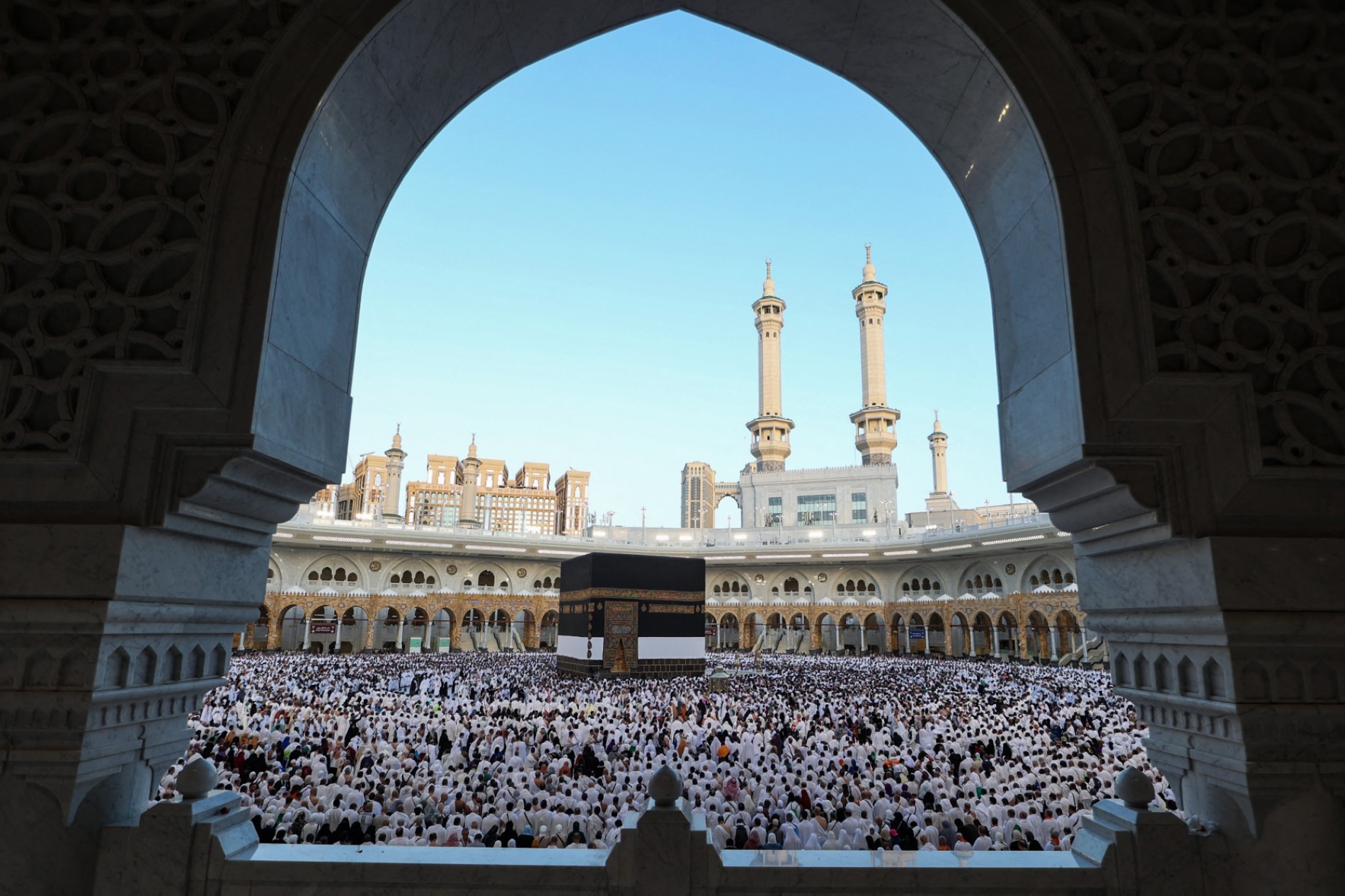
Worshippers around the Kaaba at the Grand Mosque in Mecca at the start of Eid al-Adha.

Religious prestige

The performance of the Hajj by the khawand al-Kubra was regarded as a pilgrimage undertaken on behalf of the sultan himself. It bestowed on him religious prestige as the protector and servant of the Two Holy Mosques without requiring him to leave his capital. An imposing display of economic power matched this spiritual rite. The Hajj caravans of the sultans’ wives were outfitted with legendary extravagance, serving as a tangible political message that reflected the wealth and power of the ruling house. It inspired awe in rivals and enemies, while offering reassurance to their followers.

At the same time, the strict regime of seclusion imposed on the women during their journey, despite their presence in the public sphere, was presented as proof of the sultan’s authority and of his ability to regulate his harem and maintain firm control over it. Thus, the majestic, near-mythical departure of the mahmal procession associated with the khawands’ journey acquired a powerful aura of legitimacy and ceremony, affirming the Mamluks' total security along the pilgrimage route and their complete control over the Hijaz.

In reality, the departures of Mamluk sultans’ wives created opportunities to build social networks and wield wide influence. The khawands would set out, accompanied by hundreds of attendants, thereby turning themselves into political centres of gravity through which intercession and mediation with the sultan could be pursued. In this way, the khawands became guardians of status and repositories of symbolic capital.

Even after a sultan’s death, a widow who had performed the Hajj and established religious endowments would retain a standing that prompted new sultans to compete to marry her, seeking the legitimacy associated with the former household. It also amounted to an implicit recognition of the khawand’s power, and a desire to avert the harm her intelligence might cause if turned against them. This made the khawands’ Hajj a fully formed political spectacle in which religion, wealth, and rank intertwined to shore up the foundations of rule.

Ceremonial processions

In her research paper titled Royal Pilgrims: Mamluk Accounts of the Pilgrimages to Mecca of the Khawand al-Kubra, Catherine Johnson examines pilgrimage records relating to five of the khawand al-Kubra from the Circassian Mamluk period, revealing the details behind these ceremonial processions that reflected the prestige of the Egyptian state and the wealth of its sultanate at the time.

Preparations for this arduous journey would begin months in advance, specifically in Rabi al-Awwal, when the task was entrusted to senior officials under the title of Amir al-Hajj. The choice of this Amir was made through a solemn sultanic ritual during the celebrations of the Prophet’s birthday: the sultan would send a discreet signal by means of a cup of sweet drink, take a sip, then instruct a servant to offer what remained to the chosen man, who would at once kiss the sultan’s hand, declaring his acceptance of this weighty duty.
 Hulton Archive/Getty Images
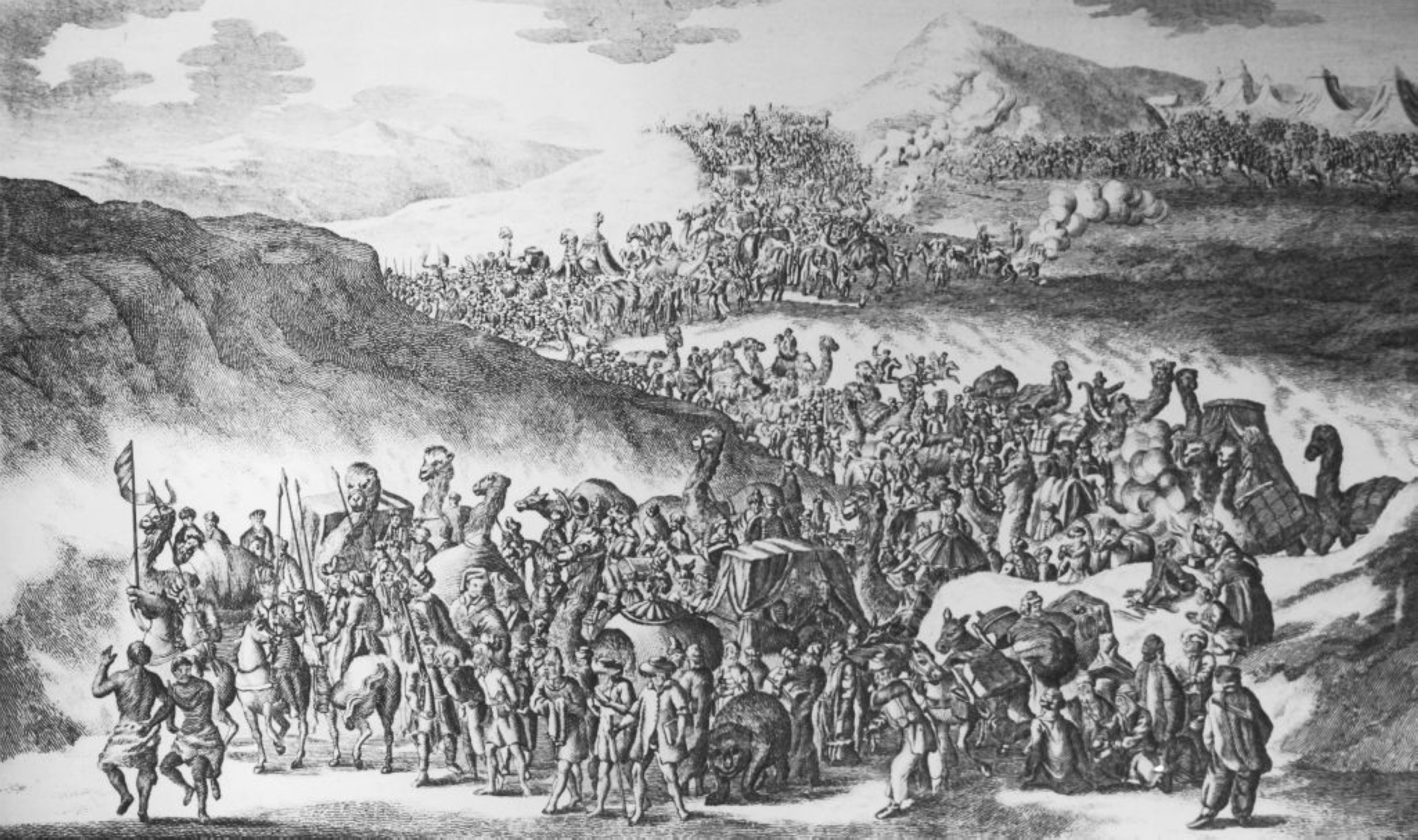
The Great Hajj Caravan Journey from Cairo to Mecca in 1778.

This journey, which could take up to 50 days, required vast quantities of water and provisions for thousands of pilgrims. Troops protected the procession. The caravan was divided into two units. There was the advance caravan, which prepared the route, and the mahmal caravan, the more prestigious of the two as it carried the Kiswah of the Holy Kaaba and the khawand, the sultan’s wife.

This great honour also imposed a heavy financial burden on senior officials, since the Amir al-Hajj bore most of the costs out of his own wealth. Some amirs sought exemption, while others were forced to borrow to pay the staggering sums, which included gifts and banquets for the sultan’s family (100,000 dinars) and the litter prepared for Sultan al-Ghuri’s wife (20,000 dinars).
Luxury didn't disappear in the desert. The khawand took with her every means of comfort, including a brass bath for washing in warm water.

Displaying splendour

The royal litters that carried the khawands most vividly displayed the splendour and luxury of these journeys. Khawand Fatima's litter was described as a marvel the like of which had never been seen, covered in gold brocade and studded with red rubies and pearls, while the litter of al-Ghuri's wife was made of red velvet embroidered with pure Venetian gold. When the procession departed from Cairo, the horsemen wore bright ceremonial dress, while sweets and gold and silver coins were scattered among the crowds lining the streets.

Luxury did not disappear in the desert either. The khawand took with her every means of comfort, including a brass bath for washing in warm water, while 1,000 camels were assigned solely to carry the baggage of the royal household, accompanied by an army of servants and eunuchs. This majestic journey reached its climax on the return, when the khawand ascended to the Citadel with the 'Dome and Bird' borne above her head as emblems of royalty, while pieces of gold and silver were scattered beneath her feet in celebration of her arrival.

 Amir MAKAR / AFP
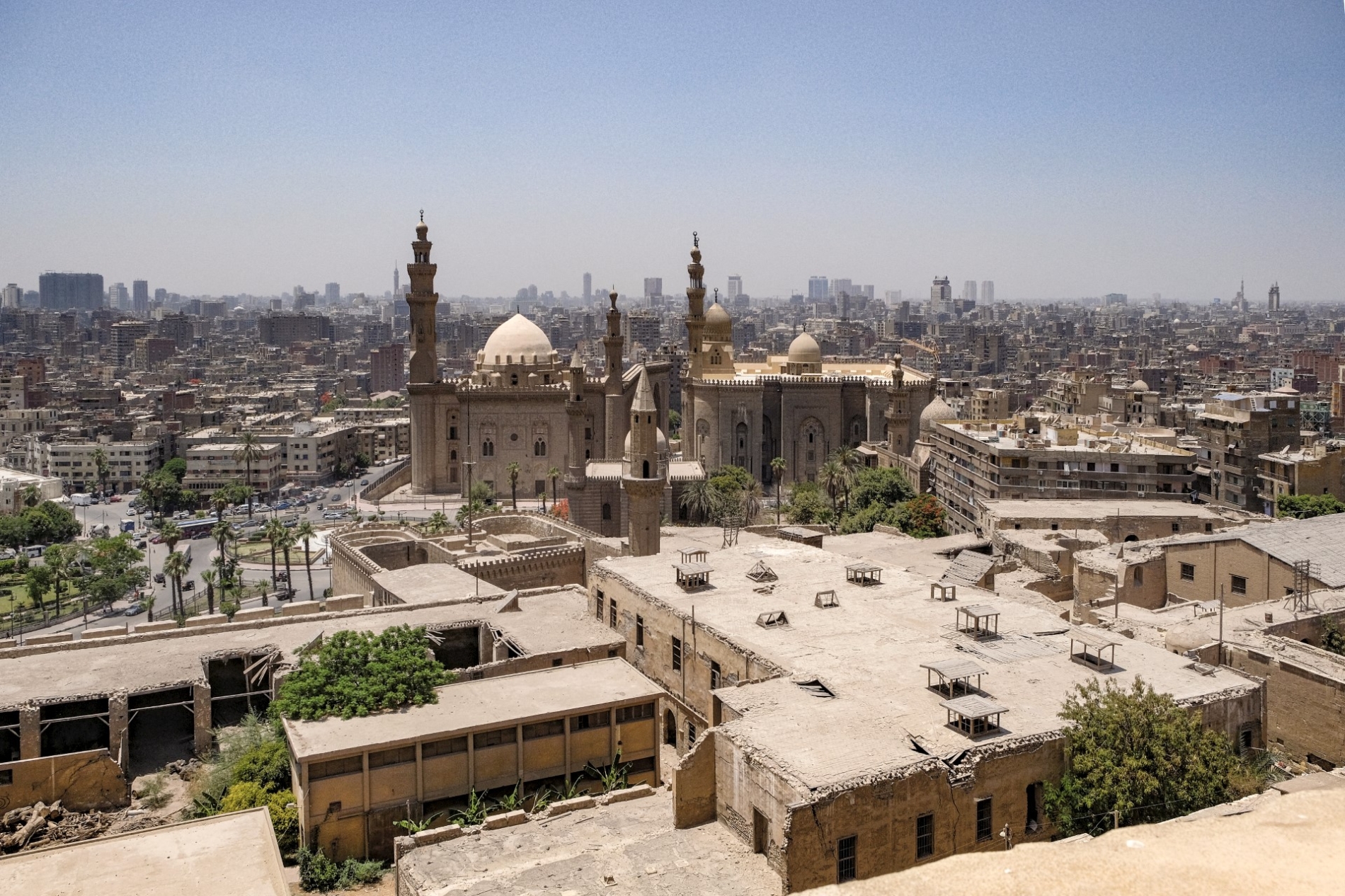
A view from the Cairo Citadel showing the Sultan Hassan Mosque and Madrasa and the Al-Rifai Mosque, 2021.

The origins of Mamluk court women were as varied as those of the men. Some came from noble and distinguished families, such as the daughter of the judge al-Barizi or the two daughters of Ibn Khassbak. Others were former concubines who won exceptional favour with their masters, were freed, and then married by sultans, as happened with Shukr Bay al-Ahmadiyya. Their personalities also differed. Some received a refined education in the arts of politics and manoeuvre, learning how to survive within the circles of power, while others were known for asceticism and deep piety. Each left a distinct imprint on the history of the Citadel.

Notable arrivals

Among the best-known wives of the Circassian Mamluk sultans to set out for the Hajj was Khawand Mughul bint al-Barizi, the wife of Sultan al-Zahir Jaqmaq and the daughter of a prominent Shafii judge. Her name became linked to the pilgrimage of 851 AH. Yet her life was not free of family turmoil, ending in divorce after accusations connected to sorcery. Even so, she retained a place in Egyptian popular memory and became known as a patron of good works, credited with building the Mosque of Shaykh Sidi Madyan Al-Ashmuni.

During her first pilgrimage, Sharif Barakat, the ruler of Mecca, received her with exceptional deference, dismounting from his horse and walking before her litter in recognition of her rank. The sincerity of her devotion also stood out: after her power had waned, she continued to visit the Ancient House (the Kaaba), choosing to leave with the caravan in Rajab in pursuit of a long sojourn within the precincts of the sanctuary.

Khawand Zaynab bint Badr al-Din Ibn Khassbak, the wife of Sultan al-Ashraf Inal, emerges as a model of iron will, wielding sweeping financial and political influence over the sultan and the affairs of the realm during her journey in 861 AH. Historical works describe her procession as being led by camels adorned with golden saddles and draped in yellow brocade.

When she completed the rites and returned to her seat at the Citadel of the Mountain, she was escorted in a singular royal ceremony, with the insignia of the sultanate held aloft above her head and silk laid beneath her feet. The occasion was further marked by lavish gifts, including a saddle inlaid with precious peridot. The historian al-Sakhawi described Khawand Zaynab as enjoying absolute obedience from her husband, Sultan Inal, to the point that he would settle nothing without consulting her. She was his partner in the gifts and monies that reached the court, and she also built houses and ribats dedicated to widows.

As for Khawand Shukr Bay al-Ahmadiyya, a freed concubine who later became the wife of Sultan al-Zahir Khushqadam and performed the Hajj in 868 AH, she was known for her asceticism and her deep attachment to the Ahmadiyya Sufi path. Her renunciation was such that she asked for her bier to be covered with a patched dervish garment rather than the finest textiles.

The Hajj caravans of the sultans' wives were intentionally extravagant, meant to reflect the wealth and power of the ruling house

Followers of the order walked in her funeral procession carrying their red banners, a scene that reflected her humility and closeness to ordinary people. Her Hajj journey, however, was profoundly majestic. Her grandson took charge of the mahmal caravan, and leading figures of society travelled with her, including senior judges and amirs, underscoring the cohesion of the ruling household and the depth of its prestige.

Reflecting fortune

Khawand Fatima bint Ala al-Din Ibn Khassbak, the wife of Sultan al-Ashraf Qaitbay, embodied wealth and high social standing. She retained the title Sitt al-Qaa (the lady of the main hall) for nearly three decades and performed the Hajj in 879 AH with a procession that reflected her immense fortune. In Cairo's popular memory, she endured as a generous woman.

On her return from the Hajj, she distributed sweets and alms in gold and silver to ordinary people. Her journey fused the spirituality of faith with the beauty of art. She took with her in the caravan the finest chanters and the most eloquent preachers, and travelled in a procession that included 50 camels adorned with colours and velvet, while her litter glittered with rubies and pearls.

Khawand Umm Sidi Muhammad, the wife of Sultan al-Ashraf Qansuh al-Ghuri, was known by a title drawn from her son's name, Nasir al-Din Muhammad, during her pilgrimage in 920 AH. Her procession was legendary for its extravagance. It was said that she travelled with dining vessels made of crystal, Chinese porcelain, and lapis lazuli, while the horses in her train were armoured in steel in a display of military force.

She was accompanied by an army of concubines and women, requiring the provision of 1,000 mounts to carry them. Yet despite the splendour of her litter, embroidered with gold thread, street poets in Cairo mocked her for returning from the Hajj in secret at night without distributing alms.

Historical sources also record the names of other women who formed part of the social and political fabric of the ruling household, such as Khawand Nafisa bint Dhi al-Ghadr, who joined Khawand Mughul on her journey, and Khawand Surbay al-Jarkasiyya, whose standing rose until she became the Khawand al-Kubra of Sultan Khushqadam.

The circle widens further to include princesses of non-Arab origin, such as Shahzada bint Uthman, the daughter of the Ottoman sultan, as well as the daughters of the khawands, including Khadija, the daughter of Sultan Jaqmaq; Badriyya and Fatima, the daughters of Sultan Inal; and Khatun, the daughter of Shukr Bay. Together, this paints a fuller picture of the complex roles and family ties that surrounded the seat of power in the Mamluk era.

Charity and development

Historical studies by Dr Doris Behrens-Abouseif and Professor Amalia Levanoni indicate that the pilgrimage of women from the sultanic court in the Mamluk period was not confined to ceremonial display; it extended into a wide charitable and developmental role. Elite women, such as Khawand Baraka and Asalbay, established architectural foundations in Mecca and Medina, including madrasas and sabils, and distributed abundant alms known as the sultanic purse.

This strong female presence in Mecca and Medina directly contributed to the legitimacy of the Mamluk ruler as protector of the Two Holy Mosques. It also made the official wife's pilgrimage a formal event, recorded with precision in historical registers as an integral part of the court's social and political life.

Despite its religious and charitable character, the Hajj was sometimes used as a sharp instrument of exile under the cover of piety. It could serve to remove powerful women from the centre of decision-making in Cairo when conflicts flared. The story of Asalbay al-Jarkasiyya, consort of Sultan al-Ashraf Qaitbay and mother of Sultan an-Nasir Muhammad, offers a clear example. Although she set out to fulfil the obligation in 1508 amid displays of veneration, the journey functioned as a disguised exile, and she remained in the Hijaz until her death.

The Hajj of the khawands was therefore not merely a journey in search of spiritual tranquillity; it was a shrewd political strategy through which the Mamluk court entrenched its legitimacy and affirmed its sovereignty over the holy lands. Through those imposing processions led by palace women, the state succeeded in projecting a message of power and prestige at home and abroad, turning the Hajj obligation into a soft diplomatic instrument that strengthened the sultanate's standing as guardian of the sacred sites and patron of the welfare of the Islamic world.

The Hajj of the khawands was not just a spiritual journey; it was a shrewd political strategy through which the Mamluk court entrenched its legitimacy

Charity and development

Historical studies by Dr Doris Behrens-Abouseif and Professor Amalia Levanoni indicate that the pilgrimage of women from the sultanic court in the Mamluk period was not confined to ceremonial display; it extended into a wide charitable and developmental role. Elite women, such as Khawand Baraka and Asalbay, established architectural foundations in Mecca and Medina, including madrasas and sabils, and distributed abundant alms known as the sultanic purse.

This strong female presence in Mecca and Medina directly contributed to the legitimacy of the Mamluk ruler as protector of the Two Holy Mosques. It also made the official wife's pilgrimage a formal event, recorded with precision in historical registers as an integral part of the court's social and political life.

Despite its religious and charitable character, the Hajj was sometimes used as a sharp instrument of exile under the cover of piety. It could serve to remove powerful women from the centre of decision-making in Cairo when conflicts flared. The story of Asalbay al-Jarkasiyya, consort of Sultan al-Ashraf Qaitbay and mother of Sultan an-Nasir Muhammad, offers a clear example. Although she set out to fulfil the obligation in 1508 amid displays of veneration, the journey functioned as a disguised exile, and she remained in the Hijaz until her death.

The Hajj of the khawands was therefore not merely a journey in search of spiritual tranquillity; it was a shrewd political strategy through which the Mamluk court entrenched its legitimacy and affirmed its sovereignty over the holy lands. Through those imposing processions led by palace women, the state projected a message of power and prestige at home and abroad, turning the Hajj obligation into a soft-power tool that strengthened the sultanate's standing as guardian of the sacred sites and patron of the welfare of the Islamic world.

font change