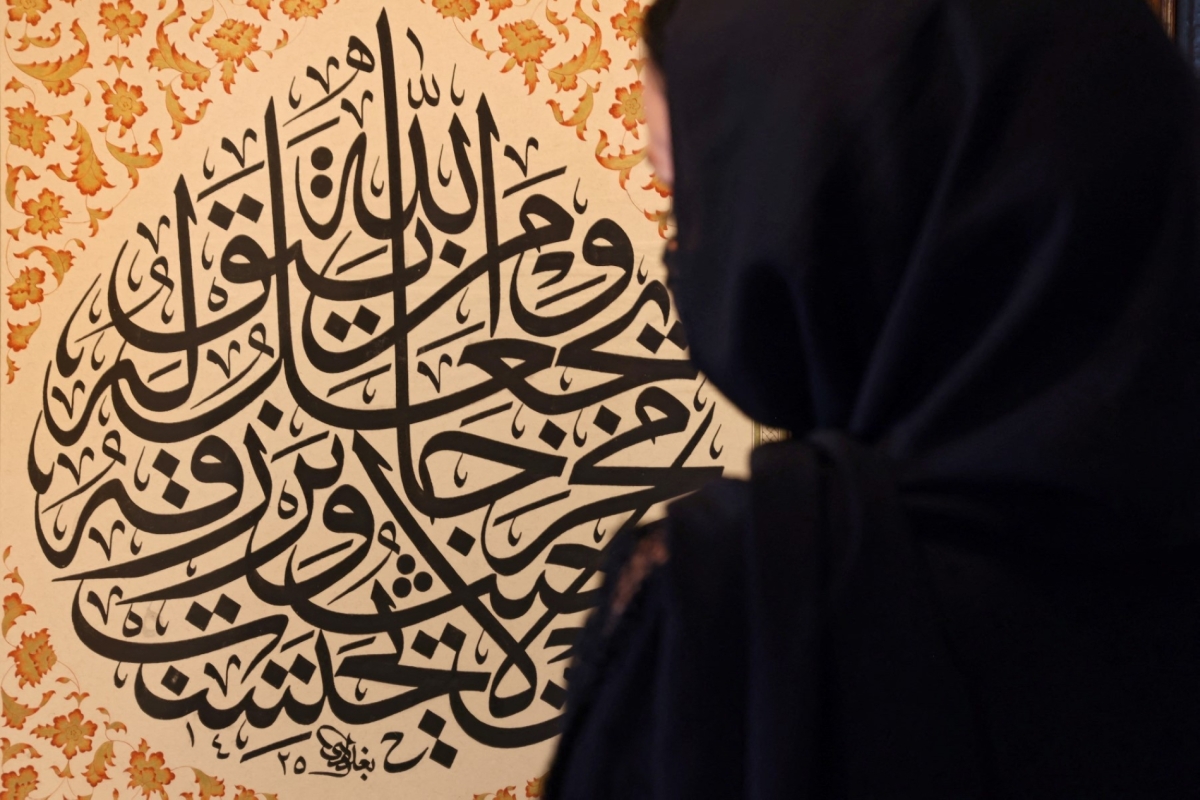

Standing before the archaeological remains of the Nabataean kingdom, with the vast rock-cut façades of AlUla and Mada’in Salih carved into the mountains, it is difficult not to feel in the presence of an astonishing civilisation.
Yet the ancient kingdom, which stretched from Petra in Jordan to north-west Saudi Arabia, conceals a deeper and more consequential story for scholars of Arabic. It is here, among the rocks and inscriptions of Petra and Mada’in Salih (Hegra), that one of the greatest cultural transformations in Arab history took place: the birth of Arabic script.
What is the connection between the Nabataeans, a semi-nomadic Arab people who inhabited northern Arabia, the southern Levant, and the Sinai Peninsula from around the 4th century BCE, and the birth of a script that would enshrine the word of God, help preserve human knowledge and understanding, and become an instrument of both art and beauty? The answer lies in a time before the Nabataeans themselves, in the remote origins of alphabetic writing.
The Phoenician alphabet, which emerged on the eastern coast of the Mediterranean in the first millennium BCE, represents the founding moment from which most Semitic alphabets descend. The Phoenicians simplified writing by reducing the sound system to a limited set of symbols, making it far more adaptable and easier to transmit. From this alphabet emerged Aramaic, which would become the language of administration and culture in the eastern empires.
Aramaic was distinguished by its flexibility and adaptability. Although the Nabataeans were Arabs in origin and language, and Arabic was used in their daily lives, they initially wrote in the Aramaic alphabet, particularly in administration and official inscriptions. Yet despite its broad diffusion, the Aramaic script retained a degree of formal rigidity. Its letters remained relatively separate and preserved their geometric structure. Among the Nabataeans, however, this began to change gradually.
Loosened letterforms
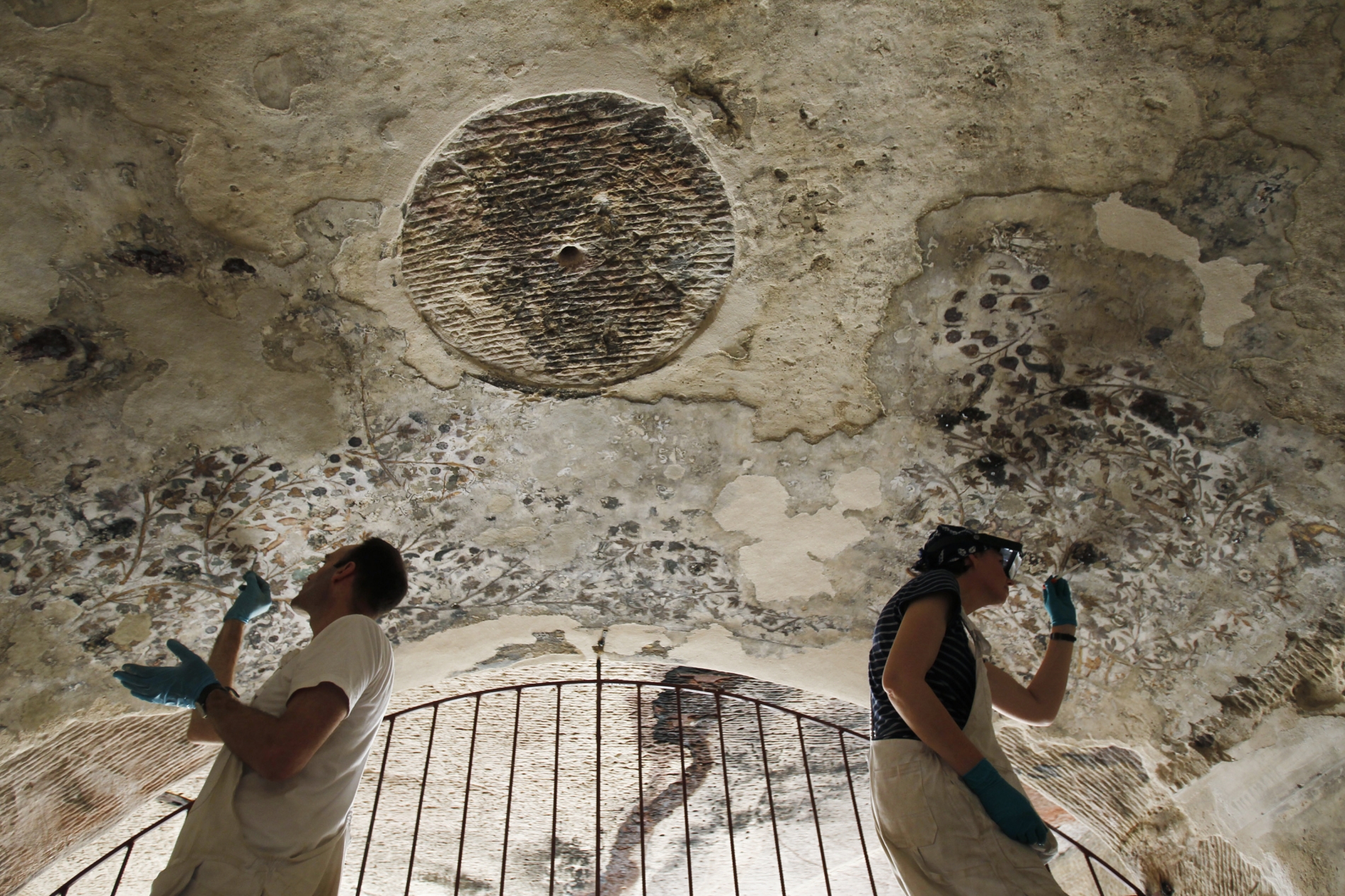
The emergence of the Nabataean script, as revealed by inscriptions stretching from Petra to Hegra, marks a gradual loosening of letterforms. The sharp angles softened, connections increased, and writing became more fluid, shaped by the demands of everyday use in a vibrant commercial and cultural world.
The Nabataeans did not invent Arabic script, but they created the conditions that made its emergence possible. They carried writing from its imperial Aramaic phase into a living local form, one capable of adapting to Arabic as a spoken language. In their inscriptions, the first seeds of the connection between letters and the flowing movement that would later become a defining feature of Arabic script can be discerned.
Archaeological evidence supports this theory. Early Nabataean inscriptions from Umm al-Jimal in northern Jordan, together with the Namara inscription in southern Syria, dated to around AD 328, and later early Arabic inscriptions from the Hejaz, illustrate a gradual transition from late Nabataean script toward Arabic script. In 2014, a joint Saudi-French archaeological team discovered what is believed to be one of the oldest known inscriptions in early Arabic script.

Dated to around 469 to 470 CE and found north of Najran, Saudi Arabia, it is written in a mixed Nabataean-Arabic script. It is only with the Zuhayr inscription at Mada’in Salih, dated to 644 CE, that we encounter an early Arabic script in a more recognisable and standardised form.
The German orientalist Beatrice Gruendler, in her book The Development of the Arabic Scripts: From the Nabataean Era to the First Islamic Century, notes that most of the essential features of Arabic script can be traced back to Nabataea. Although Nabataean commemorative inscriptions maintained a strict formal character, the script used in daily life was more flexible and more open to rapid change, and stood closer in form to Arabic.
Evolving script
After the decline of the Nabataean kingdom in 106 CE and the disappearance of central authority, the script appears to have spread more widely among Arab scribes. This gradually adapted the script to Arabic, paving the way for the emergence of the Arabic alphabet in its early form—one that would, in time, give rise to the script in which the Koran was first recorded. As the historian Jawad Ali notes, a number of inscriptions discovered by travellers were "written in a dialect not far removed from the Arabic dialect in which the Koran was revealed, in connected letters, and in the late Nabataean hand, which closely resembles the earliest Arabic scripts, especially Kufic".
Arab communities from Mesopotamia to the Hejaz inherited this transformed script. Early Arabic writing, often called Jazm, developed out of late Nabataean and gave rise to a range of regional styles, including Hiri, Anbari, Makki, and Madani. Hejazi scripts were used in some of the earliest Koranic manuscripts, but it was with the emergence of Kufic (from Kufa in Iraq) as a dominant calligraphic style in the late 7th and early 8th centuries that Arabic writing assumed a more formalised and enduring visual identity.
The Koran's key role
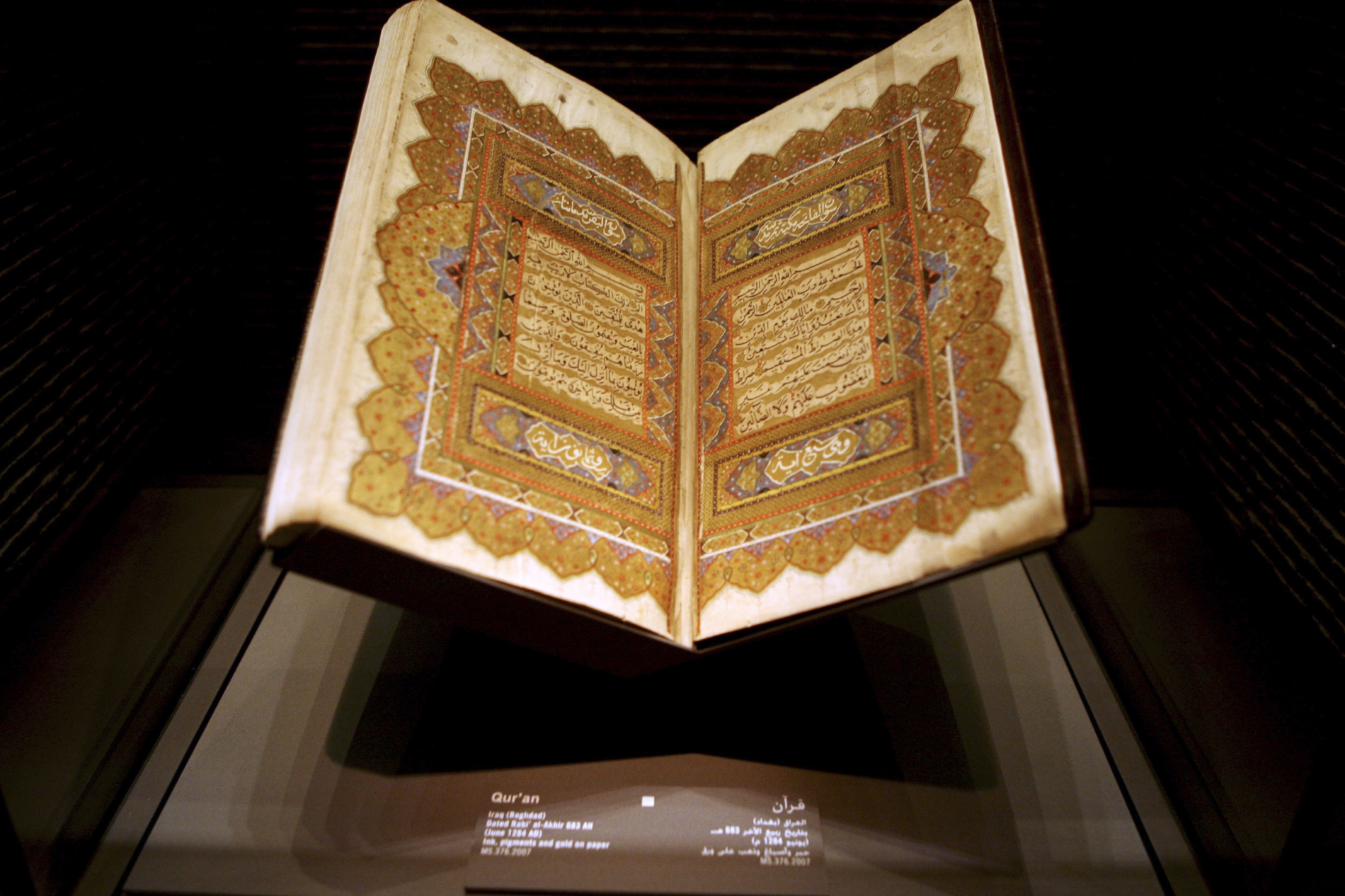
The revelation of the Koranic marked a major turning point in the history of Arabic script. As both Islam and Arabic spread across North Africa and into what is today Spain and Portugal, the importance of the written word intensified, leading to a need for an authoritative script that balanced aesthetics and readability.
Early forms of Kufic lacked the diacritical dots that later distinguished letters, as well as the vowel marks used to indicate correct pronunciation. These features were gradually introduced in the second half of the 7th century through systems of consonant differentiation (ijam) and vowel marking (tashkil).
There were, however, few fixed rules attached to the use of calligraphic styles such as Kufic, leading to widely differing versions of each script. It was not until Abu Ali Muhammad Ibn Ali Ibn Muqla codified the principles of calligraphy in the 10th century that six scripts (al-aqlam al-sitta)—naskh, muhaqqaq, rayhani, thuluth, riqa, and tawqi—were standardised through principles of proportion. This codification would be refined over the centuries, elevating Arabic to a visual art of remarkable complexity, adorning mosques, Koranic manuscripts, and architecture, while giving it an aesthetic dimension that few other writing systems have known.