Farasan, the literature of the sea, and the poetics of placehttps://en.majalla.com/node/330612/culture-social-affairs/farasan-literature-sea-and-poetics-place
Farasan, the literature of the sea, and the poetics of place
In these pristine Saudi islands, a generation of writers has drawn on life by the sea to produce a body of work shaped by memory, identity, and rapid change
Lina Jaradat
Farasan, the literature of the sea, and the poetics of place
The 1,300 or so islands scattered across the waters and along the coast of Saudi Arabia are far more than small pieces of land encircled by the sea. They are self-contained worlds that bear a profound cultural, human, and historical legacy. These environments have endured salt and drought, shaping distinctive ways of life for their inhabitants, preserving customs and traditions, and giving rise to stories and legends woven from the lives of fishermen, sailors, and their families.
From the Red Sea and the Gulf of Aqaba, where the vast majority of these islands lie, to the Arabian Gulf, their significance resides not only in geographic remoteness but also in symbolic fluidity—a space that holds both separation and connection, distance from the world and deep immersion in it.
If the term ‘island literature’ is indeed valid, it is not because it describes a mode confined to a particular geography, but because it evokes a human current that crosses cultures and raises larger questions of selfhood, identity, freedom, and destiny. Perhaps that is why so many enduring works of literature have drawn on islands or the idea of solitude.
Below, we look at some of the greatest writers associated with the island of Farasan, off the southwest coast of Saudi Arabia.
Ibrahim Abdullah Miftah
Born on Farasan in 1940, where he still resides, Ibrahim Abdullah Miftah is widely regarded as one of Saudi Arabia’s foremost men of letters. A poet, novelist, and writer of sharp contemplative vision, he presents the sea in his work not merely as a geographical presence, but as an entire identity.
In Miftah’s writing, the sea is mother, memory, and longing. It is the open wound at the heart of the poem. In both verse and prose, his work gives voice to yearning and loss, as well as to the transformations of place, from close-knit, inward-looking communities to environments confronting modernity and change. His literature also carries a broad national and human resonance.
Some of his novels preserve heritage and tradition, while others draw on myth and are marked by a self-contained inwardness. He carries within him a memory steeped in stories of fishermen who braved the dangers of the sea, preserving the history and heritage of Farasan through a deep attachment to place, names, and events. Among his most notable poetry collections are Reproach to the Sea, The Reddening of Silence, and The Scent of Soil. He has also written books of local history and ethnography, as well as novels such as Al Sanjar and Umm Al Subyan.
In Miftah's writing, the sea is mother, memory, and longing. It is the open wound at the heart of the poem
Abkar Omar Al-Mashra'i
The poet and playwright Abkar Omar Al-Mashra'i was also born on Farasan in 1940 and is regarded as one of the pioneers of school theatre in the Jazan region. He began writing poetry in primary school and went on to work as a visual artist, under whose guidance many of Jazan's artists were trained.
Through his work, his richly varied voice combined cultural documentation with literary innovation. In theatre, he added a performative dimension to the literature of the islands, establishing initiatives that helped embed a culture of creativity in small and remote communities.
In his poetry and visual art alike, he drew upon the sea and rocks as symbols of tension between permanence and change, between rootedness and aspiration. His plays, meanwhile, were never mere performances, but intellectual dialogues between people and memory, nature and society, the past and expectation, death and drowning.
Ali Mohammed Sayqal
Through his writings, the poet Ali Mohammed Sayqal succeeded in recasting everyday island life within a profound poetic frame that reached beyond geographical boundaries into existential and philosophical reflection. His poetry, varied in language and emotional register, is marked by stark realism and vivid imagery, through which he traces the psychological and social transformations experienced by island communities.
After the two met during the filming of a television programme on Farasan, Sayqal's celebrated poem A Mark upon My Forearm, an Engraving upon My Body was set to music by the Saudi singer Mohammed Omar.
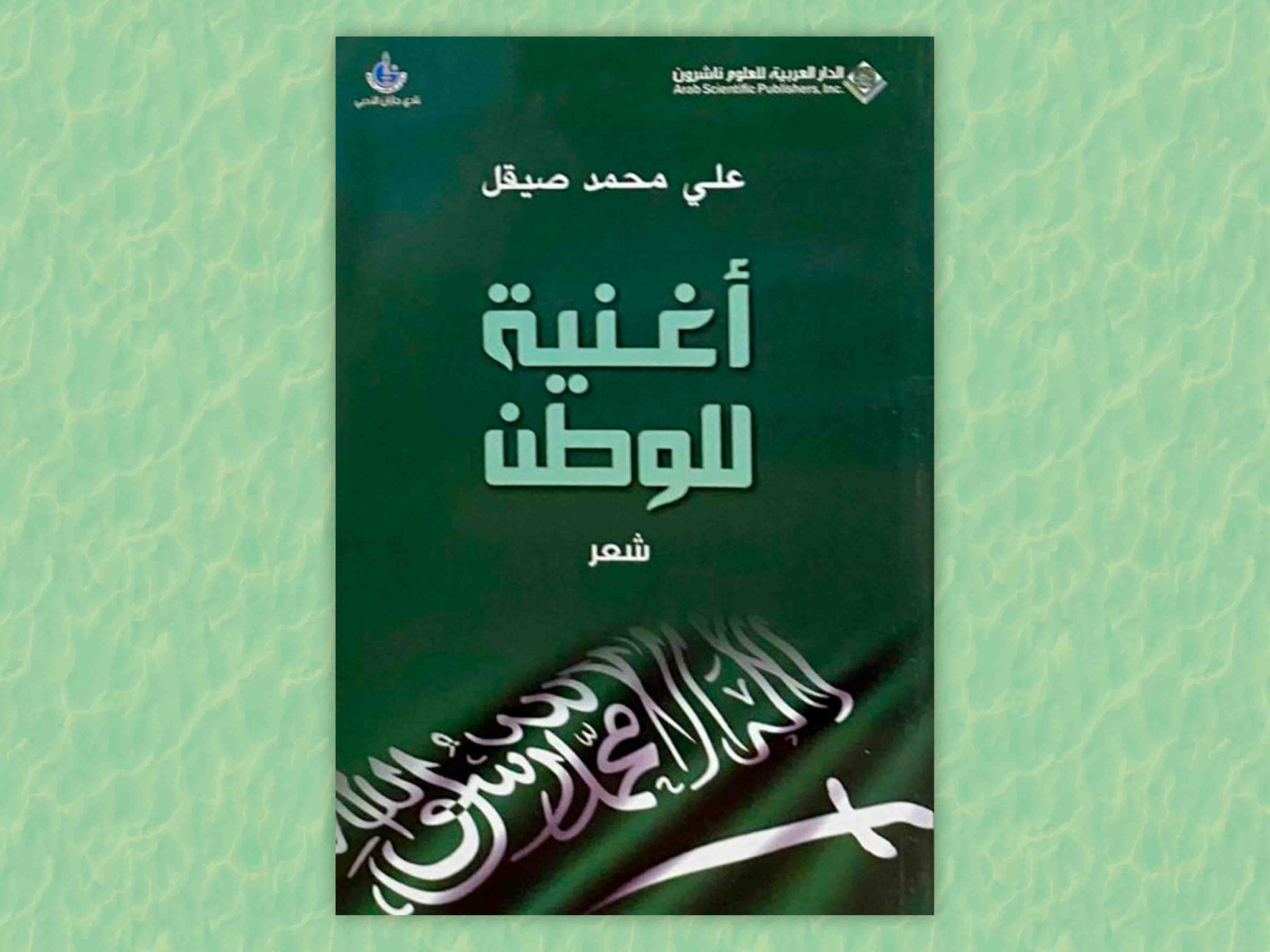
The late poet did not treat the sea as a mere backdrop. He made it a living presence that intervenes in human destinies—speaking, withdrawing, and rising in revolt. In his two collections, Hymns on the Shore and A Song for the Homeland, questions of identity, belonging, and estrangement emerge as the self's journey confronts inheritance and renewal. The poet died in 2022, but his celebrated poem survived him.
Ahmed Ibrahim Youssef
The author and short story writer, Ahmed Ibrahim Youssef, was born in Farasan in 1954 and is regarded as the spiritual father of the Farasani short story. Miftah once said of him: "I am deeply fond of this man; it is enough that he was the one who set me on the path to writing short stories and novels."
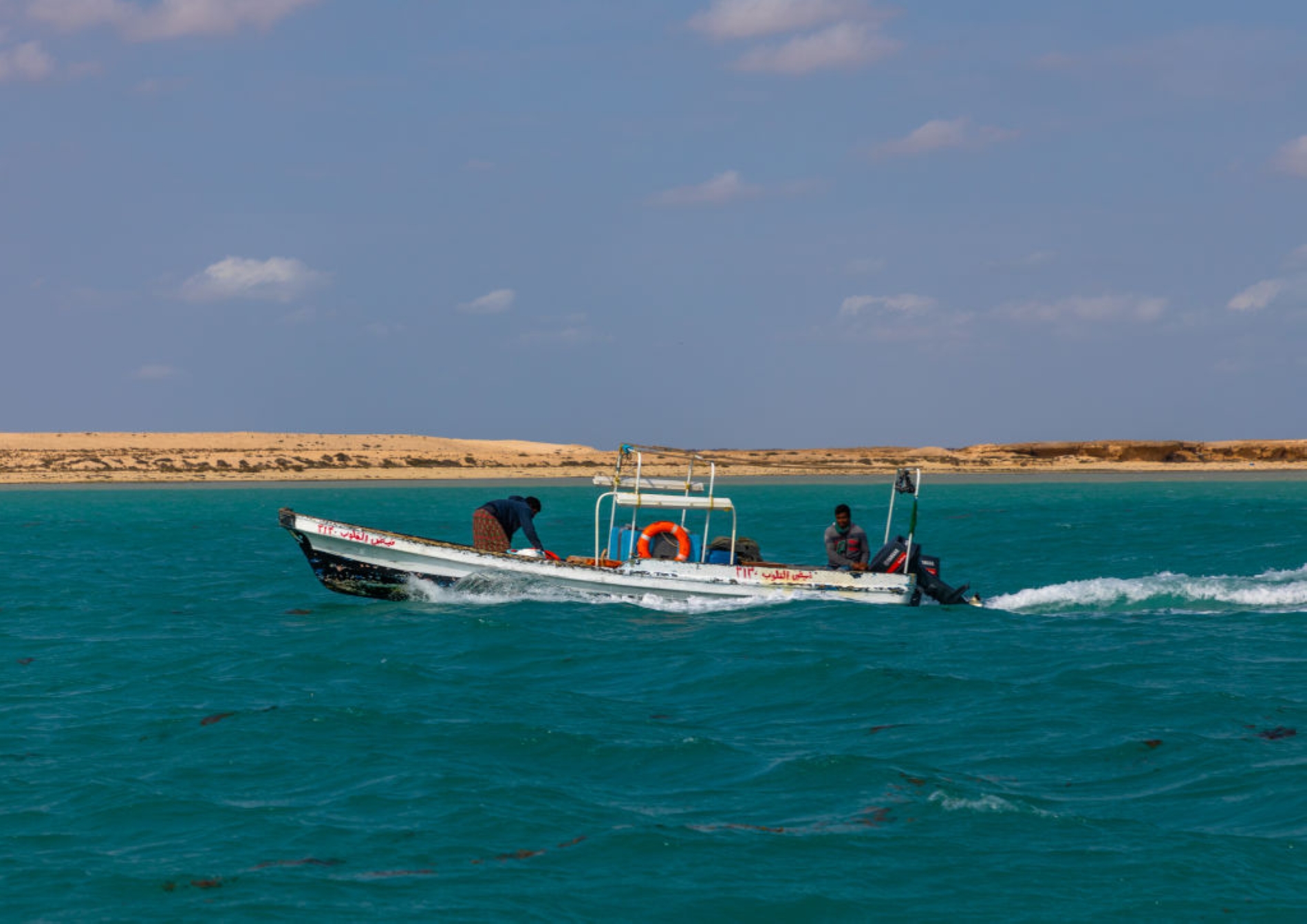
Fishermen boat in the Red sea, Jazan Province, Farasan, Saudi Arabia on 4 January 2022 in Farasan, Saudi Arabia.
He began writing while a student and later worked as a BBC correspondent before joining Jeddah Radio and writing for a number of newspapers and magazines. His short story collections include Tongues of the Sea, whose varied themes draw on the realities of life on Farasan and are rendered in a lucid style that allows generations shaped by the sea and the islands to recognise their worlds.
Among his other notable works are the short story Al-Mughawi, in which he turned to the mythical inheritance handed down through oral tradition. A Farasani legend akin to the great myths, Al-Mughawi brings together the elements of storytelling, realms of darkness, and the effects of obscurity upon a sea shadowed at its very core.
In Al-Mughawi he wrote: "We felt our way back to Al-Mawnasah through a stretch of darkness spread before our eyes, black immensities through which we moved without direction. Whenever a light flickered in the distance, a rush of hope passed through us, and we took a few steps forward. Sometimes the light came from our right, at other times from our left. It kept flickering, and hope kept stirring within us. Guided by it, we pressed on until our feet grew weary, our steps faltered, and our resolve weakened."
Youssef remains devoted to his fictional world, fashioning from the sea a transparent crutch on which he leans whenever he wishes it to carry him back to the mainland.
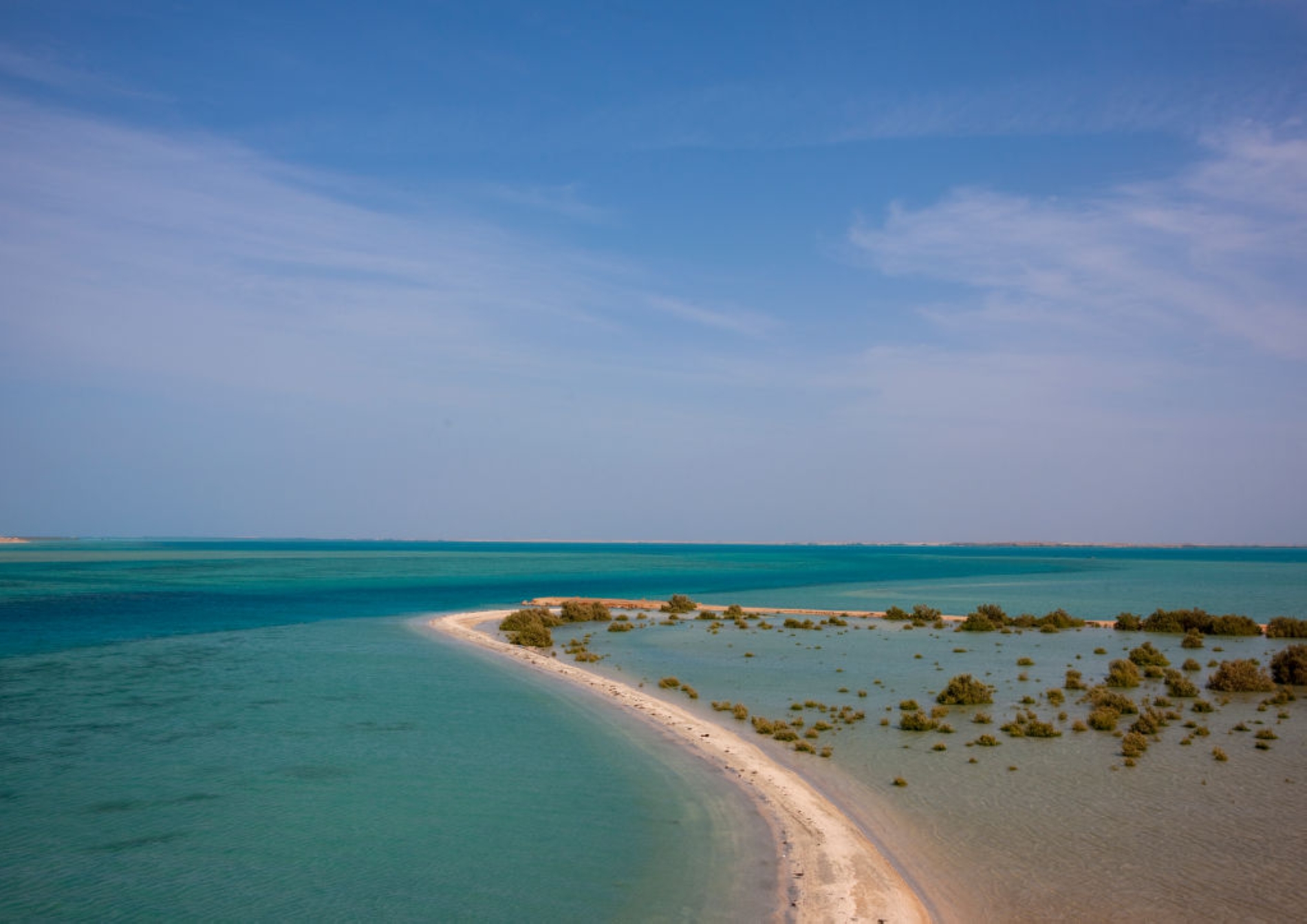
Beach on the red sea, Red Sea, Farasan, Saudi Arabia on 14 January 2010 in Farasan, Saudi Arabia.
Hussein Suhail
One of the most prominent poets of Farasan, and of Saudi Arabia more broadly, Hussein Suhail is among those who consciously wove together popular maritime heritage and poetic modernity.
His poetry was never merely an expression of a local environment. It was a human cry, carrying within it the full vocabulary of place: the scent of the sea, the sound of oars, the sighs of mothers, and the legend of the missing fisherman.
He used a language that flowed like the tide itself, shaped by the sea's cadence, the bewilderment of waiting, and the loneliness of distance. His poems turned the daily life of the island and its surrounding isles into enduring stories, offering a complete image of existence in these remote environments, where poetry becomes a means of understanding the self, history, and place—an oar moving through the depths of feeling to draw out its most beautiful expressions.
Four poetry collections were published during his lifetime: The Sails of Silence, The Moons Have a Door, Kasarat Farasaniyya (Farasani Fragments), and The Memory of Twilight. He also published Farasani Proverbs, a volume that gathered more than 3,300 sayings current in the history of the Farasan islands.
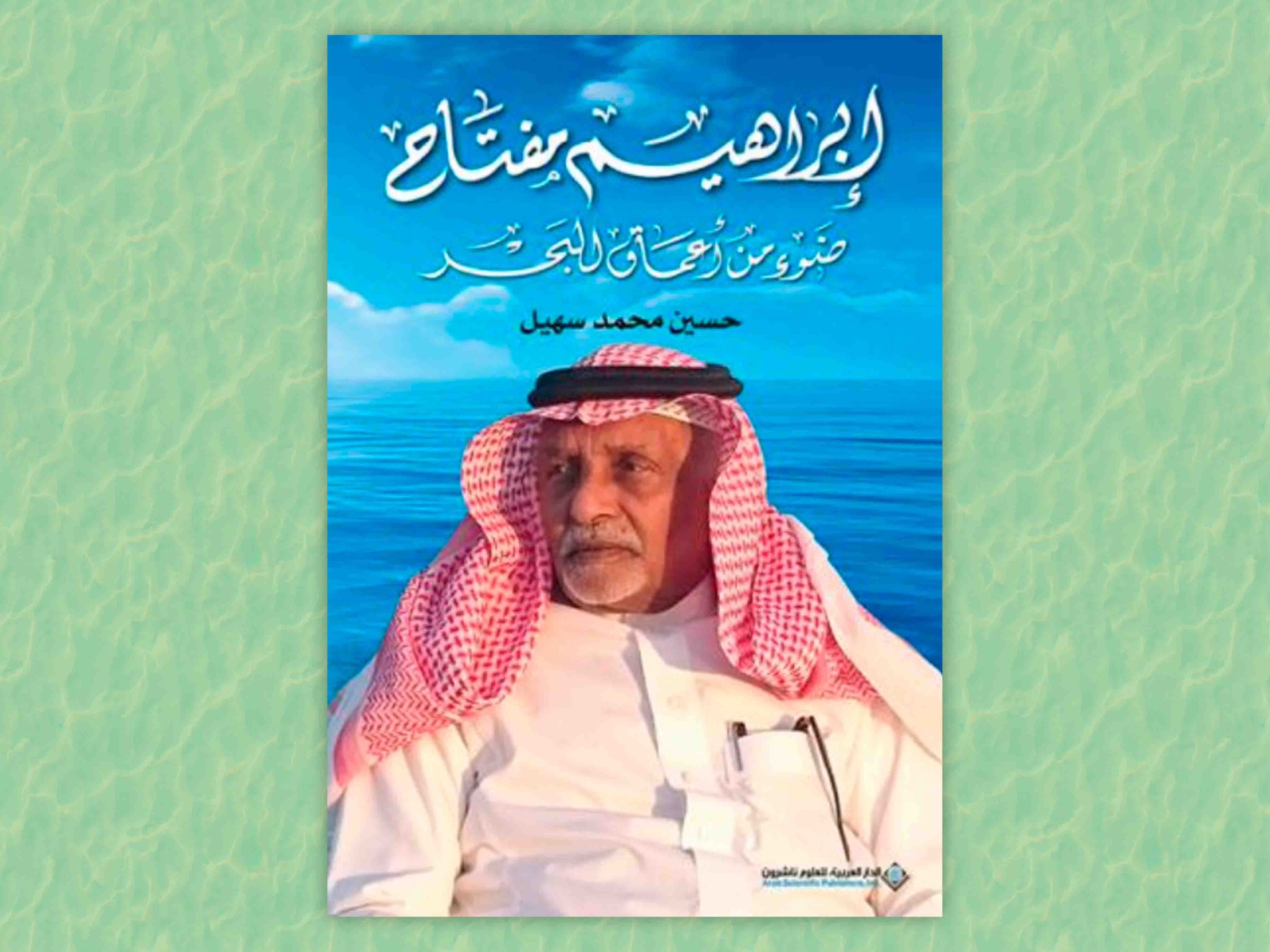
Several years after his death, his final book, Ibrahim Miftah: A Light from the Depths of the Sea, appeared as though sent from another world—a testament of love and fidelity, not meant to be read until after his passing.
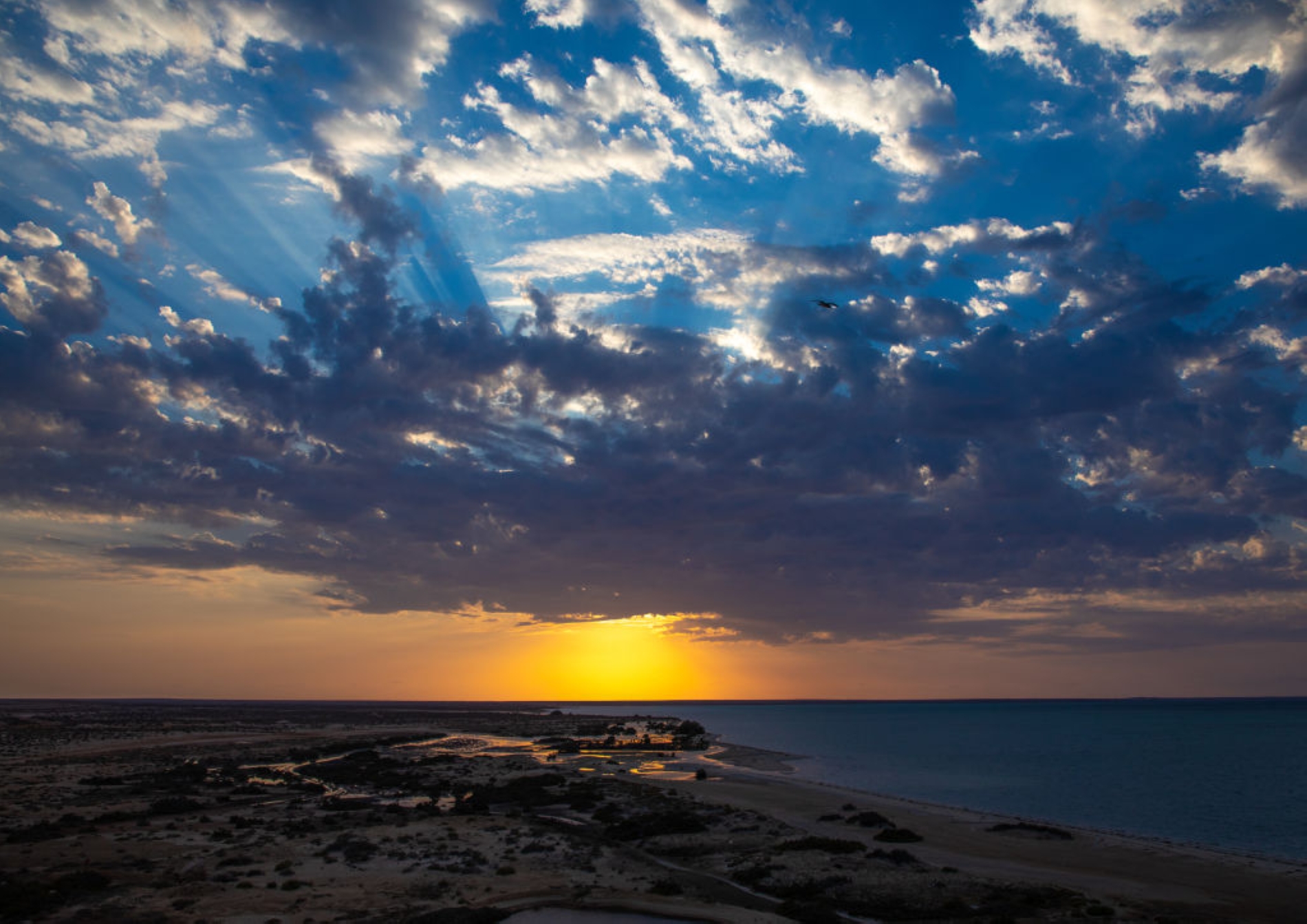
Sunset on the island, Jazan Province, Farasan, Saudi Arabia, on 4 January 2022, in Farasan, Saudi Arabia.
Abdulmohsen Yusuf
Born in 1962, Abdulmohsen Yusuf, like other Farasanis, came into the world to the sound of the waves and their stories. From his earliest school years, he formed a deep attachment to books. At that time, there was no public library on the Farasan islands, and his only source of intellectual nourishment lay in his teachers.
Among them was Miftah, who taught Arabic and devoted composition classes to reading aloud from world literature, before asking his pupils to recount the stories orally and rewrite them in their own style.
The poet grew up on the island he loved, completed his education there, and later earned a bachelor's degree in media studies. During his career, he served as managing editor of the Saudi newspaper Okaz. Among his published poetry collections are Your Palm Trees Are Heavy and My Hands Are Empty, Something Like Modest Hopes, and A Lazy Rain at the Door. In all that he wrote, Yusuf remained bound to the sea.
This legacy of Farasani literature has been inherited by a new generation of islanders, among them the poet Wafi Sawahili, whose language combines simplicity with depth. In some of his poems, the sea symbolises freedom and turbulence, while others record island life and the struggles with identity and belonging in an age of speed and modernity. Others include the poet Abdullah Ibrahim Miftah, the poet and novelist Ali Kaaki, whose writing seeks to employ oral heritage and popular folklore in a contemporary form, and the Farasani novelist Miqat Al Rajhi, a notable creative voice in Saudi literature.