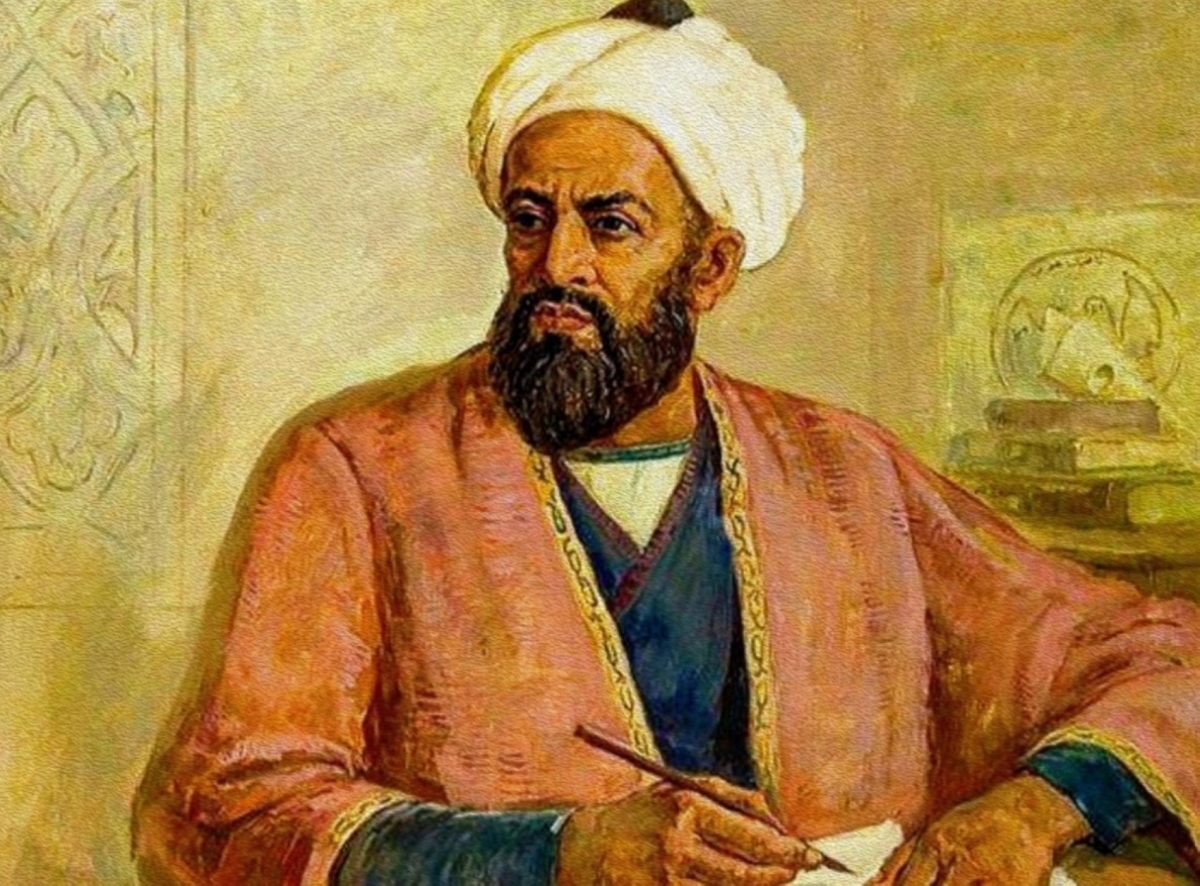

Last December, the former president of Cairo University, Mohamed Othman Elkhosht, caused controversy when he revived the debate over the Persian scholar and polymath Abu Hamid al-Ghazali. What was so eyebrow-raising? Elkhosht described al-Ghazali as the embodiment of the “abdication of reason” in Islamic civilisation, holding him responsible for the decline of science and philosophy among Muslims.
That view recalls a famous passage by the American astrophysicist Neil deGrasse Tyson, who spoke admiringly of the golden age of Islamic civilisation and of the remarkable achievements of Arabs in the sciences. The reach of their learning, he said, extended to the heavens themselves. Stars in the sky bore Arabic names. Scholars of that age drew no distinction between Arabs and non-Arabs, Muslims, Christians, or Jews. All contributed to one of the greatest scientific movements in history.
What happened afterwards? How did that civilisation retreat after such brilliance and scientific distinction? Tyson explains what he calls the “collapse of Islamic civilisation”. In the 12th century, he says, something occurred that upset the balance: the religious scholar Abu Hamid al-Ghazali outlawed mathematics and philosophy, associated them with the devil, and declared philosophy a source of evil. Islamic civilisation subsequently collapsed and never recovered.
With this direct and simplified explanation, Tyson reduces the decline of Islamic civilisation to the stance of a single man. Of course, that view did not originate with Tyson, nor is it the product of his own reflections. It is a common notion in modern cultural writing that Imam Abu Hamid al-Ghazali marked the moment when the ‘gate of reason’ was shut in Islamic civilisation, and that his book, The Incoherence of the Philosophers, amounted to a declaration of the decline of philosophy and science.
Too simple by half
The idea is seductive because it is simple and offers a ready-made explanation for an exceedingly complex historical trajectory. Yet the idea is neither rooted in inherited Islamic tradition nor born of classical internal debates within Islamic thought. It took shape in a modern Orientalist context, alongside attempts to explain Europe’s scientific ascent and its emancipation from ecclesiastical authority through the construction of a stark dualism between a ‘rational West’ and a ‘dogmatic religious East’.
In that framework, decline and progress appeared to be explainable through a single conflict between reason and transmitted authority. Within this context, the French Orientalist Ernest Renan cast al-Ghazali as the symbol of theology’s triumph over reason, linking his critique of causality to the collapse of scientific thought in Islam. For Franco-German Orientalist Salomon Munk, al-Ghazali “dealt philosophy a fatal blow from which it never recovered in the East”.
In the Orientalist imagination, al-Ghazali was therefore transformed into the figure summoned to explain the entirety of the East’s backwardness. More troubling still, this reading gradually seeped into modern Arab discourse and came to be seen as the truth. Al-Ghazali, as Zaki Mubarak wrote in his book Ethics According to Al-Ghazali, “studied philosophy with ill intent, probing its depths only in order to spread its defects throughout the world”.
He goes further, writing: “Al-Ghazali cast philosophy into the fire of estrangement. It had been the source of his intellectual sharpness and the means by which his fame spread, yet he thereafter made it contemptible in the eyes of the common people and enabled the ignorant to belittle the wise. Nor was his excommunication of Ibn Sina and al-Farabi a trivial matter. That deed may indeed be counted the seed of those detestable traditions from which free thinkers across the Islamic world have long suffered.”
The turning point
The deeper influence, however, came with Mohammed Abed al-Jabri, as put forward in his grand project, The Critique of Arab Reason. Al-Jabri divided the modes of knowledge in Islamic culture into bayān, burhān, and ‘irfān—textual exposition, demonstrative reason, and gnosis/knowledge of spiritual mysteries—and regarded the Ghazalian moment as the decisive turning point at which bayān and ‘irfān triumphed over burhān, displacing philosophical reason from the centre of civilisational activity.
When discussing The Incoherence of the Philosophers, al-Jabri borrows Munk’s famous formulation, writing: “Indeed, al-Ghazali did deal philosophy a fatal blow from which it never recovered. This is true if we consider that the philosophy of Ibn Rushd, which emerged in al-Andalus, established itself not in the abode of Islam, but rather in Christian Europe, as is well known. After al-Ghazali, rationalist philosophy did not regain its footing in the lands of Islam. This is a historical fact, and that historical reality, which imposed itself, cannot be explained without placing The Incoherence of the Philosophers at the top of the list of factors and causes.”
George Tarabishi attacks al-Jabri’s thesis. In his view, the theory of the Ghazalian fatal blow is “either a naive theory or a malicious one... Naive because it imagines that a jurist, theologian, and ideological functionary of the Seljuk state, could single-handedly bring philosophy to an end and demolish its edifice with the pickaxe of elite critique or the cudgel of popular anathematisation.
“Malicious, because the unspoken premise on which it rests is that Arab-Islamic philosophy was structurally fragile, inherently vulnerable because of its imported nature, and liable to collapse at the first blow, since it was merely planted and had no roots in the soil of Islamic civilisation.” In both cases, he says, the theory of the fatal blow “yields only one implicit conclusion: that philosophy in Islamic civilisation was an incidental phenomenon, a mere historical accident”.
For that reason, opposition to this idea also emerged from within the Orientalist current itself. The Dutch Orientalist Tjitze Jacobs De Boer rejected it outright, writing in his History of Philosophy in Islam that it is “a false claim, betraying neither knowledge of history nor understanding of the facts,” adding: “The number of teachers and students of philosophy in the East after al-Ghazali reached into the hundreds, indeed the thousands”.

In defence of al-Ghazali
Returning to al-Ghazali himself, the familiar image quickly begins to unravel. He was neither an enemy of reason nor an opponent of the demonstrative sciences, nor did he ever call for the abandonment of mathematics, medicine, or astronomy. His critique in The Incoherence of the Philosophers was directed at specific theological and metaphysical questions, not at philosophy as an intellectual enterprise in itself.
He examined 20 questions and pronounced the philosophers to be unbelievers in only three: their assertion of the eternity of the world, their denial of God’s knowledge of particulars, and their denial of bodily resurrection. In his view, these matters belonged neither to mathematical demonstration nor to empirical proof, but to the limits of reason in apprehending the unseen.