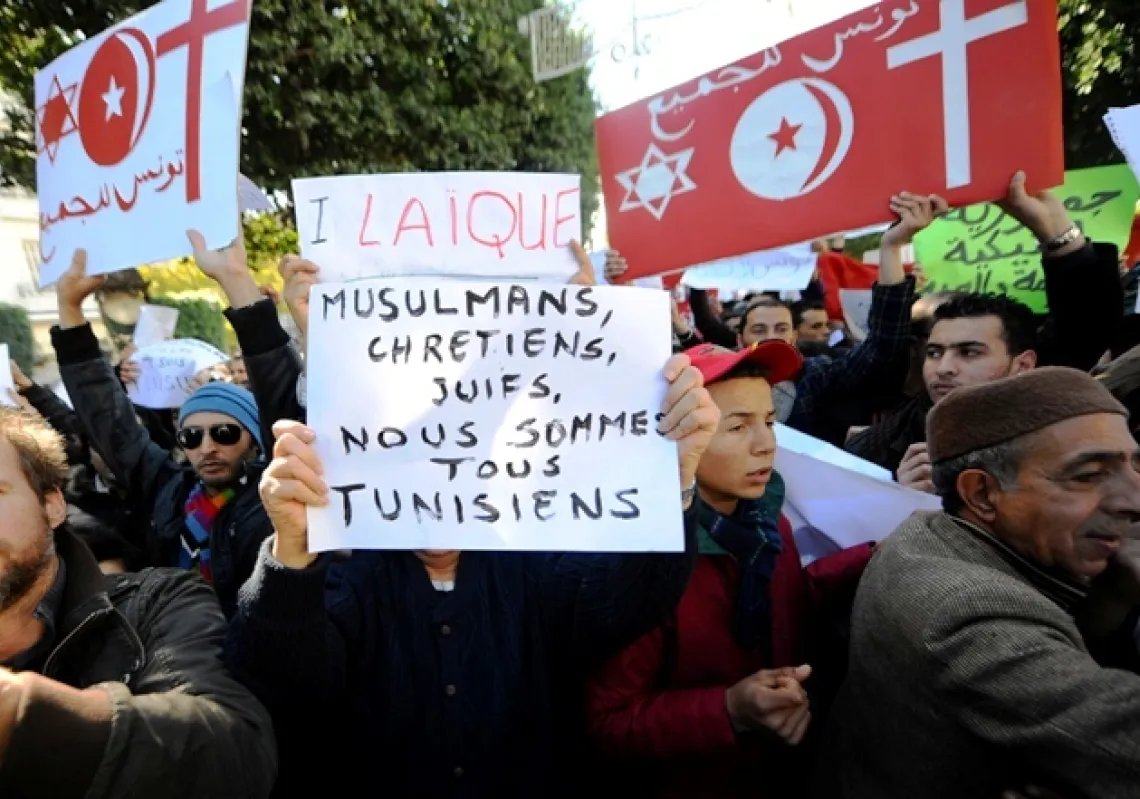

Amid intensifying debate over identity, Islam, and integration, a new book rethinks institutional Islam’s place within French society. Published at a moment when security concerns intersect with broader cultural and social questions, the book takes the form of an encyclopaedic 896-page reference work tackling the most contentious questions surrounding Islam in France—from secularism and citizenship to the headscarf, civil marriage, antisemitism, and homosexuality.
Published in February, Muslims in the West: Enduring Cultural Practice and Integrated Presence is the product of three years of dialogue involving 80 academics, historians, politicians, religious authorities, and scholars, with the Grand Mosque of Paris presented as its institutional embodiment.
In the book’s title, the phrase ‘enduring cultural practice’ carries a dual message. It suggests an attachment to Islamic law grounded in non-negotiable constants, while ‘integrated presence’ implies a readiness to reshape the representation of Muslims in public life in ways consistent with the legal and secular framework of the French state.
What is striking is that this tension between the fixed and the adaptable is not presented in the book as a retreat or a temporary compromise. It is framed instead as an exercise in juristic reasoning rooted in the higher objectives of sharia, while also incorporating contemporary concepts such as freedom, justice, human dignity, and environmental protection.
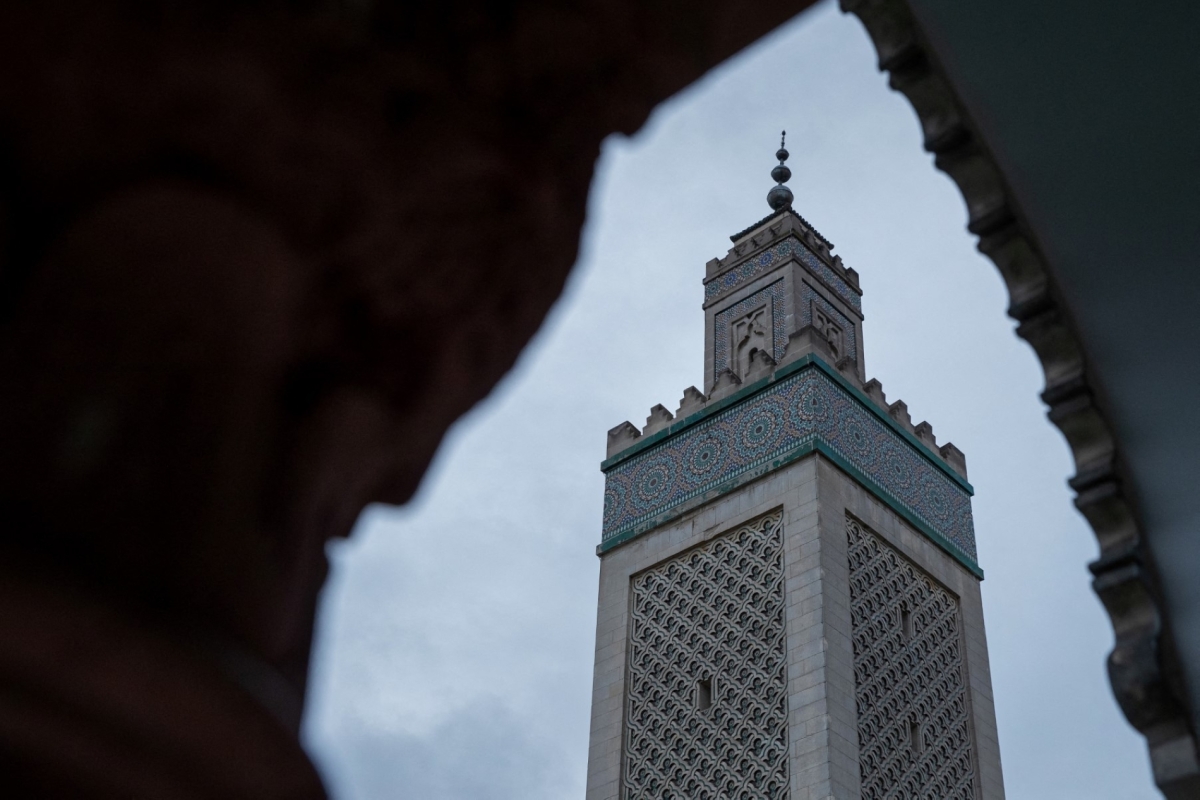
The Grand Mosque of Paris was founded in 1926 in honour of the more than 70,000 Muslims who died defending France in the First World War. Its establishment was therefore an official recognition of the contribution Muslims had made to the country’s history. Since then, the mosque has played a central role in representing Islam within the republic. It participated in the establishment of the French Council of the Muslim Faith in 2003 and the National Council of Imams project.
It also advanced a model of Islam explicitly opposed to antisemitism—a principle embodied by the mosque’s founder, Si Kaddour Benghabrit, during the Second World War, when he helped French Jews by providing forged identity papers identifying them as Muslims in order to protect them from death, thereby saving many lives.
Two sections, two audiences
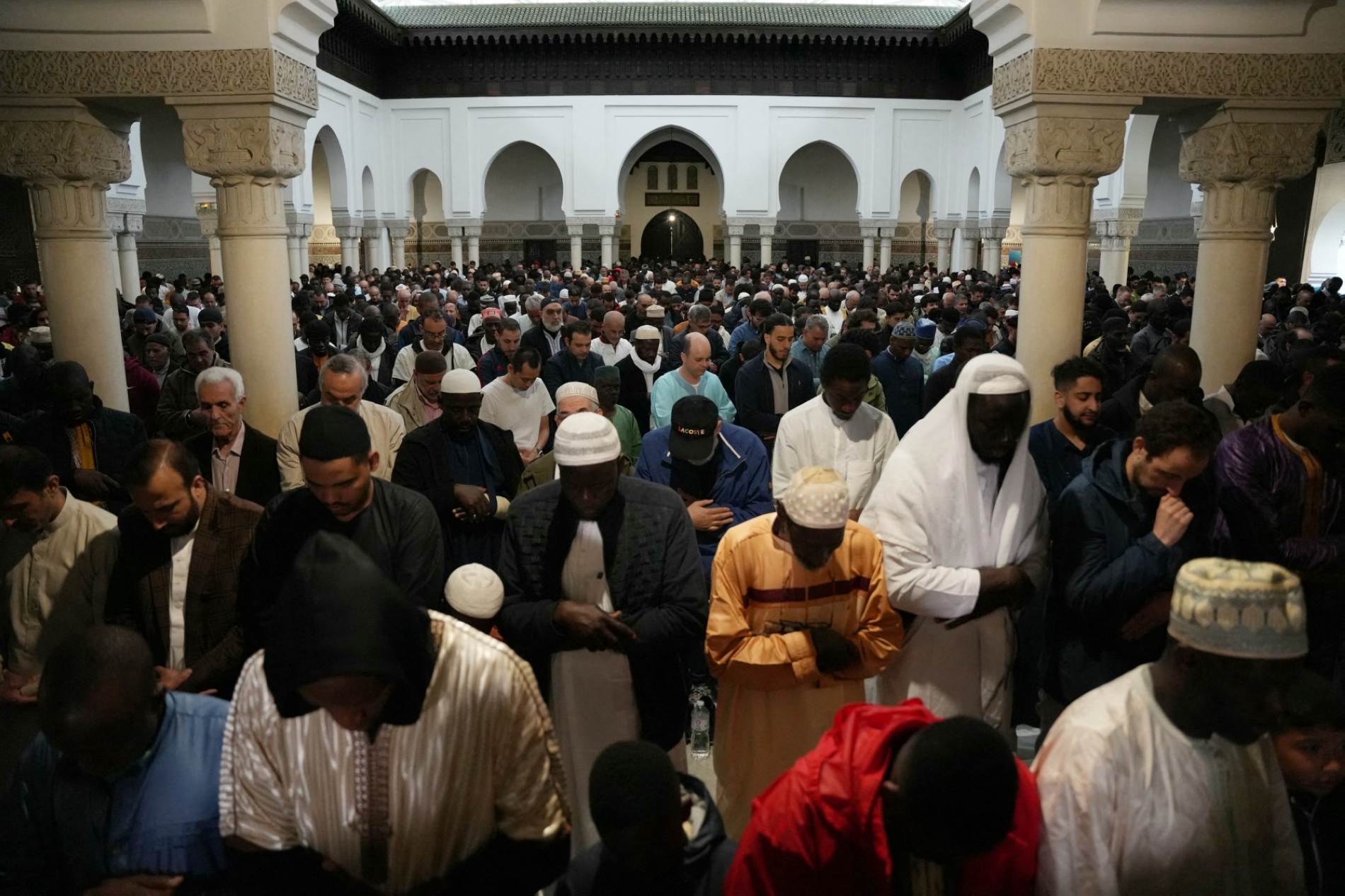
The book is divided into two sections, each addressing a different audience. The first is aimed at Muslims living in France and the wider West. It draws on the Charter of the Principles of Islam in France, issued in 2021, which affirmed commitment to the values of the republic, rejected political Islam, especially in its more hardline forms, and refused any external interference in religious affairs.
This section offers a practical juristic framework for organising daily life in a secular environment, covering such matters as the primacy of civil marriage, accepting the removal of the headscarf in the workplace where required, and a non-hostile stance towards homosexuality, along with other issues that generate daily friction between religious reference and civil law. Scholars from Al-Azhar and the University of Ez-Zitouna contributed to its formulation, lending it juristic depth beyond the local framework.
The religious authority behind the work also recommends that sermons be delivered and religious instruction given in French, while incorporating references to Arab history and culture, thus enabling young Muslims to achieve full integration without losing touch with their cultural inheritance.
The second section is addressed to institutions, including public administrations, schools, hospitals, and companies. It takes the form of a conceptual glossary explaining terms such as zakat, halal, jihad, fasting, and others, with the aim of building a shared language between institutions and Muslim communities in a political and media environment that often reduces such concepts to security or ideological connotations. An expanded digital version has also been made available, allowing it to be updated in line with shifts in public debate.
The book concludes with a series of dialogue sessions that brought together religious and civic figures, jurists, theologians, and experts in law and the social sciences. At their centre was a single question: “Which forms of behaviour associated with the expression of Islamic faith may prove problematic in our societies?”
The breadth of participants is telling. Catholic bishop Pascal Gollnisch, Buddhist monk Michel Tao Chan, philosopher Souleymane Bachir Diagne, and Afghan opposition figure Ahmad Massoud appear alongside French political figures including François Hollande and Jacques Attali, as well as the philosopher Rémi Brague and historian Benjamin Stora—signalling an audience wider than the Muslim public alone.
Contentious questions
The book’s treatment of the headscarf, marriage, abortion, and homosexuality reveals a pattern of juristic reasoning that remains, in principle, faithful to established legal rulings without revisiting their original basis or declaring them superseded. Yet it seeks to translate them into lived reality through the Islamic legal concepts of necessity and dispensation, allowing religious norms to be adapted to alleviate hardship or avert harm.
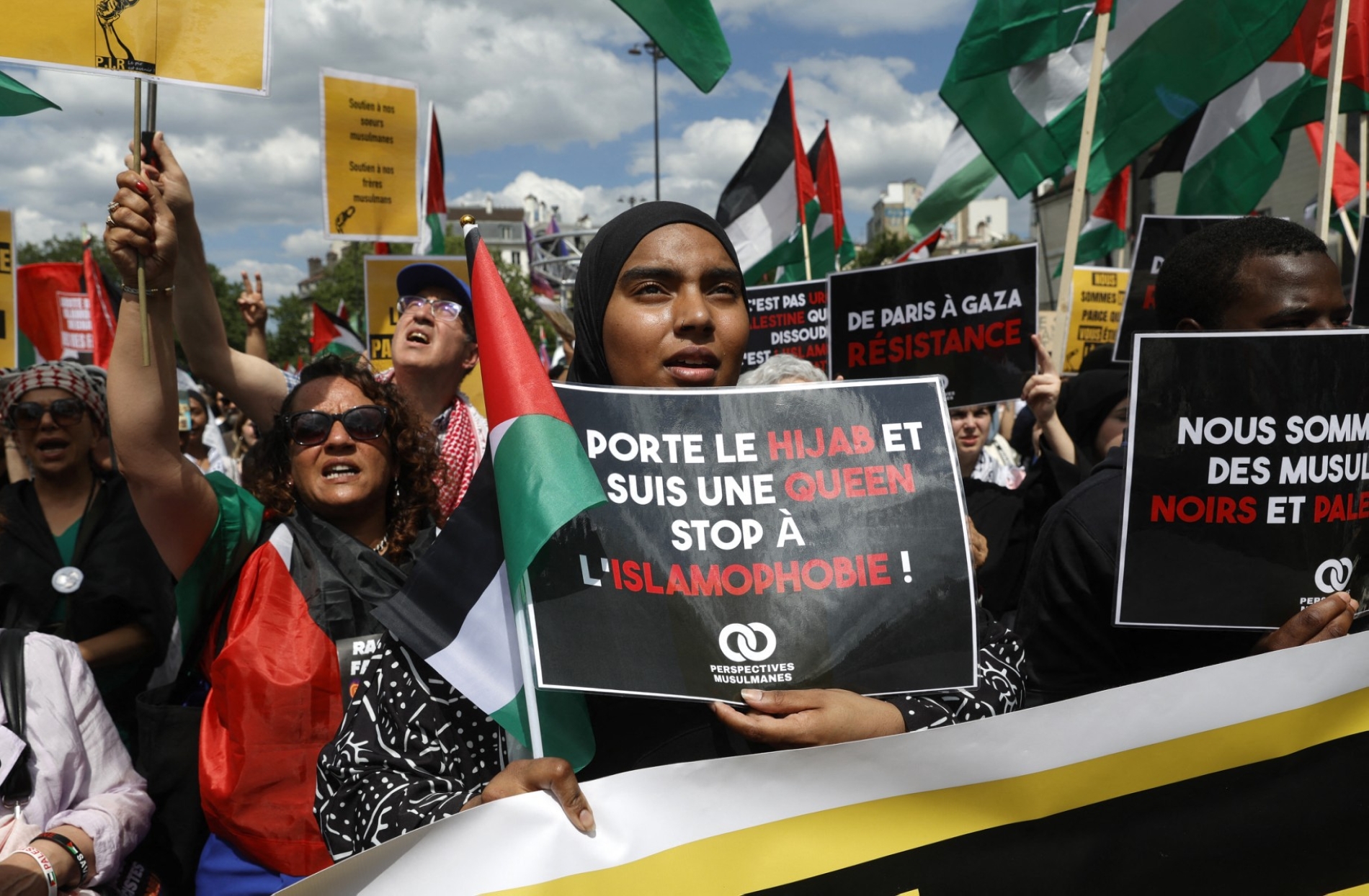
On the question of the headscarf, the book affirms the traditional juristic ruling that a woman is required to cover herself in public, drawing on Qur’anic verses and prophetic traditions addressing modesty and the limits of bodily exposure. The mosque’s rector, Chems-Eddine Hafiz, encapsulates this approach by suggesting that a woman who has spent years in higher education and cannot work while wearing the headscarf may remove it in the workplace and put it back on in public.
Modesty, the book argues, is a fixed ethical principle, while its outward forms remain open to adaptation in response to cultural change. It cites a number of contemporary thinkers who link the headscarf to a specific social context in the 17th century, suggesting that it may be understood as a moral value capable of multiple expressions rather than through hair covering alone. At the same time, the text notes that covering the hair is not exclusive to Islam, but also found in other religious traditions.
A 2004 law banning conspicuous religious symbols in schools and public institutions covers the Islamic headscarf, the Jewish kippah, Christian crosses, and other visible signs. As for the face veil, the book maintains that it does not constitute a binding religious obligation in most legal schools, a position that aligns with the French ban in force since 2010.
On marriage, the book adopts a clear position within the French legal framework, affirming that civil marriage is the only form recognised by law and that no religious marriage contract is valid unless preceded by a civil ceremony at the town hall. It places responsibility on imams to verify this before conducting the religious rite, described as a solemn covenant founded on free consent, affection, and mercy. In this way, the text combines juristic grounding with an explicit acknowledgement of the primacy of civil law in regulating family life.
Charged atmosphere
The publication of the book comes in a charged French atmosphere, marked by sustained security measures and legislative tightening following the terrorist attacks of 2015—a process that reached its climax with the murder of the teacher Samuel Paty in 2020 by a young Chechen after he showed caricatures of the Prophet Muhammad during a lesson on freedom of expression. That killing ushered in a phase of profound legal and political transformation in the way the French state deals with Islam and Muslims.
In 2021, France adopted a legal framework to combat what it termed Islamist separatism, expanding the state’s powers to monitor religious associations, home schooling, and foreign funding. In its wake, a number of mosques and associations deemed extremist were closed. The law also required associations to disclose foreign funding exceeding €10,000, granted prefects the authority to order the temporary closure of places of worship in cases of inflammatory speech, and obliged any association seeking state authorisation to sign a republican commitment contract affirming the principles of secularism, equality, and human dignity.
This legislative tightening has coincided with rising religiosity among younger Muslims. A 2025 study by the Ifop institute found that 80% describe themselves as religious—a higher proportion than among followers of other faiths. It also revealed a striking generational pattern, with levels of religious commitment among those aged 15 to 24 surpassing those of older generations, challenging the classical secularisation model, which assumes that modernity and education gradually erode religiosity, especially among the young.