
The heads of the wild pigeons bob and dip in their multi-coloured flock, passing the time pecking at scattered grains at the junction of Abd al-Rahman al-Ghafiqi Street and Ibn Shahin in eastern Riyadh while cats in doorways and annexes drink the water left out for them. Here, in the Saudi capital, both cats and birds are spared the fast. Around them, Ramadan is being observed in districts like Al-Quds, Al-Rawdah, and King Faisal, areas that skirt the central artery of Khalid bin al-Walid Street.
An Egyptian halawani (confectioner or sweet maker) closes his bakery to catch the midday prayer at the nearby King Abdulaziz Mosque. He is known for his basbousa, a traditional Middle Eastern syrup-soaked semolina cake. The mosque is full, drawing Saudis, Africans, Levantines, Maghrebis, Asians, and others. Beneath the trees, a gentle breeze. As the afternoon hours grow long, the calm loosens, until it finds its exuberant release after the night prayer, through tarawih (nightly prayers performed during Ramadan), and on towards dawn.
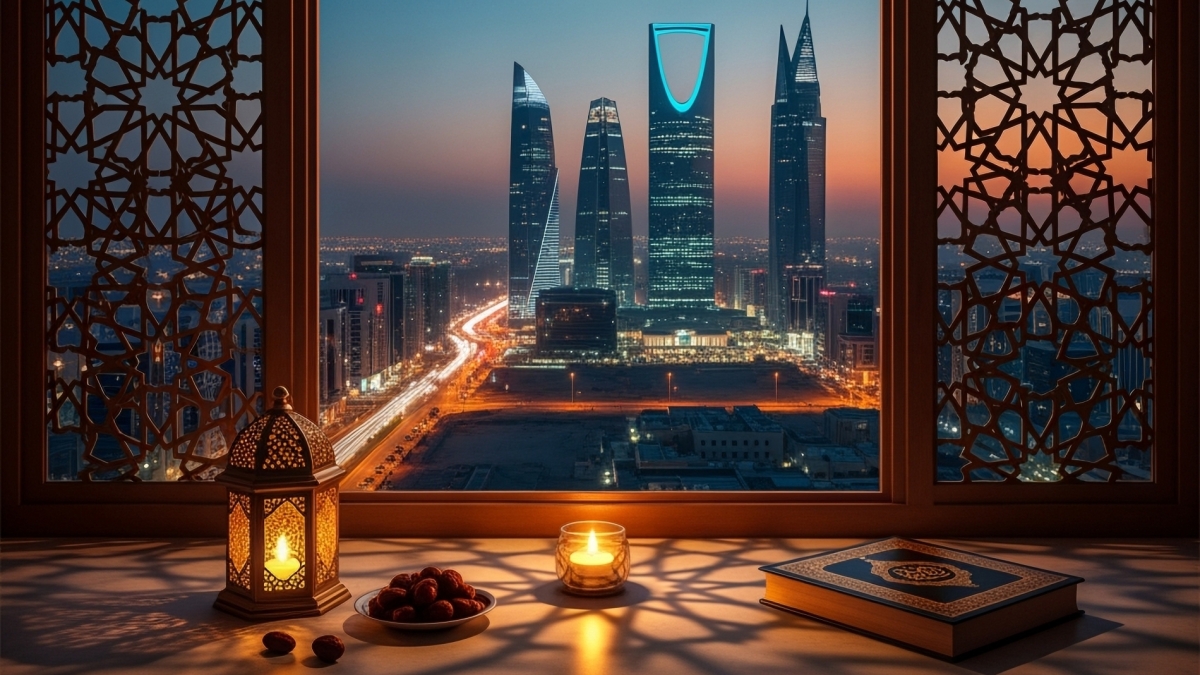
There is a record number of cars on Riyadh’s roads, bathed in the bright spill of light from building façades. Trains and buses move ceaselessly until 3am, thousands travelling for myriad reasons in a city that sleeps even less during Ramadan, the ninth month of the Muslim year. This year, Ramadan makes its 1446th return. In Riyadh, warmth courses through the 200 or so neighbourhoods. Some are historic, others new. Night-time wandering through its branching worlds within this tapestry of districts is a pleasure in the mild early spring, with its gentle grace.
Time to travel
A 23-year-old Yemeni man working at the main public transport terminal in the bustling Al-Aziziyah district says he welcomes arriving passengers with unfeigned pleasure. Two decades ago, his family sought refuge in Jazan, in the far south-west, where his father spent years serving as an imam and muezzin at a mosque, before the family eventually made their way to Riyadh. “My father is like a friend to me, and my role model,” he says. “I had to start working so he could finally rest.” With boundless energy, a warm smile, and an effortless gift for conversation, he appears wholly equal to the demands of one of the busiest land-transport hubs in the Middle East.
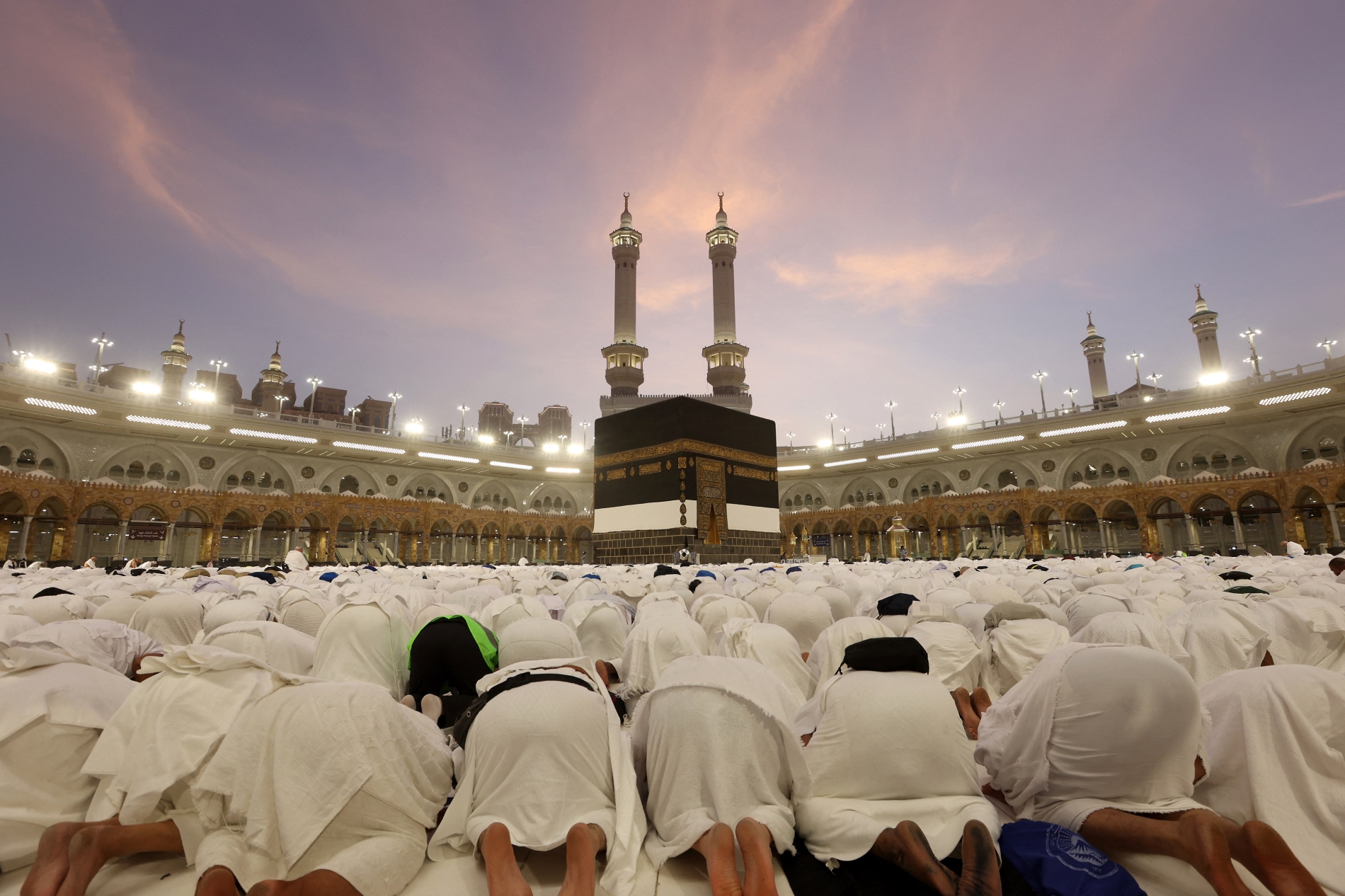
From here, millions journey into the Saudi interior. Routes to Madinah and Makkah intensify in this month, as pilgrims travel for umrah, the reward for which is held equal to that of hajj. Alongside these are overland trips to Amman, Damascus, Dubai, Manama, and cities across Yemen. One-way tickets to most of these destinations cost no more than $50 and travellers may carry up to 50kg each. “When I meet travellers here, I ask them about travel, adventure, and experience,” says the young Yemeni man. “Travellers are those best able to fathom love. I dream of being a traveller one day.”
The story of love and faith sits close to the surface, woven into the history of the area, which first began to take shape in the 1960s around Lovers’ Street, as it was then known. In the 1980s, it became the Al-Qurra District, named for Qur’an reciters. From its many mosques and prayer halls emerged an early wave of muezzins who went on to serve across Riyadh and beyond.
A world unto itself
Mansour Al-Assaf is a Saudi researcher in social history whose studies and theories on the city’s districts are well known. He points to the area’s industrial activity since the 1950s, beginning with the Gypsum Factory Company, which even lent its name to parts of the district. As social life flourished, it drew many pupils to Hatim Al-Ta’i Primary School in the late 1970s. It also became home to well-known media figures, including the late broadcaster Mohammed Al-Rashid.
Workers of various Arab nationalities stream into the Nakhat Al-Furooj restaurant, drawn by the $4 shawarma and by the yellow rice crowned with boiled eggs, set down in a piled, communal heap. A few kilometres away, commerce is both disciplined and improvised in Al-Batha. One of Riyadh’s oldest neighbourhoods, it houses large expatriate labourer communities.
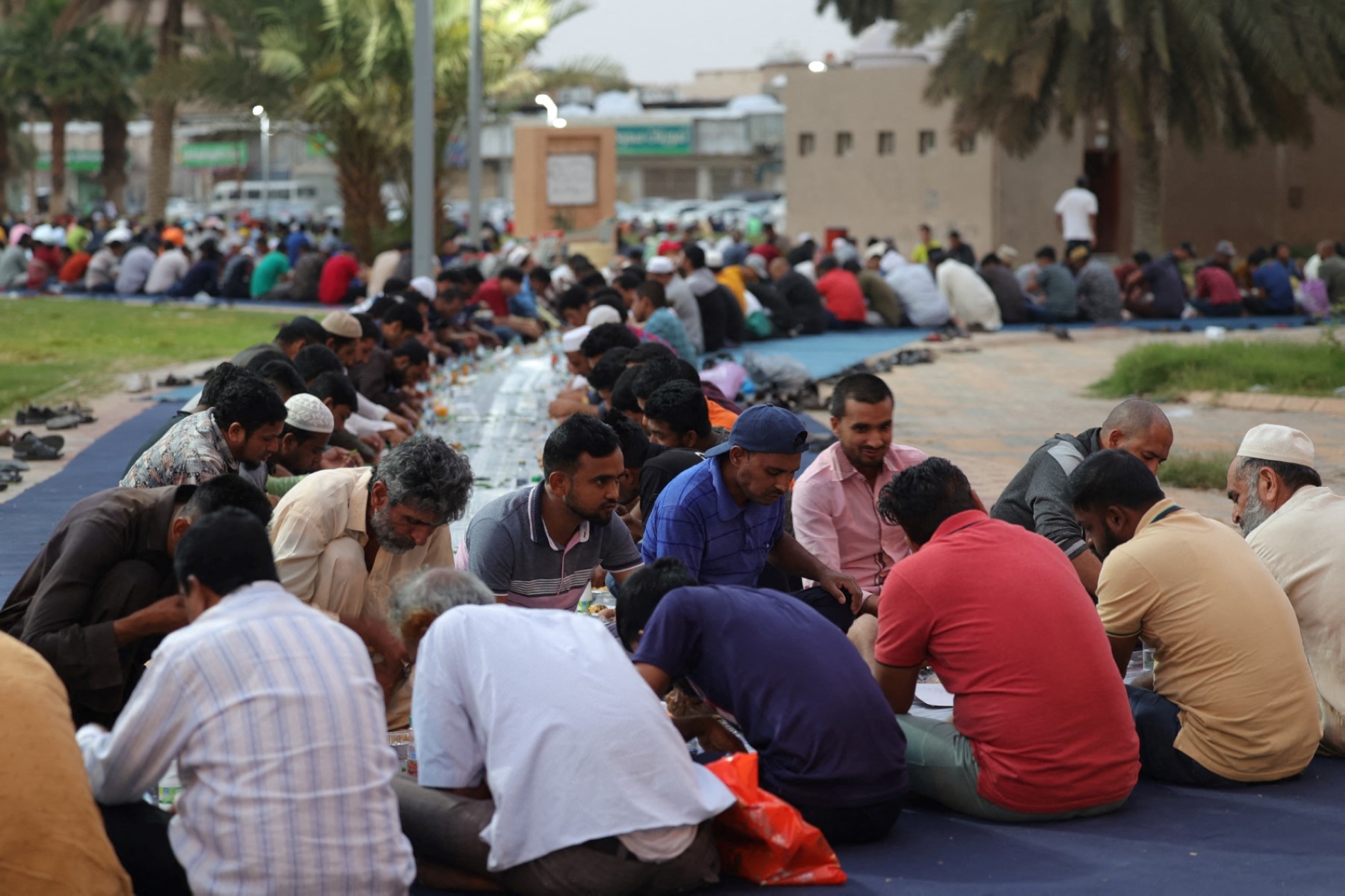
From fish sellers to menswear, from fruit and vegetables to counterfeit goods, Al-Batha roars, a clamorous world unto itself, one closely monitored by the security services who curb violations among the itinerant sellers. In the fabric quarter, a young Sudanese man stands in a shop specialising in Indian linen and cotton. He scrolls through videos he filmed from the plane during his most recent trip to Sudan and speaks with longing of the Nile’s beauty. “Nothing compares to its splendour when you see it from above, as the morning light begins.”
Lights and lobbies
In the north of the city, the atmosphere changes. A polished modernity spreads across the buildings. Company offices and hotels line the broad boulevards. Near the iconic Kingdom Tower, at the lively intersection of Al-Ulaya and Al-Urubah, a large, illuminated sign declares: ‘Ramadan Riyadh.’ There are thousands of lighting elements designed to “turn public spaces into places alive with human interaction”. Japanese tourists pass by, unhurried. Many visit the libraries, museums, and cultural venues lining the two streets, some of which stay open until 2am.