
Syria’s efforts to distance itself from Iran and its proxies have so far helped Damascus avoid becoming a direct arena in the escalating war on Iran. To further insulate itself, Syrian authorities have taken precautionary steps to secure the country’s borders with Lebanon and Iraq, deploying additional forces and tightening controls to prevent the conflict from spilling onto Syrian territory.
Yet while the government has moved swiftly to contain potential security risks, it has shown far less urgency in preparing for the war’s economic fallout. The ongoing conflict is already reshaping global energy markets and supply chains, and early signs of economic strain are beginning to surface in Syria.
Unlike larger economies that can absorb shocks in global markets, Syria has little room to cushion the impact. For households already struggling to meet basic needs, rising prices and growing shortages are not temporary disruptions. They are an immediate threat to daily survival. Without a proactive strategy to secure supplies and stabilise markets, the economic fallout from a prolonged regional conflict could quickly become one of Syria’s most pressing domestic challenges.
The war is already sending ripples through the global economy. Oil prices have risen amid fears of disruptions to production and shipping routes, particularly in the Gulf and through the Strait of Hormuz. Higher energy costs are feeding into broader inflation by raising transport and production costs, pushing up food prices and delaying shipments of essential goods.
Developed economies have already begun taking steps to cushion these shocks. Governments are preparing to release strategic fuel reserves, subsidise energy costs, and seek alternative supply routes to stabilise markets. Others have restricted or suspended fuel and gas exports to protect domestic supplies—moves that are contributing to higher global prices and increased volatility in energy markets.
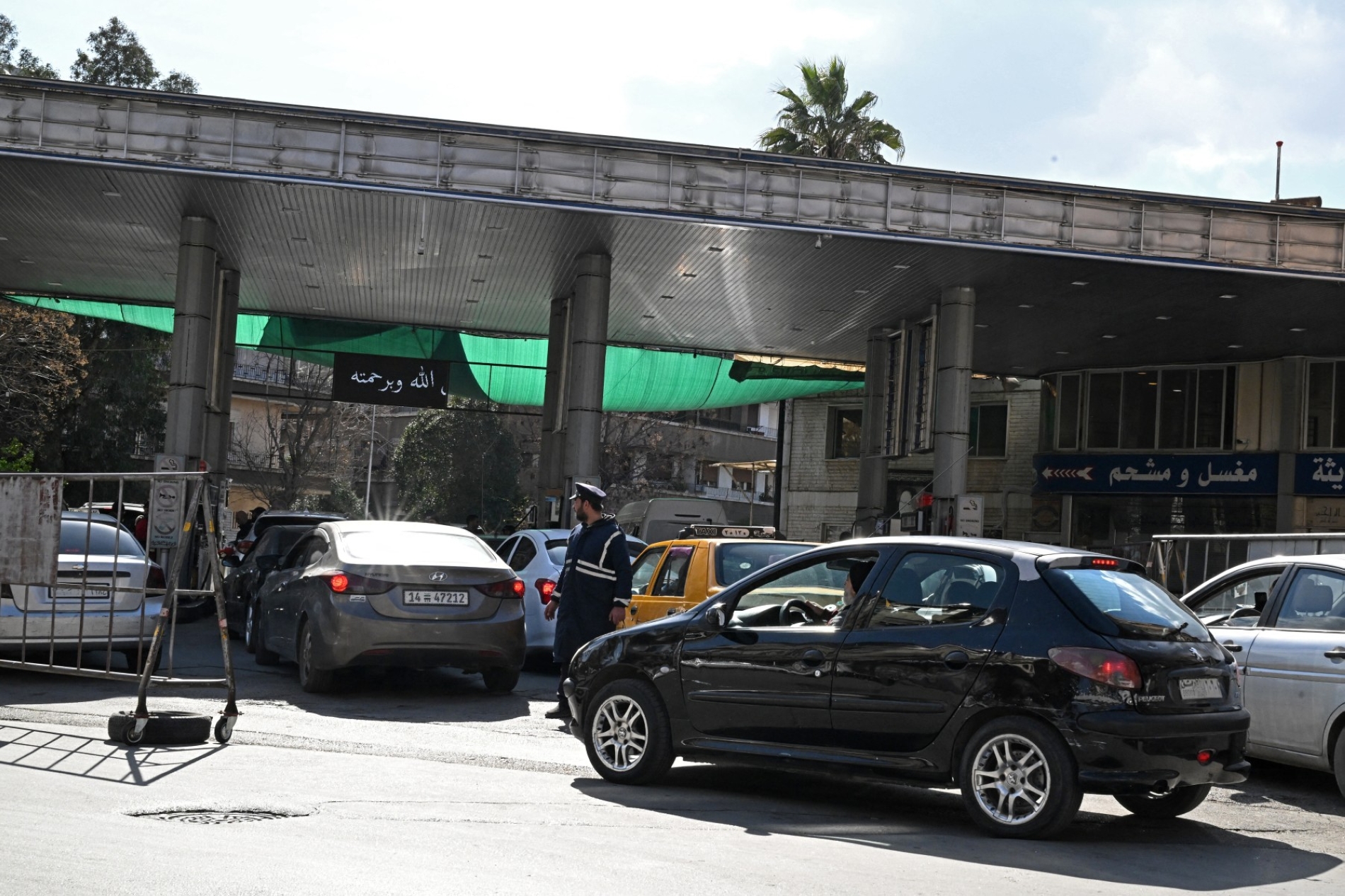
In contrast, Syria’s fragile economy is among the most exposed to these pressures. The country is already grappling with a deep cost-of-living crisis driven by structural weaknesses in production, trade, and monetary policy. Since the beginning of Ramadan, food prices have risen sharply across the country. Shortages of household cooking gas have brought back long queues after months of relative availability, with similar scenes now emerging at fuel stations.
Economic fragility
Officials have offered different explanations for these disruptions. Food price increases have been linked to higher demand during Ramadan; gas shortages to temporary import delays caused by weather conditions; and fuel queues to panic buying triggered by the war. Yet regardless of the explanation, they all point to the same underlying reality: the fragility of Syria’s economy and the absence of effective buffers to absorb external shocks.
Domestic production remains weak, while imports supply many essential goods. As a result, even modest disruptions in the flow of fuel, wheat, or other basic commodities can quickly ripple through the economy, affecting transport, electricity generation, food production, and industrial activity.