Gold hits record high of $5,100 as traders seek safety

Investors’ flight into precious metals is symptomatic of the economic upheaval and uncertainty being causes by US President Donald Trump and his trade wars

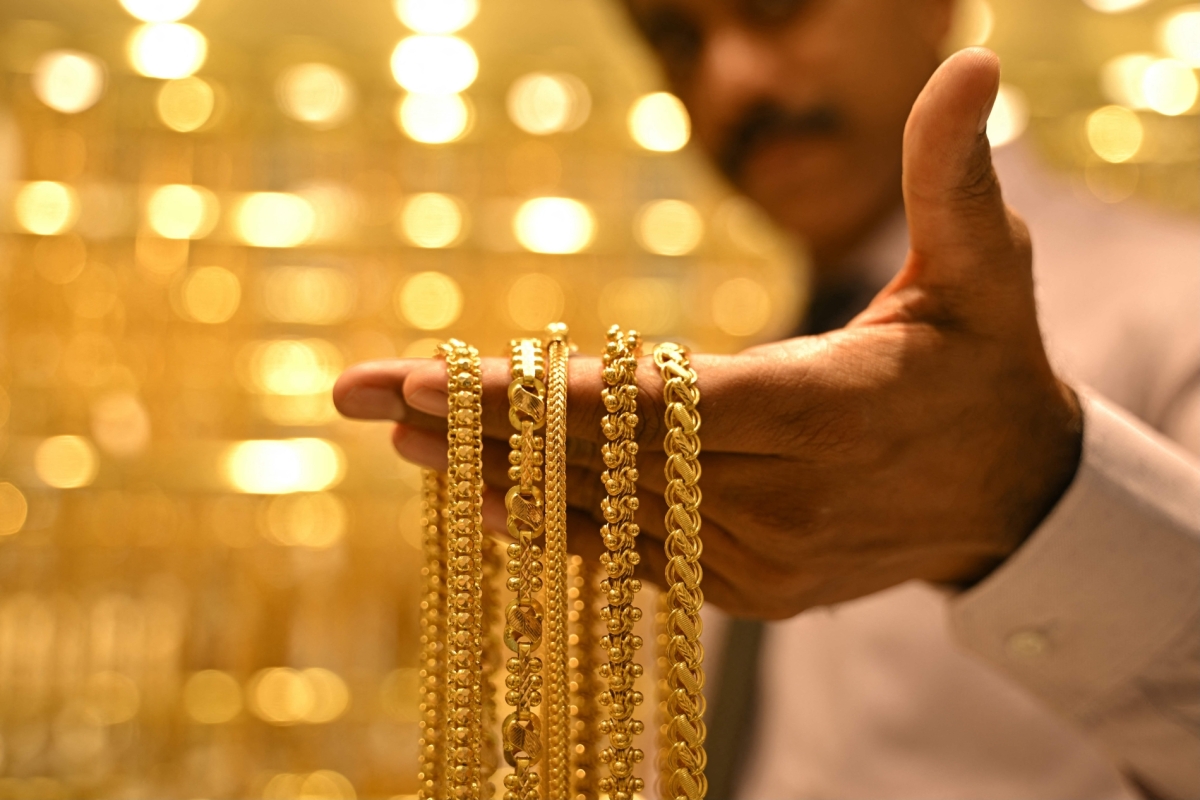
A salesman displays gold chains, at Jos Alukkas jewellery store in Bengaluru on 17 September 2025.
Idrees MOHAMMED / AFP
A salesman displays gold chains, at Jos Alukkas jewellery store in Bengaluru on 17 September 2025.

Gold hits record high of $5,100 as traders seek safety

Gold hit an all-time high of $5,100 per ounce in recent days, as investors sought a safe-haven asset and banks forecast a continued rise. Alongside the ascent of gold, silver and platinum also reached record levels. Silver hit $117 per ounce, from a previous high of $43 in 2011.

The flight to precious metals emanates from market jitters over US President Donald Trump’s scattergun tariffs, most recently targeting American ally South Korea. The White House said on Monday that it would raise tariffs on Korean cars, medicines, and lumber from 15% to 25%, accusing Seoul of “not living up to” a trade deal signed with Washington in October. Trump also threatened Canada and several NATO allies.

Anticipating disruption, analysts said there was now “an uncertainty premium” embedded in gold prices. Platinum recently hit a record high of $2,928 per ounce, while palladium climbed about $2,000 per ounce. Platinum’s previous high was in March 2008, at the height of the global financial crash, when it traded at $2,162 per ounce. The previous highest price for silver came in May 2011, when it hit $43 per ounce.

Pricing and forecasts

The price of gold is determined by supply and demand and by investors’ views on where the price may be heading. The gold spot price represents the price paid per troy ounce of gold in unallocated form. Physical gold usually trades at a premium above the spot price to cover costs associated with manufacturing, transportation, and storage.

Washington threatened tariffs of 100% on Canada shortly before Canadian Prime Minister Mark Carney flew to China last week, yet he also threatened tariffs on European allies over his desire for Greenland, a Danish territory. Analysts now think Trump’s aim is to splinter the world order that America helped design 80 years ago, in the aftermath of the Second World War.

The International Monetary Fund recently upgraded its global GDP (gross domestic product) growth expectations for 2026 to 3.3%, noting resilience despite the geopolitical disruptions. The World Bank puts it slightly lower, at 2.6%. Causes for optimism include the strong performance of the US economy (the world’s largest) and record levels of investment in AI and related infrastructure.
Peter PARKS / AFP
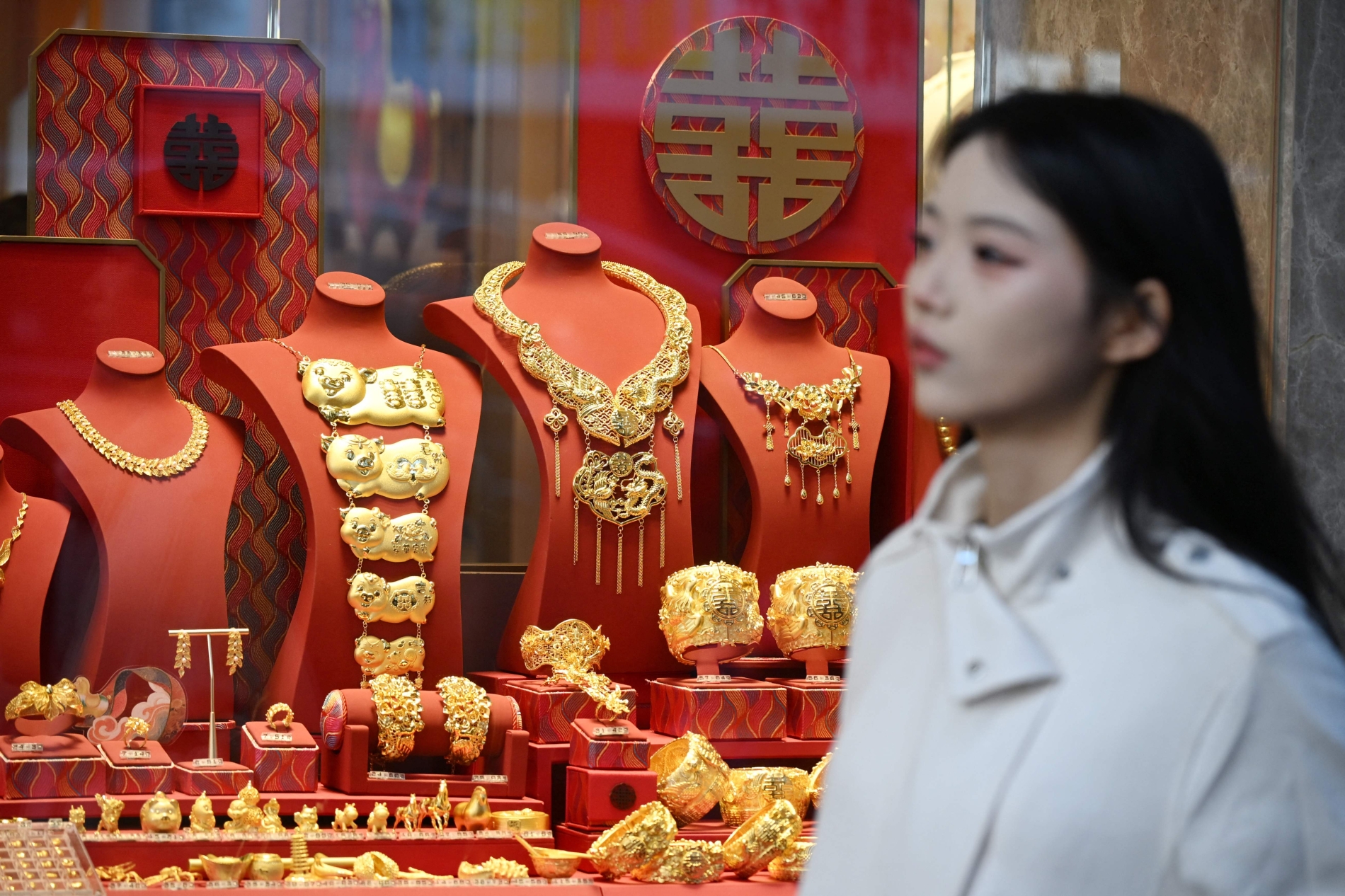
A woman walks past a shop selling gold in Hong Kong on 26 January 2026.

China, a major gold buyer, saw its economy grow by 5% in 2025. Many economists expect that rate to slow to around 4.8% in 2026, but investment bank Goldman Sachs has suggested that 4.8% may be more reasonable, citing surging exports. China’s gold holdings typically increase by around 44 tonnes per year, but gold still accounts for less than 5% of China’s total foreign reserves, which are composed chiefly of the yuan, dollar, euro, pound sterling, Swiss franc and Japanese yen.

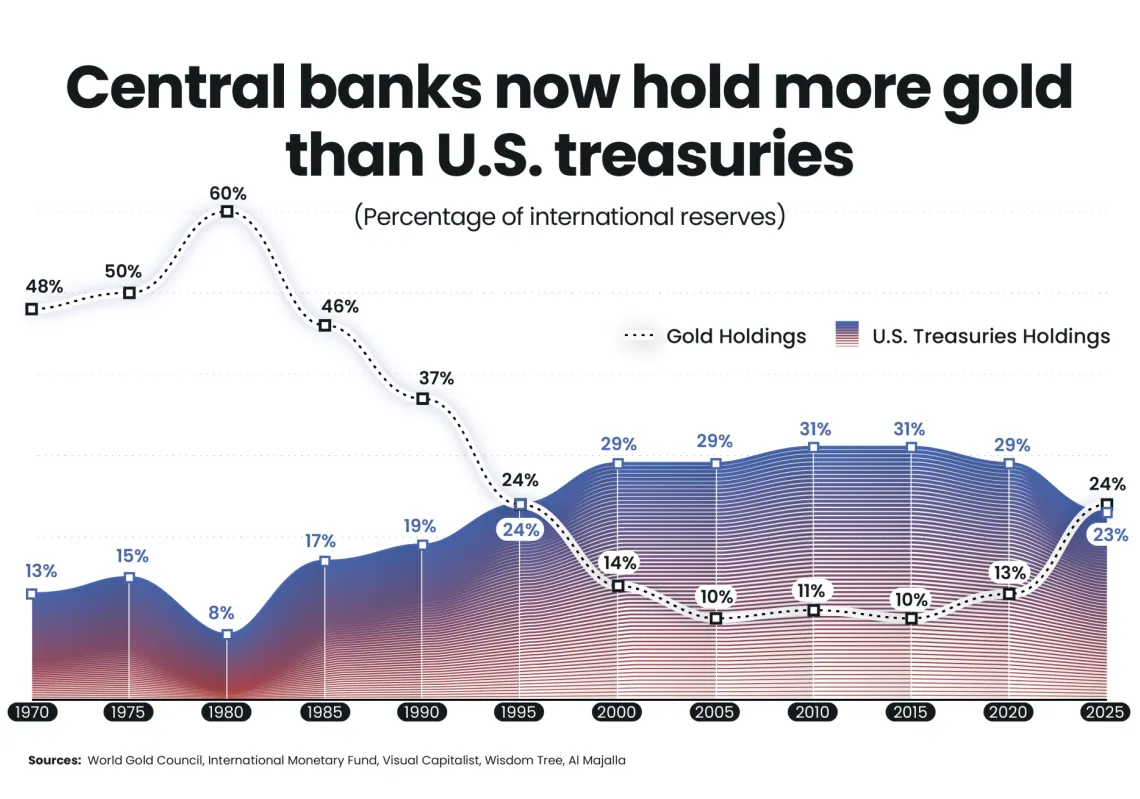
In 2020, as the pandemic hit, gold prices approached $2,000 per ounce, where they hovered for the next three years. By the end of 2024, however, they were climbing to around $2,700 per ounce, and by November 2025, they had surged up to $4,000 per ounce. That extraordinary rise, fuelled largely by demand from central banks, has only continued into 2026, its value climbing 8% in just one week in January.

The extraordinary rise in gold prices is being fuelled largely by demand from central banks. In just one week in January, its value climbed by 8%.

Some analysts predict that gold could hit $5,400 in the weeks ahead, as global financial institutions and sovereign hedge funds eager to diversify their asset portfolios seek safety amid jitters in the foreign exchange markets. Traders are keeping an eye on the Japanese yen, for instance. The dollar fell to a four-month low against other major currencies this week, while the yen surged as traders assumed coordinated action to strengthen the Japanese currency.

Gold as reserves

Germany has the second-largest gold reserves of any country and keeps around 37% of its holdings at the Federal Reserve in New York, in deposits dating back to the 1950s and the era's Cold War anxieties, when the Bundesbank feared the Soviets might break through into East Germany. Berlin is believed to have repatriated 674 tonnes of gold from the US since the last global financial crisis in 2008-09, and some in Germany want more returned, especially given President Trump's bellicose language over Greenland.

Germany's reserves are estimated at around 3,350 tonnes. Third is Italy with 2,452 tonnes, followed by France with 2,437 tonnes. The United States' holdings stand at 8,133 tonnes, almost as much as the combined reserves of the three big European nations. Between them, Russia and China hold just over 4,600 tonnes. Like China, India is a major gold buyer, adding 523 tonnes to its reserves over the past 15 years.

REUTERS/Joyce Zhou
People queue outside a gold buyback shop as gold prices surge, in Hong Kong, China, on 27 January 2026.

Arab nations are not the largest holders of gold; Saudi Arabia has the largest reserves at 323 tonnes as of March 2025, according to the World Gold Council. It stands to build on these after Ma'aden, the country's mining company, said earlier this year that it had added 250 tonnes of gold resources across four sites after drilling activity at some of its open-pit mines.

Lebanon holds the second-largest gold reserves among Arab countries, with approximately 286 tonnes. This puts Lebanon in the top 20 state holdings globally. By today's values, its gold is worth around $45bn. Given the financial collapse of Lebanese banks in recent years, the country's gold holdings are now described as the only sovereign guarantee that Lebanon has left.

The history of gold is inextricably tied to the history of economic ambition. It helped shape the destinies of several American states, from the deep South to the far North, fuelling 'gold rush' stories of poor immigrants becoming millionaires overnight after a single discovery, sending thousands off to scour mountains and valleys in search of gold. At $5,000 per ounce, the quest for gold remains undimmed.

font change