Mexico City: where the ordinary and extraordinary coexist in chaotic harmonyhttps://en.majalla.com/node/328857/culture-social-affairs/mexico-city-where-ordinary-and-extraordinary-coexist-chaotic
Mexico City: where the ordinary and extraordinary coexist in chaotic harmony
On the margins of the Guadalajara International Book Fair, I was amazed by the sheer scale of the country's capital, home to 23 million, the mundane and the marvellous
AFP / Rodrigo Oropeza
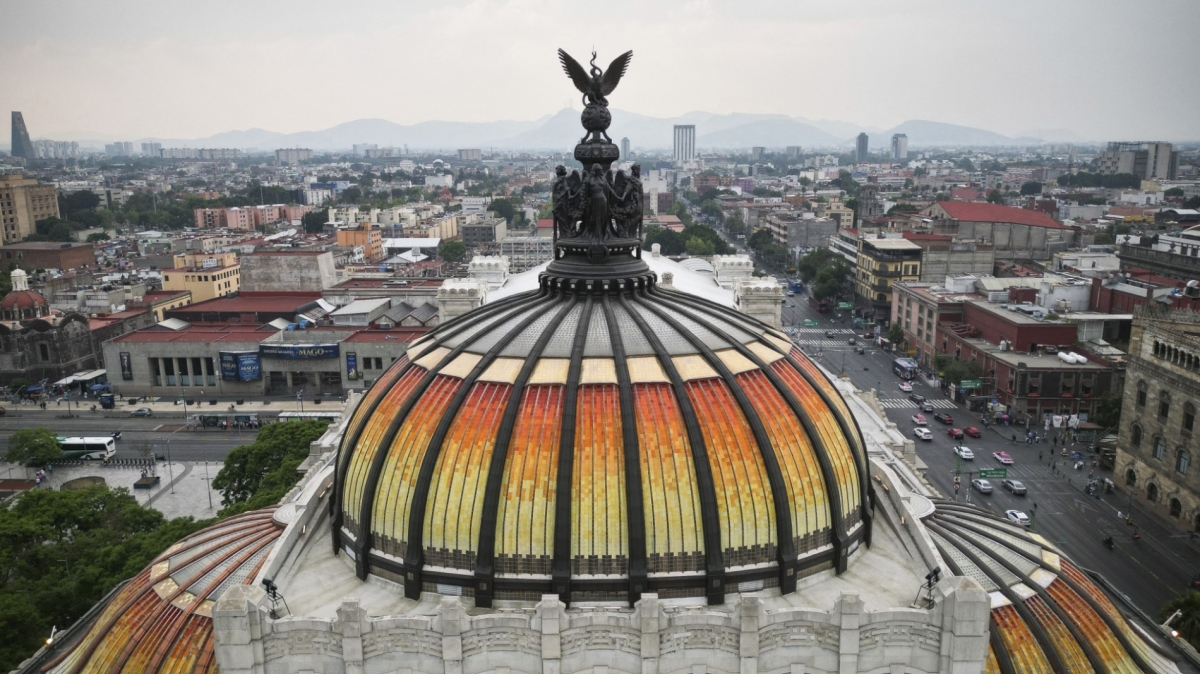
An aerial view of the dome of the Palace of Fine Arts Museum in Mexico City, on 22 May 2024.
Mexico City: where the ordinary and extraordinary coexist in chaotic harmony
I do not like taking photographs, precisely for what they are—namely, images. They are deceptive imprints of a time that has passed, the severing of a present moment and its annexation to memory.
I dislike them for another reason as well: I always appear as someone else in them. I look at myself in the most recent photograph and see a complete stranger. Worse still is when I am compelled to smile, which often happens in pictures others take. They want me to smile as proof of happiness, or at least of joy at the moment the photograph is taken or a desire for happiness. Or worse of all, out of the politeness of acknowledging the moment.
In Mexico, a country I never imagined I would visit, owing to both the distance and my chronic aversion to flying, I felt no urgent need to take photographs or to document my presence in any of the places I visited, whether alone or accompanied, during the two weeks I spent between the capital, Mexico City, and the city of tequila, Guadalajara.
And why should I wish to remember Mexico through photographs in the first place? No image could capture the essence of the new friendship I formed with Óscar de Pablo, a Mexican poet of my own generation, and with his life partner, Paula Abramo. Nor could they convey my feelings for Shadi Rouhana, the translator and academic from Haifa who has lived in Mexico for a decade, and his wife, the artist Marcela Mora. Together, they published a small booklet of translated poems by poets from Gaza, which has become one of the bestselling titles on the latest war.
No photograph could preserve the warmth of the time I spent with Iraqi writer Samuel Shimon, author of An Iraqi in Paris, recently published in Spanish by Fondo in Mexico, or with his partner in life and work, Margaret Obank. They are the publishers of the English and Spanish editions of my latest book, which brought me to travel to Guadalajara to attend its International Book Fair.
Different vantage points
The moment the plane entered Mexico City's airspace and circled above it for a while before landing at its international airport was the only time I felt grateful for choosing a window seat. Otherwise, anyone flying economy class on such long-haul journeys should be advised against imprisoning themselves by the window, and would do better to choose an aisle seat, or even a middle one, rather than risk being wedged into that narrow space, hesitating each time they must ask their neighbours to stand. Seasoned travellers, of course, are likely beyond such advice.
From the air, a first-time visitor to Mexico City gains a striking impression of the sheer scale of this vast metropolis, home to some 23 million people. They will realise another truth—one that only fully reveals itself later, when navigating the city at ground level. Cars are an organic part of its landscape, woven into the very rhythm of daily life.
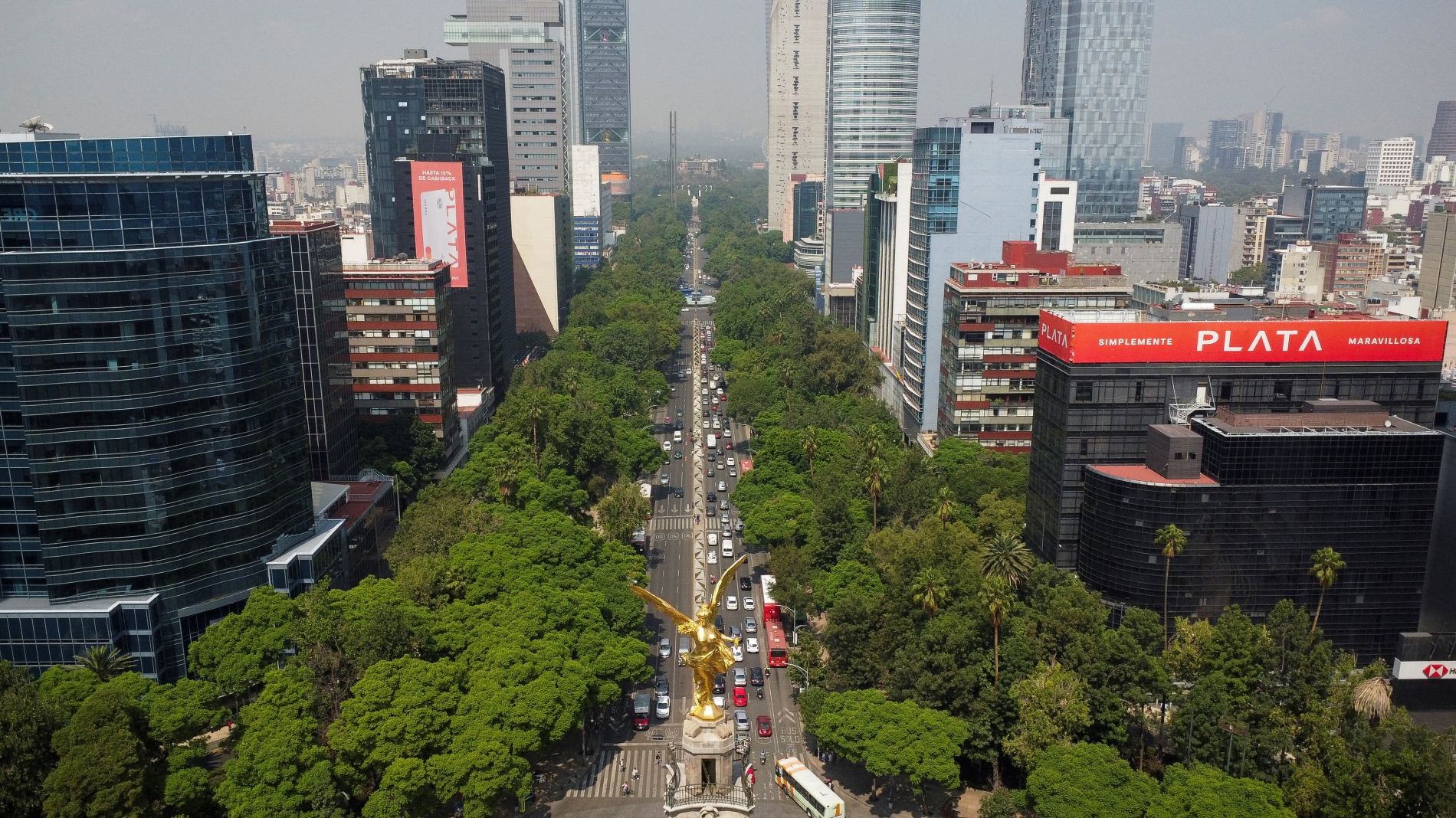
From above, endless lines of light stretch in all directions, streams of vehicles cutting through the city like tributaries of a great river. And yet, in striking contrast, something else comes into view: green lines, or rather, green patches, breaking up the red ribbons of traffic and the dense blocks of housing. As Margaret Obank remarked more than once, with astonishment, Mexico City is filled with green spaces.
An aerial view showing the "Angel of Independence" monument, a victory column located in a roundabout on Paseo de la Reforma Avenue in downtown Mexico City, on 30 May 2024.
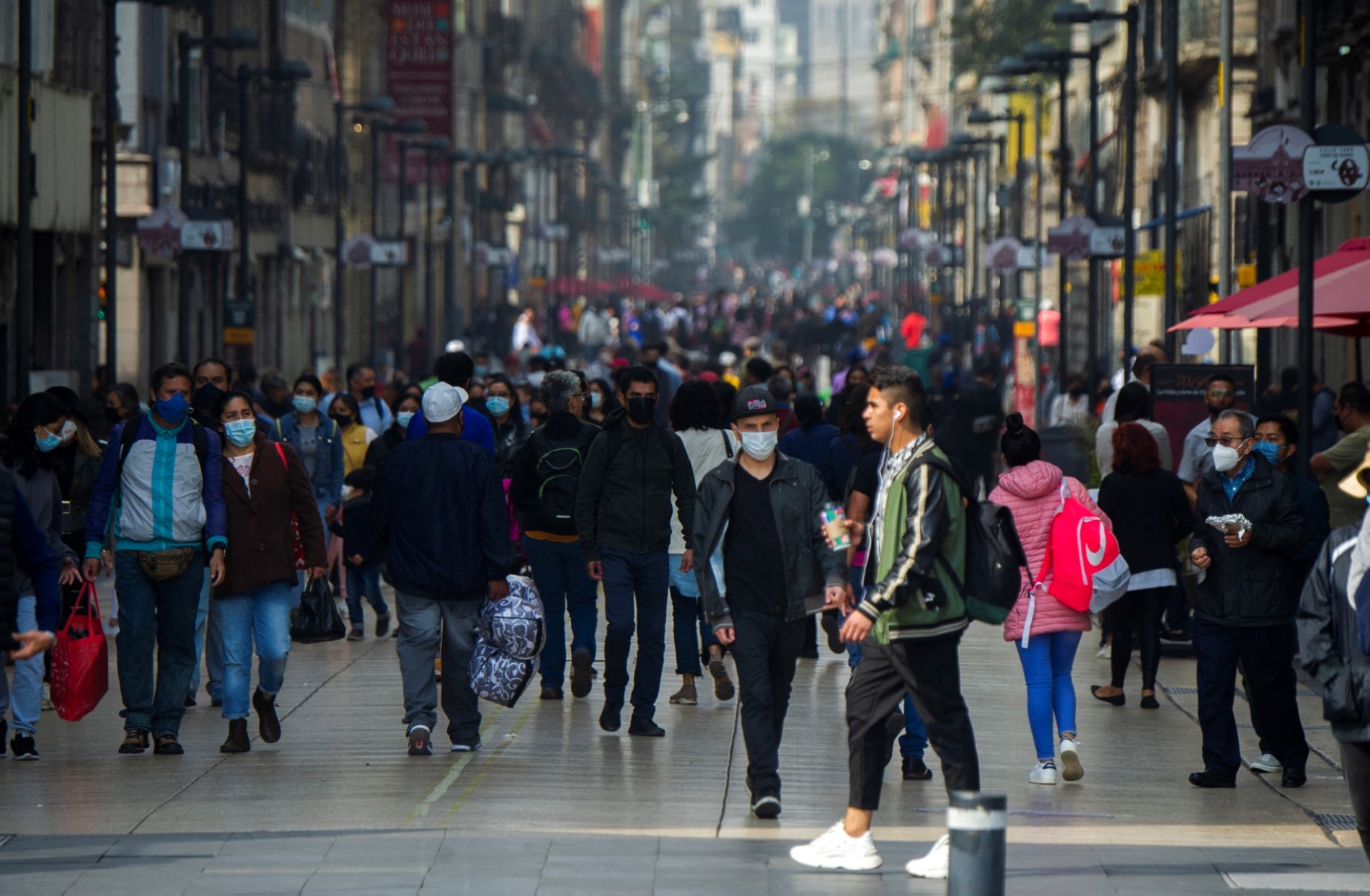
What the aerial view does not, of course, reveal are the people. In Mexico City, you are merely a pebble among millions of pebbles, constantly being pulled by the current of that river. If your steps lead you to one of the popular markets, whether deliberately or by accident, or if you find yourself even in one of the upscale tourist streets carrying American and European brands, you will grasp the true meaning of feeling like nobody in the crowd.
To understand the nature of this congestion, in which cars and people strangely coexist within the same space, it is enough to realise that a journey of a single kilometre by car may take half an hour. It almost feels as if the car inches backwards rather than forwards, given that the journey would take only ten minutes if traversed on foot.
This symbiosis between people and cars is no minor detail in the life of the Mexican capital; it is a defining feature that shapes the rhythm of daily life, the way people meet, and the timing and location of those encounters. Everything appears to be regulated by this suffocating traffic, which, paradoxically, seems entirely unremarkable. No one complains or grumbles, nor do they shout or curse, not even the taxi drivers, most of whom now work for Uber, widely considered the safest mode of transport. These drivers, it seems, are tested as much on their patience as on their driving skills.
For someone who grew up and lived mostly in small towns, the sheer scale of Mexico City is no trivial matter. It was the one thing that consistently amazed me. Perhaps it impressed me even more than the pyramids, the famed Frida Kahlo Museum (1907– 1954), the museum dedicated to her husband, Diego Rivera (1886–1957), or the city’s many other remarkable museums (over 150).
In Mexico City, you are merely a pebble among millions of pebbles, constantly being pulled by the current of that river
One museum—the Living Mural Museum—was situated just a few metres from my modest hotel. Yet I didn't even consider visiting it, perhaps because of its disarming proximity. Museums are places one sets out to see, not places one stumbles upon so casually, as tends to happen in Mexico City.
One evening, I decided to attend a cultural event organised by activists in solidarity with Gaza, where some of those who had participated in the Freedom Flotilla spoke. The journey, which took around an hour by car, unfolded after the city's traffic had eased somewhat, yet another indication of the city's massive scale.
Sex workers were a noticeable part of that evening drive—some standing alone; others in small groups— lining the roadsides across long stretches. Behind these women, whose brightly coloured clothing lit up the darkness, stood a series of small hotels and lodgings. The site felt as commonplace as the city's scattered museums, historic landmarks, and taco stands that spill across its pavements. No one warns you about such streets, nor do they encourage you to seek them out. They appear and vanish as you move from one place to the next.
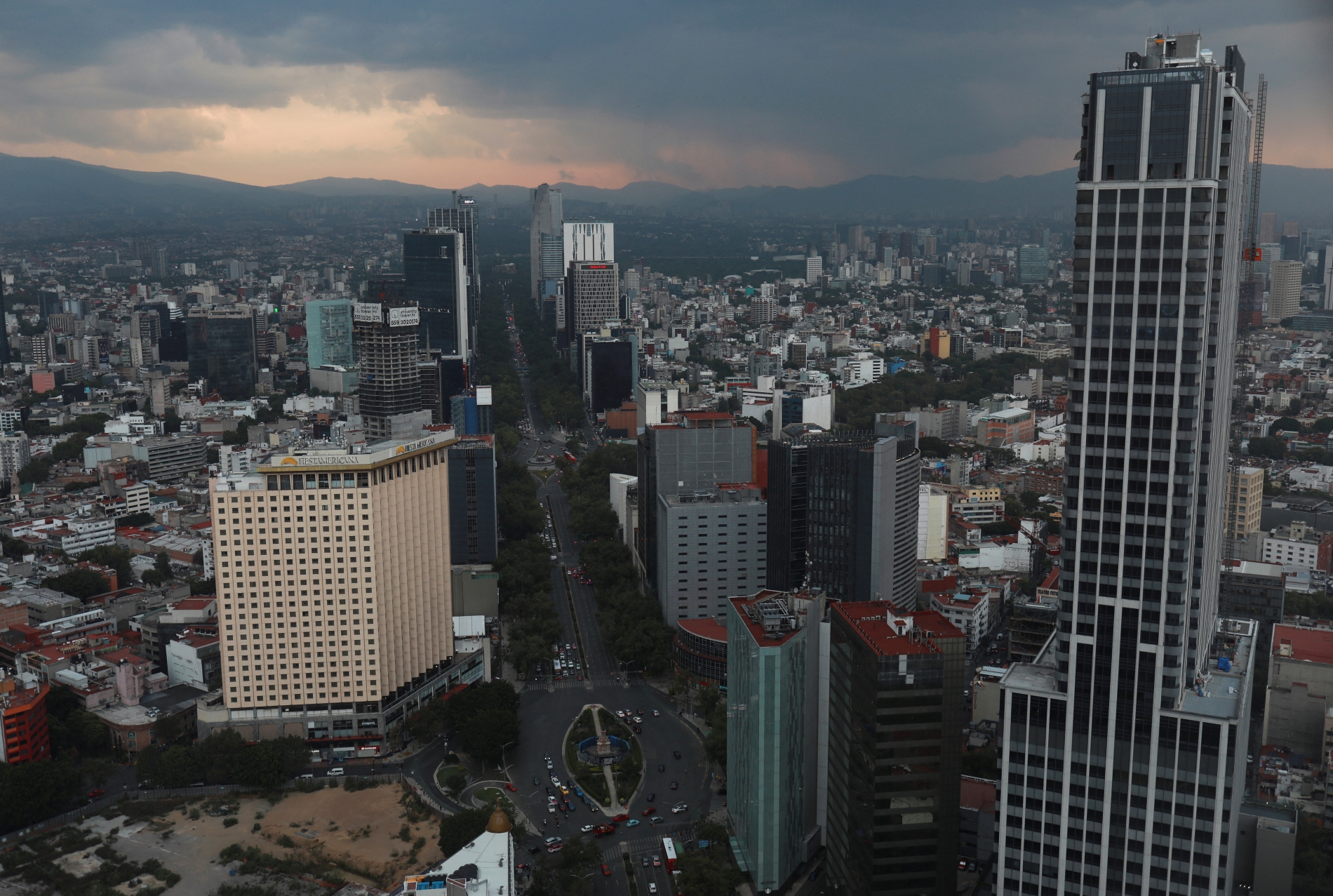
A view of the Mexico City skyline at sunset, with cars passing along Reforma Avenue, captured through the window of a building, on 24 May 2023.
Mexican architect José Ramón Calvo spoke to me at length about the capital's architecture, in response to my question about how one might begin to comprehend it, especially as, despite its multiplicity of styles reflecting the city's varied historical phases, it still manages to feel elusive. The old overlaps with the modernisation and expansion that took hold during the city's explosive growth in the second half of the 20th century.
Calvo, an expert on the architecture of the Spaniard Antoni Gaudí, was astonished to learn that I knew nothing of the great Mexican architect Luis Ramiro Barragán Morfín (1902-1988)—one of the global symbols of modern architecture. He urged me to visit the Barragán House, now a museum and regarded as one of Mexico's architectural masterpieces.
"It is no less important than Juana Inés de la Cruz," he said. He was visibly taken aback when I apologetically confessed that I was unfamiliar with her poetry and, to my knowledge, it had never been translated into Arabic. He insisted that her influence and stature rival those of Cervantes. He began searching on Google for Arabic translations of her work and was disappointed to find none. "Someone must surely have translated at least some of her poetry into Arabic," I said, promising him I would look further upon my return.
Cars form an integral part of the cityscape. From the air, they appear as endless threads of light, penetrating the city in every direction
Air pollution...but not from cigarettes
Given the sheer volume of cars in Mexico City, we wrongly assumed the city had no public transport system. So we were surprised to find out that the city is home to one of the largest in the world. Yet, curiously, it remains almost clandestine. You do not see clear signs marking the entrances to its stations, as you would in other major capitals. The streets are not dotted with metro symbols guiding the way.
Occasionally, you might come across an opening in the pavement with a staircase descending into the ground, but you wouldn't necessarily recognise it as a metro entrance, like the ones you are used to in cities like London, Berlin, Madrid, Paris, or Moscow. All of this, combined with the suffocating, near-constant traffic congestion, creates the impression of a city devoid of public transport. Even the so-called Metrobus, long red buses operating on fixed routes throughout the day, barely registers amid the unrelenting flood of cars.
The presence of such vast numbers of vehicles results in an enormous volume of toxic fumes saturating the city's air at all times. The city appears either indifferent to this reality or incapable of confronting it effectively.
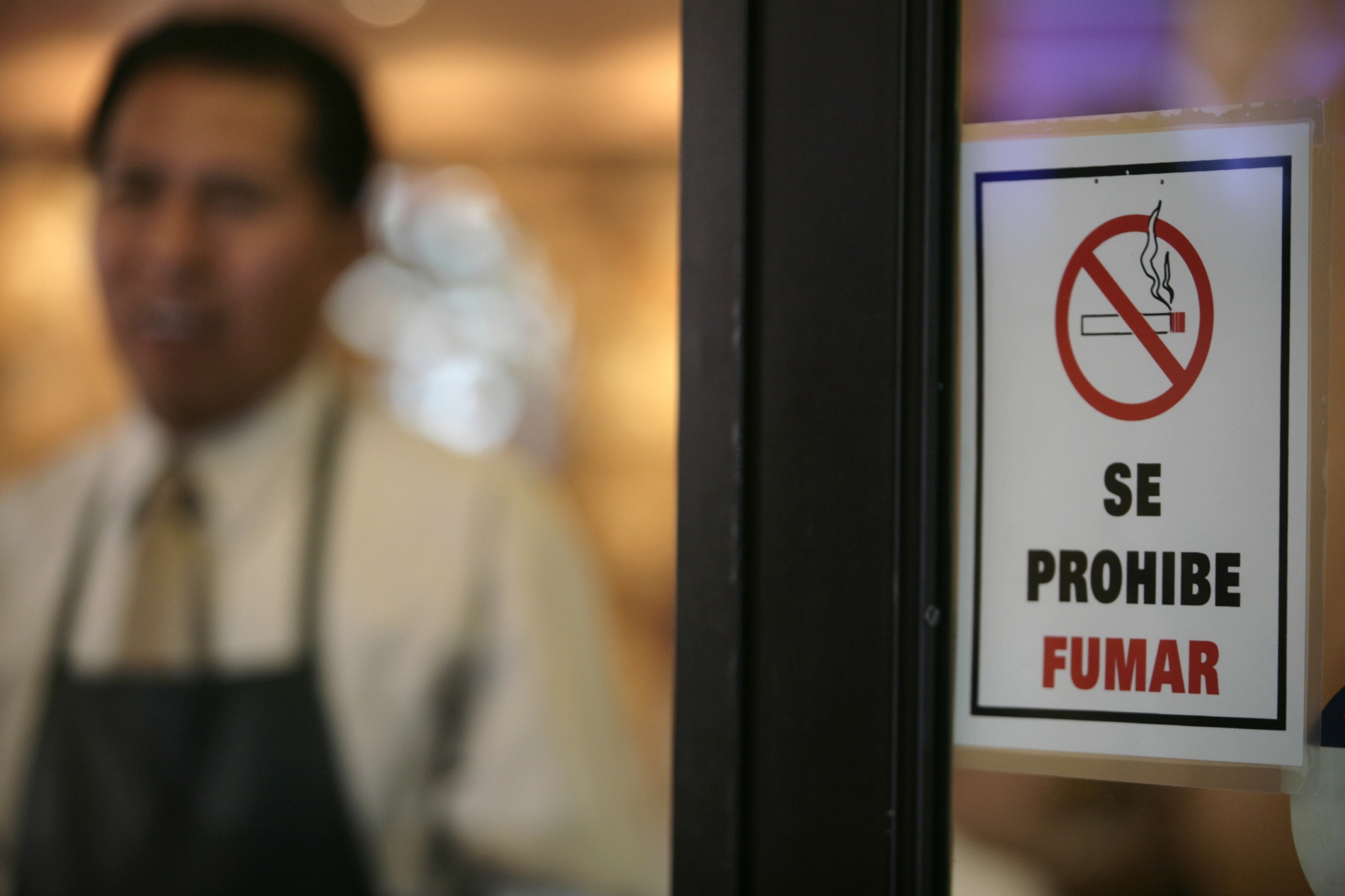
The real anomaly, however, lies in the fact that Mexico, despite its heavy air pollution, enforces one of the strictest smoking bans on both conventional and electronic cigarettes of any country I have visited. In hotels, cafés, restaurants, parks, and all public spaces, smoking is strictly prohibited; violators face steep fines.
A sign at the entrance of a restaurant in Mexico City reads "No Smoking," while a waiter stands in the back, on 3 April 2008, coinciding with the entry into force of the law banning smoking in enclosed spaces.
This ban, in effect since 2023 as an expansion of the nationwide tobacco control law first introduced in 2008, was enacted to mitigate the consequences of a longstanding health crisis; successive governments have sought to address it since the 1950s.
The scale of its success, while certainly vexing for a habitual smoker like myself, becomes baffling when contrasted with the lack of success in curbing factory emissions, car exhaust fumes, and the smoke from street food stalls—most of them grilling or frying— that line the pavements. One can quite literally choke while walking these streets or navigating the traffic-choked crossings, yet be entirely free from the effects of cigarette smoke.
To dispel another prevailing stereotype about Mexico—that it is a haven for drugs—the smell of cannabis is noticeably absent from the streets, unlike many European capitals. Nor will anyone approach you in the bustling streets of either city to offer drugs of any kind, something tourists have come to expect in many European and even Mediterranean capitals.
I walk through Plaza de la Constitución, commonly known as the Zócalo, the main square at the heart of the historic centre, where the clamour of thousands of pedestrians can be deafening if one chooses to focus on it. I glance left and right, searching for someone holding a cigarette, hoping for some reassurance that I might discreetly smoke my electronic cigarette. I can scarcely find anyone, and so I hesitate, until I spot an elderly man smoking, a small opening I take as private permission to proceed.
Yet there is a feeling, difficult to define, of shame or embarrassment associated with smoking here. And while the contrast between the strict ban on cigarettes and the apparent failure to address other forms of pollution is indeed striking, the feat that Mexican authorities achieved by enforcing this ban deserves praise. Their success is clear, particularly among adolescents and young people. I did not once see a young person with a cigarette, vape, or anything of the kind—proof that strict enforcement of public health measures, when coupled with genuine oversight and accountability, can indeed yield tangible results.
A lost moment in time
In another square near my modest hotel, letter writers are scattered about. As the poet and translator Paula Abramo tells me, they offer writing services for those who cannot write, using old typewriters. Love letters, petitions, family correspondence. It all feels quaint, like scenes from classic Egyptian films, yet here it exists in the most ordinary of ways, much like everything else in this city.
The following morning, a Sunday, I sit on one of the benches in this square, gripped by an overwhelming sense of having travelled back in time, as though those typewriters were machines designed for time travel. The sensation is deepened by the sight of an old man sitting alone on another bench, drinking from a large bottle of beer, as if he had wandered straight out of one of Jack Kerouac's novels set in 1950s Mexico City.
To find a man sitting alone on a bench in a city as densely populated as Mexico City offers yet another perspective on the place—despite the overwhelming crowds, such solitary moments and quiet spaces still exist.
People strolling through the historic centre of Mexico City, on 16 January 2022.
Colonia Roma
I walk with the Palestinian academic and translator Shadi Hanna through the Colonia Roma neighbourhood, known simply as Roma, the setting of Alfonso Cuarón's acclaimed 2018 film Roma. It is one of the city's more affluent districts. He explains that the area has undergone several transformations: from a bohemian enclave to a middle-class neighbourhood, and, today, a bourgeois one, shaped by an influx of American residents.
In such areas, the dollar sign, which in Mexico usually denotes prices in pesos rather than US dollars, takes on a different meaning. Here, at least symbolically, it is transformed into the higher-value dollar.
Shadi Rohana points me towards a building called Orizaba 210, just north of the Roma neighbourhood, where Beat Generation writers such as Jack Kerouac, Allen Ginsberg and William S Burroughs once lived as they explored this territory of dreams and whims. Almost nothing from that era remains. The Mexico City Kerouac tried to fix in his 1960 novella Tristessa, and in his collection Mexico City Blues, has vanished.
Today it isn't the haven for poets, artists and bohemians that it once was. It is a city of work. Even my visit to one of the city's best-known jazz clubs confirmed it. What calls the shots is not mood, but the choreography of elegant, tidy nightlife.
Today's major cities are organised around two things and little else: work and tourism. The people who live in the city, and those who move to it to earn a living or use it as a gateway to other countries, live a life unlike that of the tourist, even as both share the same streets and squares. Mexico City, the hub of Latin America in every sense and a gateway to the United States, makes this especially clear, hence Uncle Sam's constant complaints about immigration. Residents and migrants inhabit the city differently from visitors. Each group also has its own spaces that don'tt necessarily overlap.
In affluent areas such as Roma or Reforma, where luxury hotels, Starbucks and a parade of American and global brands dominate, you will not find the taco stalls that spread along the pavements elsewhere like arteries running alongside the arteries of cars on streets and boulevards. Instead, restaurants—Mexican and international alike—offer tacos as one item among broader menus of Latin and world cuisines.
On pavements lined with major hotel chains, including Mexican ones like Barceló, alongside familiar global brands, you see another kind of crowd. Their appearance, their clothes and the way they move through space are the same as in well-off districts around the world, whether in Beirut, Barcelona or beyond. They look comfortable in their clothes, and their movements through the city seem planned, with specific times and destinations that keep them from being trapped in traffic. They live and move through places shaped over time to suit their needs and tastes.
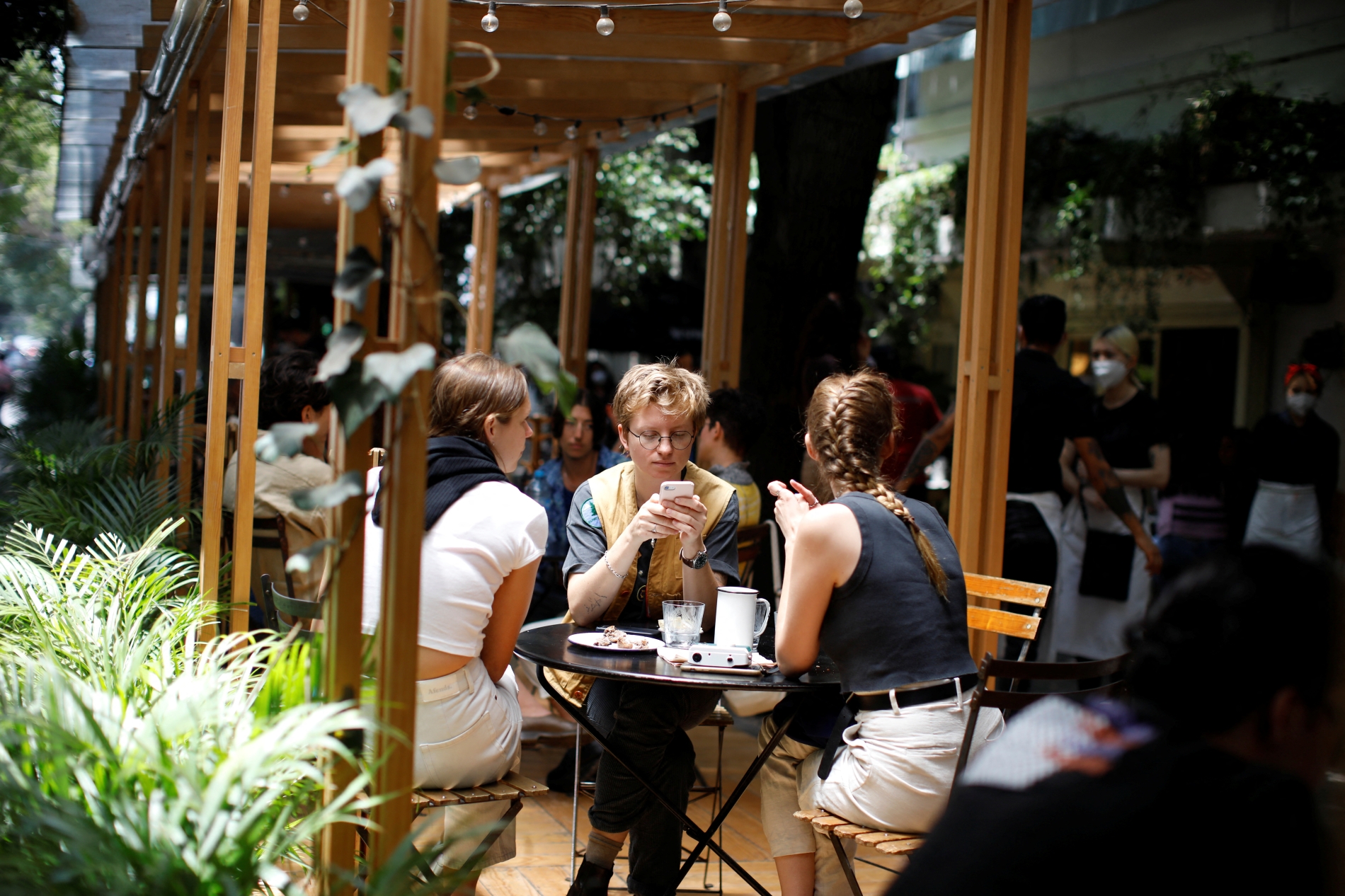
People having breakfast in the Roma Norte neighbourhood of Mexico City, on 9 September 2022.
In these streets, you will see tourist faces, mostly white American and European, the same ones you see in other cities. You will also spot the city's own affluent residents, businesspeople and employees of international companies, sitting quietly in cafés and restaurants, or exercising in expensive outfits with instantly recognisable logos, in spacious areas and on clean pavements designed to reassure them that they are in the right place.
The Trotsky Museum
There is no room here to talk about class, about the rich and the poor and perhaps a middle class whose features are not easily seen. The world's conversations no longer move in that orbit. These are old terms, not so much replaced as abandoned. They have given way to no single label, to something you can feel without necessarily having a name for it.
That is why the Trotsky Museum really is a museum, a relic to be visited so that the tourist, whatever their social or ideological background, can glimpse a piece of distant history. This is the spot where the Spanish agent sent by Stalin, Ramón Mercader, 1913 to 1978, stood when he brought an ice axe down on Trotsky's head.
The job of museums is to show us the value in what has passed. The Trotsky Museum, however, is a sad story: a visit to a crime scene and, at the same time, a sign of shifting times rather than continuing. The man who was part of an attempt to change the world, whether we welcomed that change or not, lies in a fenced grave in the garden of the house where he was killed. His killer survives as a photograph, or as a character who loves dogs in a novel by the Cuban writer Leonardo Padura.
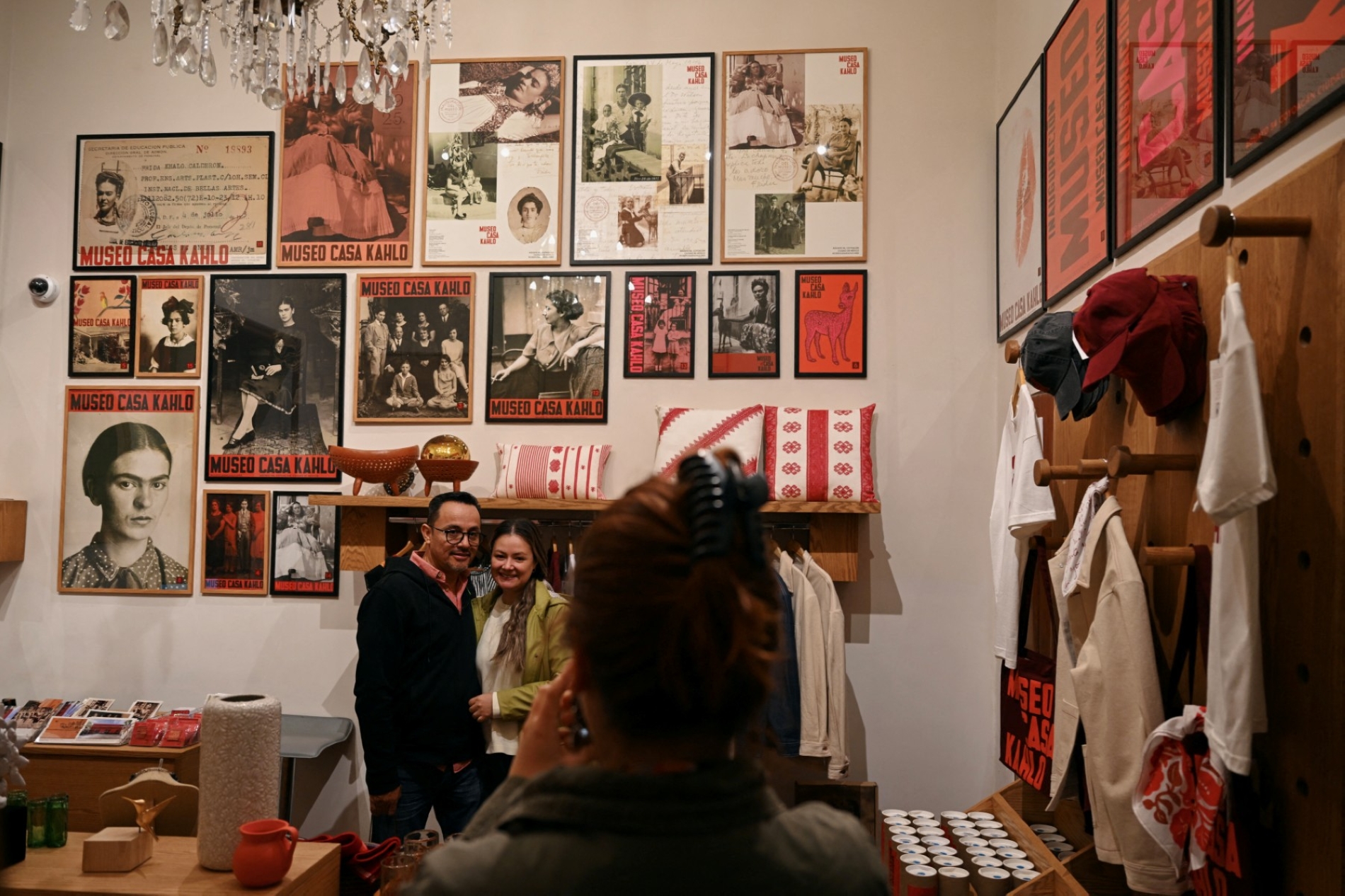
A visit to the Frida Kahlo Museum takes us somewhere else. In a sense, it is the Starbucks of museums. Here we see the glory of branding at its most perfected. The artist, whose talent Mexican intellectuals do not deny, even if they are not necessarily impressed by the commercial drive behind the manufacture of her image, has become part of an industry of brands and icons. Tourists line up, a new queue forming every 15 minutes, to tour her home and studio and take photographs as proof of the visit.
It is a tourist landmark, yet the crush here, if we consider the size of the space and the nature of what it contains, is far greater than at the larger and more important landmark of the vast National Museum of Anthropology, or even the famous Maya pyramids. Casa Frida draws half a million visitors annually, roughly one-sixth of those who pass through the Museum of Anthropology.
The credit for this frenzy of love and admiration, as the poet Óscar de Pablo tells me, goes first to the American singer Madonna, who once bought two works by Frida. The purchase drew attention and helped open the way for the making of the famous film about her. Madonna called her her favourite artist, throwing the doors wide open to a belated global fame.
An employee of the "Casa Kahlo Museum" takes a picture of a couple of tourists in the museum's souvenir sales room in the Coyoacan neighbourhood of Mexico City on 3 October 2025.
In any case, American influence extends far beyond the Frida Kahlo phenomenon. You find it present, or at least implicit, in many debates about culture and politics in Mexico. One intellectual notes that Mexico's left-wing president, Claudia Sheinbaum, has always treaded carefully in her approach to relations with the United States, especially during the era of Donald Trump. Even her stance on the war in Gaza was hesitant. She did not acknowledge the scale of what was happening until many months had passed, when she judged that speaking out would not be politically costly or add strain to an already fraught relationship with Washington.
The war in Gaza is more present in the conversations of left-wing intellectuals, artists and journalists. Yet its impact is not sweeping, as in other countries, including elsewhere in Latin America. It is largely muted, given Mexico's size and influence on the continent.
One Mexican activist, who devotes most of his efforts to supporting Gaza, tells me that demonstrations have never, throughout the war, reached the scale seen in countries such as Spain or Britain. He attributes that to the relatively small Arab presence, saying Arabs make up no more than 1% of the population.
On my second day in the city, I witnessed a demonstration that formed part of a Global Day of Action in support of Gaza. It might look large in a smaller town, but in a vast city like Mexico City, it can only be described as modest.
Mexicans' priorities lie elsewhere. This is not surprising when around 36% of the population lives below the poverty line and more than 8% in extreme poverty. This does not negate the achievements of recent left-wing governments, which have lifted around eight million people out of poverty. That is what gives these governments their real legitimacy and credibility, set against the lacklustre attempts of the right to return to power.
The Feast of the Virgin
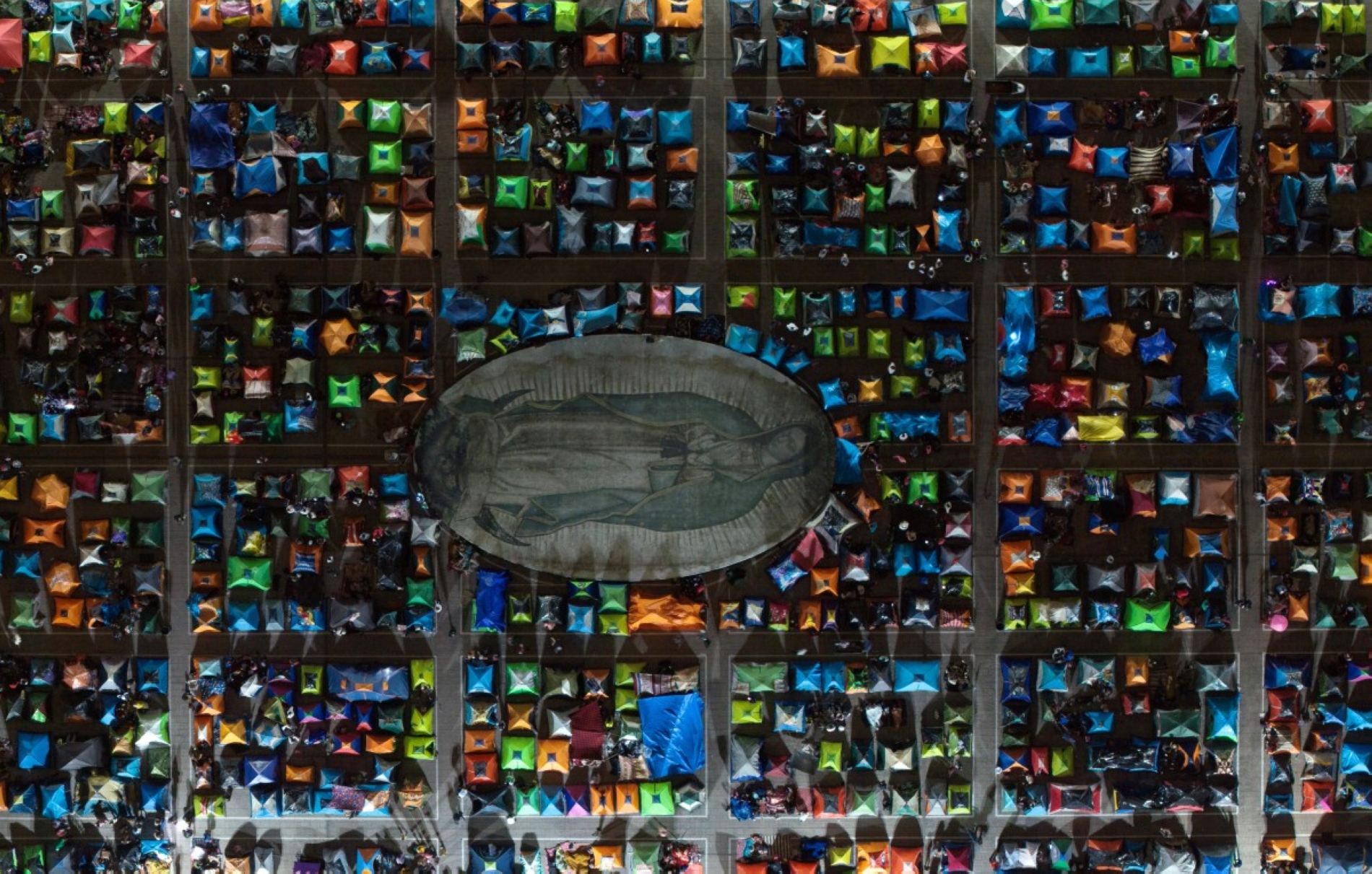
In Fellini's film La Dolce Vita, released in 1960, there is a scene in which crowds and journalists converge on a site in one of Rome's suburbs, where it is claimed that two children have seen the Virgin Mary. I remembered it as I watched the masses of pilgrims arriving in Mexico City for the Feast of the Virgin, the Feast of Our Lady of Guadalupe, on 12 December.
An aerial shot shows worshippers camping outside the Basilica of Our Lady of Guadalupe in Mexico City, on 11 December 2025.
My friend Shadi Hanna tells me the story of this epic celebration. It is said that on 12 December 1531 the Virgin Mary appeared to an Indigenous Mexican farmer of Aztec origin named Juan Diego. Many believe it was a device used by the Spanish coloniser to impose Catholicism on Indigenous Mexicans. If so, it succeeded spectacularly. Hundreds of thousands, some say as many as 12 million, stream into the capital from 11 December to attend the vast mass at the Basilica of Our Lady of Guadalupe, the second most important pilgrimage site in the Catholic world after the Vatican.
On the way to the famous pyramids of Teotihuacan, about an hour's drive from the capital, what stood out was the near-unbroken line of pilgrims heading into the city, whether in cars, buses and lorries, on bicycles and motorbikes, or on foot. I could not help recalling the awe of the scene in La Dolce Vita as I watched this immense human tide and its striking details, including people strapping statues of the Virgin to their backs as they cycled under Mexico's blazing sun.
Another scene on the road to the pyramids, unrelated to the pilgrims' march, also seemed to speak to this Mexican sense of immensity. It was the Cablebús line rising above us as we drove, stretching for more than 20 kilometres, with dozens of cabins moving uphill and down. I learned later that the service is not aimed at tourists so much as it is one of the relatively low-cost transport solutions adopted by Greater Mexico City to ease congestion on the crowded edges of the metropolis and make it easier for residents to reach poorer areas.
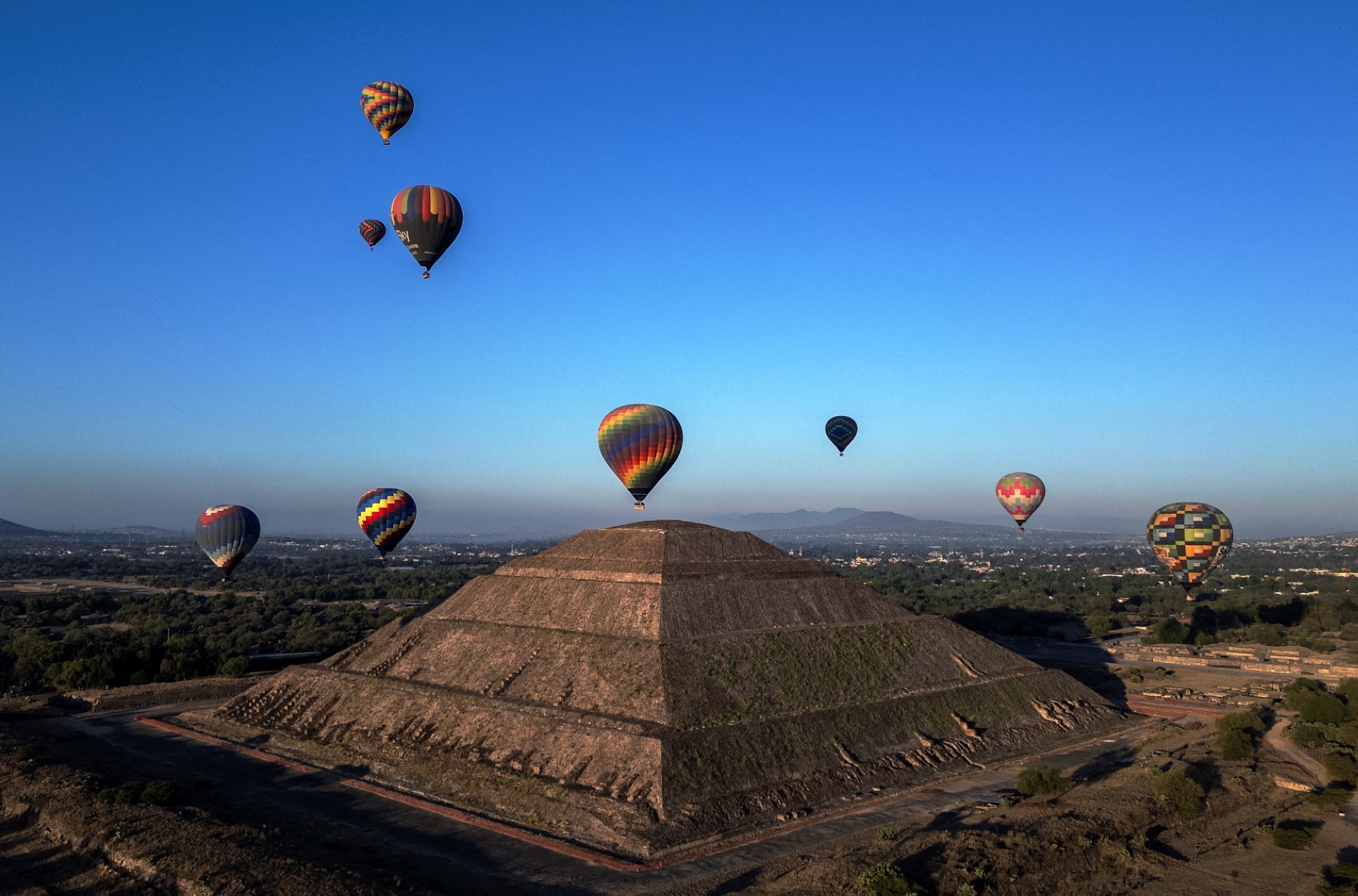
Hot air balloons fly over the pyramids of Teotihuacan in the municipality of San Juan Teotihuacan, Mexico, during the celebration of the spring equinox, on 21 March 2024.
As for the pyramids, part of the great city of Teotihuacan, whose oldest traces date back to 800 BCE, that is a different story altogether. You cannot stand in those vast spaces, threaded with temples and places of sacrifice and overlooked by the immense Pyramids of the Sun and the Moon, without feeling a deep humility in the face of the country's civilisational reach.
It is not only the existence of these singular remains, which recount the lives of vanished civilisations and preserve their imprint. It is also the pride people in this country take in such sites, and their sense that they are an inseparable part of national identity, much like Our Lady of Guadalupe. One does not contradict the other. They meet and coexist within a single civilisational fabric.
Many Mexican intellectuals I met on this trip spoke of multiple forms of racial discrimination within Mexican society itself, and between that society and migrant communities arriving from nearby countries. As a passing visitor, I find it hard to grasp the details. What is certain is that there is a broad consensus around pride in this shared, ancient heritage.
You can see a clear expression of that pride in the National Museum of Anthropology in Mexico City, a landmark built in 1964, with 23 halls packed with priceless heritage. Here, too, it is hard not to feel humbled by a museum of such scale, run with rigour, respect and a very high level of professionalism. It is as if, as you enter and move through its halls, you step into a sacred precinct.
You leave feeling that the story of this planet is not only our story, as races, religions and cultures. It is a story of extraordinary branching richness, intersecting with other stories on shared human ground, while also diverging and distinguishing itself through the qualities of the people and places that produced it and safeguarded it for generations.
The largest book fair in the Americas
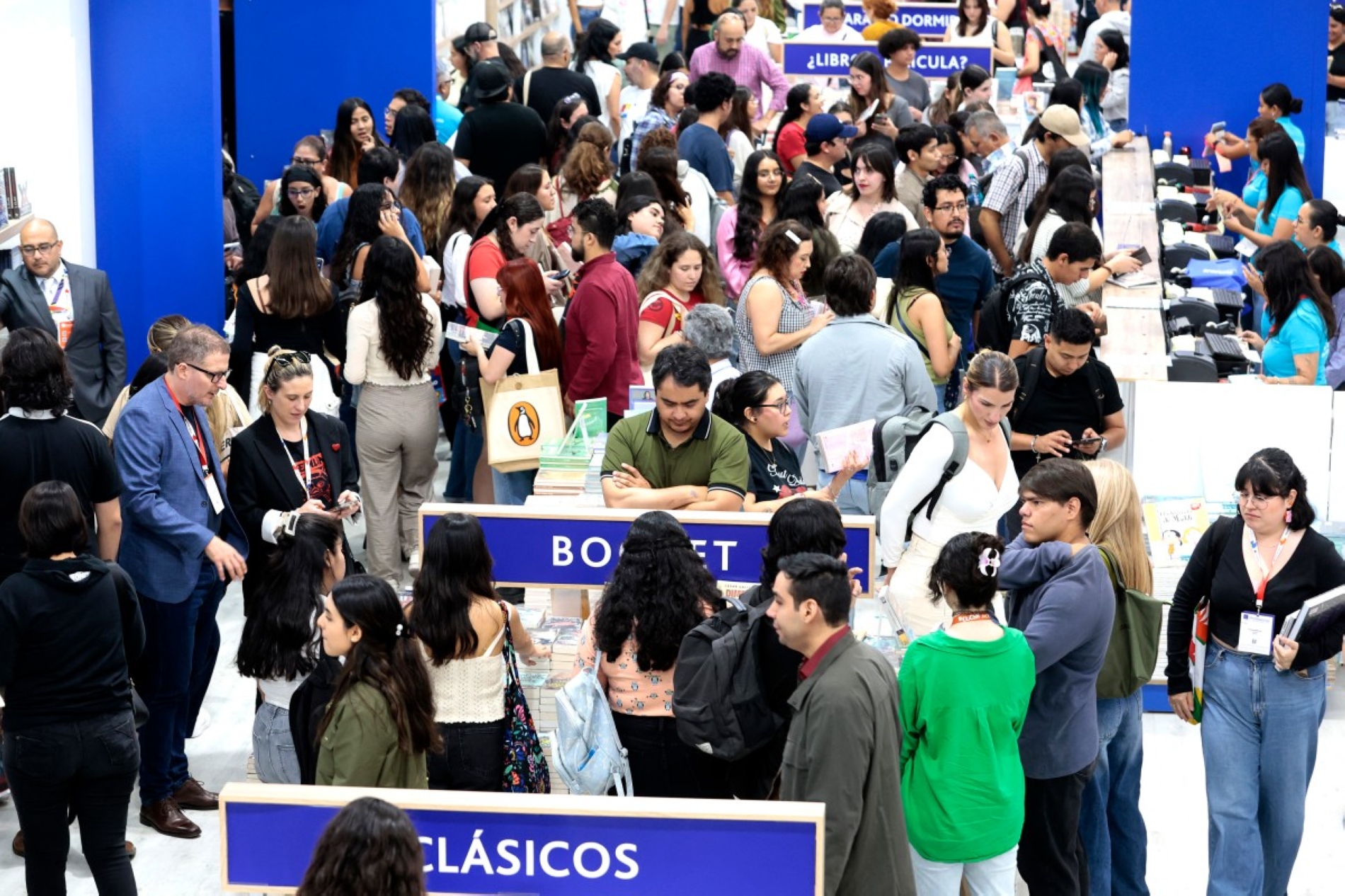
The Guadalajara International Book Fair's reputation—as the largest in the Americas and the second-largest after Frankfurt—precedes it. Yet seeing it for yourself is something else entirely. The sight of tens of thousands of people, of all ages but especially teenagers and young adults, streaming into the fair all day long is heartening, not least because of this exceptional appetite for the printed book. It runs against the familiar narrative of the decline of reading and publishing. In Mexico at least, that narrative does not hold. You see it in the number of bookshops and the small book fairs that spring up across Mexico City.
Visitors flock to the Guadalajara International Book Fair in Guadalajara, Jalisco, Mexico, on 29 November 2025.
Barcelona was the fair's guest of honour, and the Francophone writer Amin Maalouf was the celebrated guest of the latest edition. As Margaret Obank, Samuel Shimon and I made our way to a hall to attend a panel by one of the Arab women writers invited to the fair, as part of the fair's cultural partnership with Banipal magazine now in its second consecutive year, we found ourselves trapped in a huge surge of people, mostly women, trying in vain to reach the hall where the American actor Richard Gere was speaking. I did not see anything like that crush again during my time at the fair.
Still, fleeting glimpses of influencers, with young people jostling to take photographs with them, suggested that social media fever has reached this vast event too, even though it may not actually need it, unlike Arab book fairs that suffer from thin attendance.
At every panel I attended, including my own, the turnout was striking. The same was true of Samuel Shimon's session, where he and Shadi Rohana read Arabic passages and their translations from An Iraqi in Paris, and of the event with the Moroccan writer Latifa Labsir, who read excerpts from her book Taif Sbeiba alongside its Spanish translation. There, Mexicans of different backgrounds and ages came with real eagerness to learn about Arab culture. They asked questions and wondered, as we did, about the faint presence of the Arabic book in Mexico, including at its most important book fair.
Arab publishing institutions and governments often overlook influential cultures like those in Latin America
I can find no convincing explanation for this glaring absence, except perhaps neglect by Arab publishing institutions and governments, which often turn to more mainstream languages like English while overlooking other influential cultures, including Mexican and Latin American cultures more broadly. The absence of Sor Juana Inés de la Cruz's work from the Arabic library is only one small example of the scale of what is missing.
In return, the Arabic book finds no place—not even a small one—on the shelves of Mexican bookshops. It is a mutual failure, but the greater responsibility lies with Arab institutions and publishing houses, still unable to adopt the language of the modern market. As a result, they disregard what presence can yield, including major commercial horizons, at large book fairs such as the Guadalajara International Book Fair.