A state in crisis: Lebanon’s struggle to restore financial stability https://en.majalla.com/node/328792/business-economy/state-crisis-lebanon%E2%80%99s-struggle-restore-financial-stability%C2%A0
A state in crisis: Lebanon’s struggle to restore financial stability
Following the appointment of a new president, Lebanon has struggled to come to terms with the deep-rooted challenges of its financial collapse
Lina Jaradat
Despite a new president, a new prime minister, a new government, and a new central bank governor, what has actually changed after Lebanon's economic collapse?
A state in crisis: Lebanon’s struggle to restore financial stability
What has changed in Lebanon’s economy and financial situation in 2025, following the election of a new president, the appointment of a prime minister, the formation of a government, and the naming of a new central bank governor?
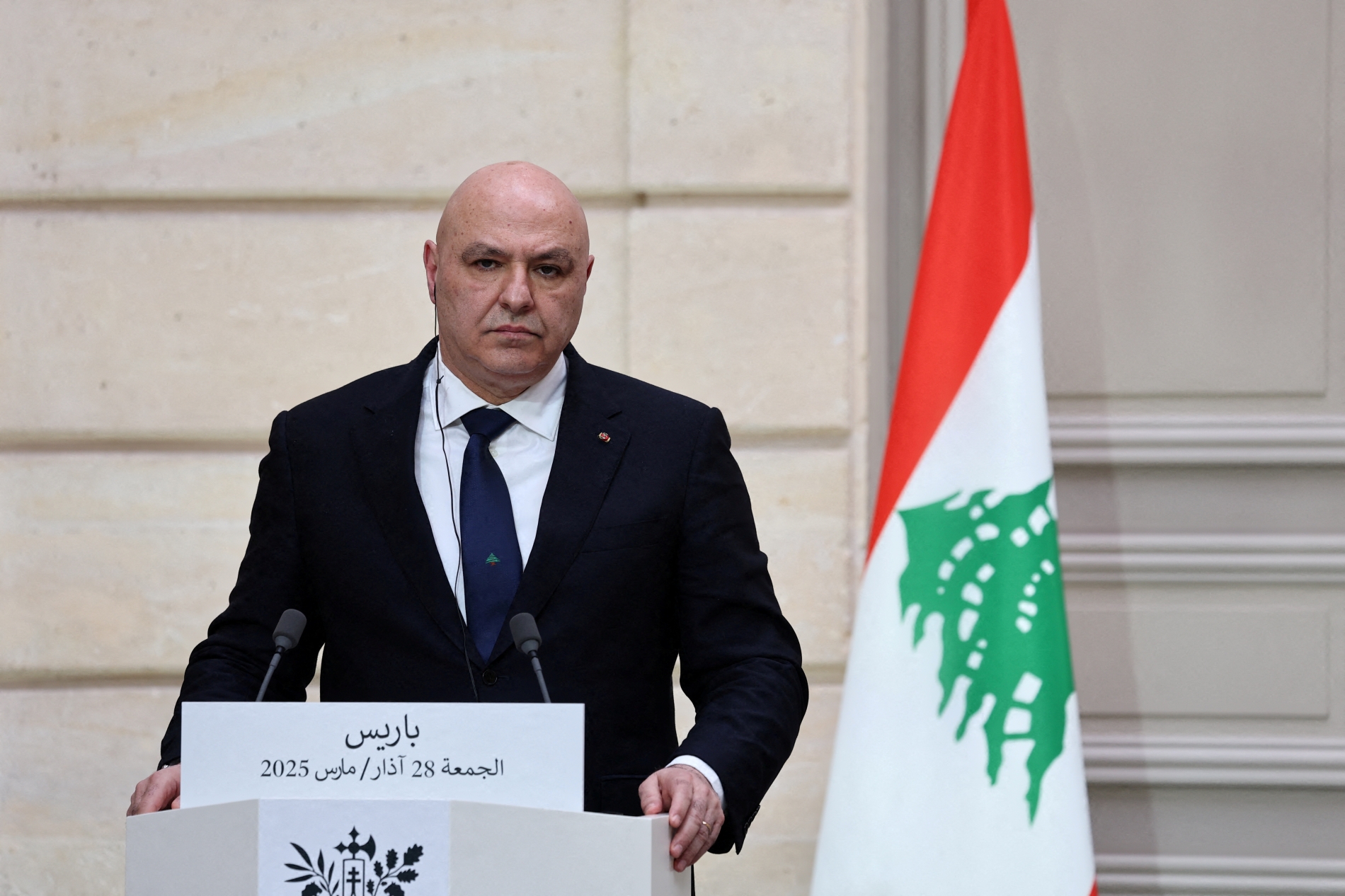
The election of former army general Joseph Aoun as president in January briefly rekindled public hopes that Lebanon might begin to emerge from the financial collapse that has gripped the country since October 2019. In his inaugural address, Aoun made an explicit promise to protect Lebanese depositors whose savings were wiped out by the banking system. This pledge resonated strongly with a population exhausted by years of economic free fall.
Expectations rose further when, following binding parliamentary consultations, international judge Nawaf Salam was tasked with forming a government. Salam’s appointment was widely interpreted as a break from the political class that has dominated Lebanon since the signing of the Taif Agreement in 1989, raising hopes for a reform-minded cabinet capable of confronting entrenched financial interests.
President Aoun promised to protect Lebanese depositors whose savings were wiped out by the banking system.
Those hopes, however, quickly began to fade. While Salam’s government secured parliamentary confidence based on a ministerial statement pledging to develop a comprehensive plan to protect depositors’ rights, the composition of the cabinet has drawn sharp criticism. Nearly one-third of its ministers come from the banking sector, including five who sit on the boards of local banks. Many of the remaining ministers also maintain business ties or family connections to banking interests, deepening public scepticism about the government’s willingness, or ability, to challenge the very sector at the heart of Lebanon’s financial collapse.
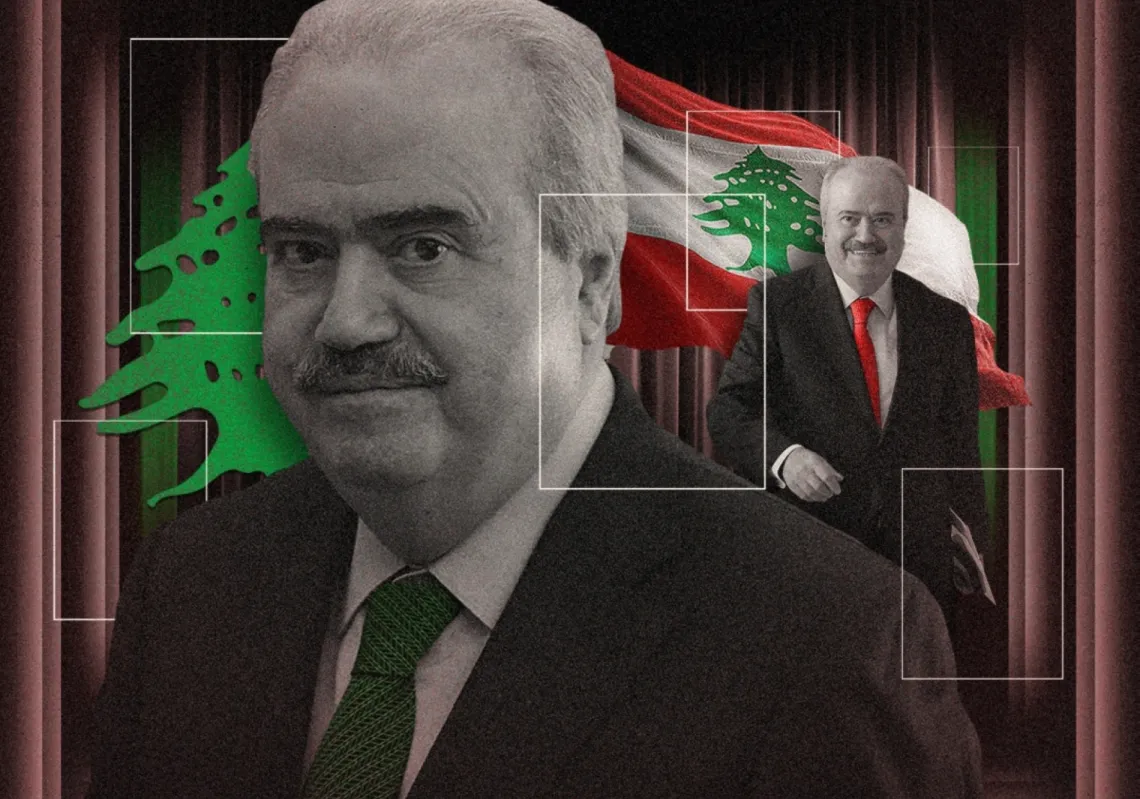
Nearly one-third of its ministers come from the banking sector, including five who sit on the boards of local banks
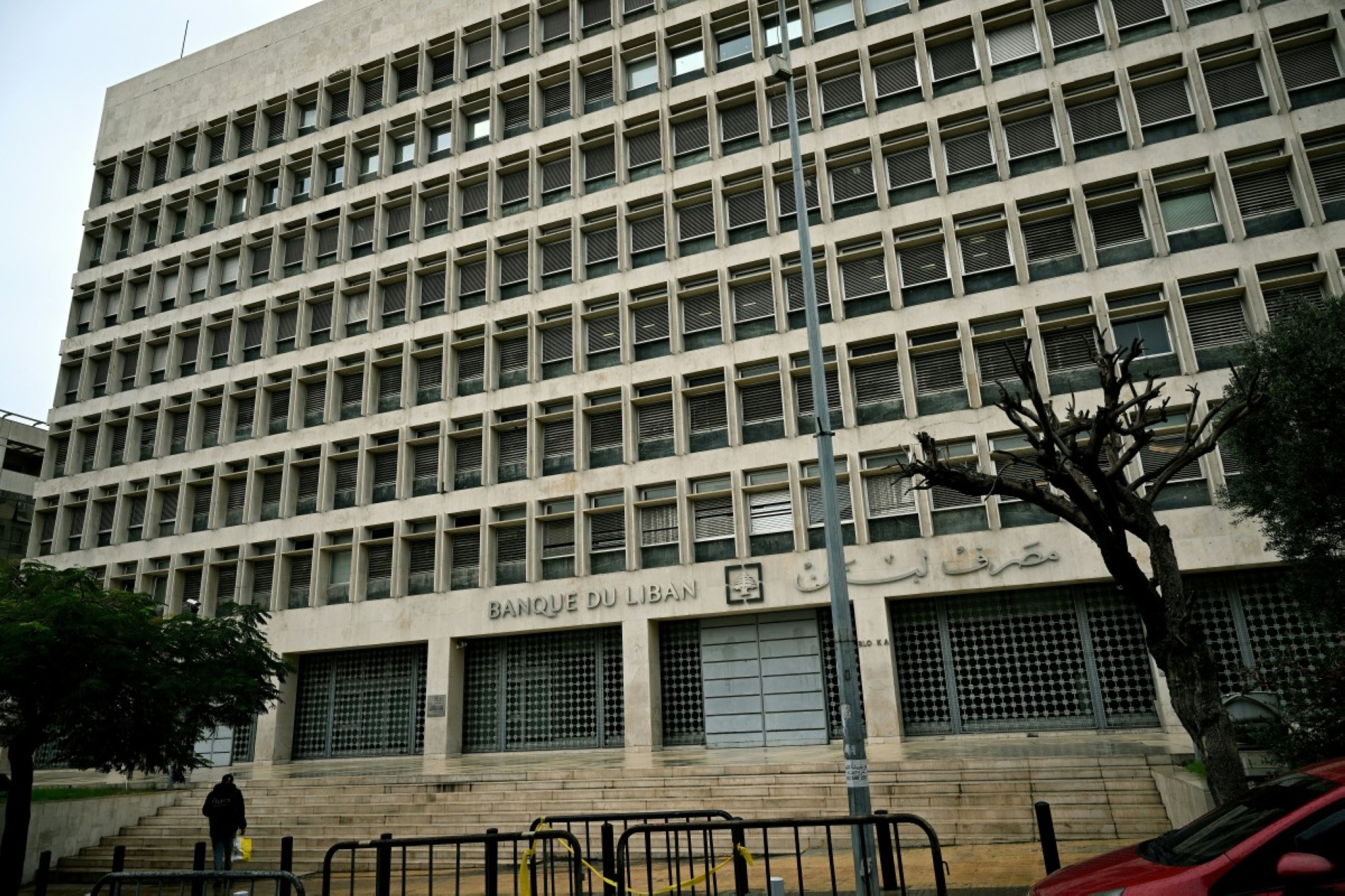
The government deepened these concerns with its decision to appoint Karim Souaid as governor of the Central Bank of Lebanon (Banque du Liban in French). Souaid had previously served on the board of directors of a Lebanese bank, whose relevant department was headed by the president's financial adviser. The appointment immediately raised questions about conflicts of interest and the extent to which the government was willing to insulate monetary policy from the banking sector it is meant to regulate.
The approach echoed a controversy witnessed in France, when François Villeroy de Galhau was nominated to head the Banque de France in 2015, after serving as a senior executive at BNP Paribas. At the time, around 150 French economists and academics warned in an open letter published in Le Monde of the risks posed by revolving-door appointments, asking how someone who had long defended the banking sector's interests could suddenly become the embodiment of the public interest. Even with formal guarantees in place, they argued, doubts inevitably remained.
As Salam's government moved to restructure the central bank's governance in a similar spirit, figures with direct ties to the banking sector came to dominate key positions in monetary decision-making. This, in turn, deepened fears that official promises to protect depositors' funds are more rhetorical than substantive, amounting to slogans rather than enforceable policy commitments.
Amendment of the Bank Secrecy Law
On the operational front, the government has focused on implementing the commitments under the Staff-Level Agreement, signed with the International Monetary Fund (IMF) in April 2022. The first step in this process was the preparation of a draft law, approved by the House of Representatives and promulgated in April, that amended the 2022 revisions to Lebanon's Bank Secrecy Law.
The amendment significantly broadened the circumstances under which banks are required to disclose information without invoking banking secrecy. In addition to the judiciary specialised in corruption and financial crimes—the National Anti-Corruption Commission, the Special Investigation Commission at Banque du Liban, and the Tax Administration for Combating Tax Evasion—the law now extends these powers to three additional supervisory bodies: the Central Bank of Lebanon, the Banking Control Commission, and the National Deposit Guarantee Institution.
A recent legal amendment has broadened the circumstances under which Lebanon's banks are required to disclose information without invoking banking secrecy.
Under the new framework, these entities are authorised to request financial data dating back to 2015 as part of the banking sector restructuring process. Such requests may be made without identifying specific accounts or clients. However, customer identities may be disclosed when necessary to analyse deposits and verify their legitimacy, in preparation for returning lawful deposits to their owners.
However, the law's implementation remains incomplete. Its application is contingent on decrees to be issued by the Council of Ministers upon the proposal of the minister of finance. As of now, these decrees have not been issued, leaving the operational framework suspended and key reforms on hold.
Banking status reform law
The second measure approved by the House of Representatives, also required under the Staff-Level Agreement with the IMF, was the Law on the Reform of the Status of Banks in Lebanon. The legislation states that its objectives are to "promote financial stability, address bank failures, protect deposits during liquidation and restructuring processes, and limit the use of public funds to rehabilitate distressed banks."
The law reorganised the Supreme Banking Authority at the central bank, which is chaired by the governor, by dividing it into two chambers. The first chamber is tasked with issuing disciplinary and administrative decisions against institutions that violate banking laws or central bank directives. The second chamber is responsible for reform decisions, including remediation or liquidation measures, based on a final assessment submitted by the superintendent of banks and prepared by an independent evaluator.
This new structure, however, has drawn widespread criticism. Observers argue that it strips the authority of the relative independence and quasi-judicial character it had enjoyed since its creation, when it was chaired by a judge appointed with the approval of the Supreme Judicial Council. At the same time, the amendments have significantly expanded the central bank's influence within the authority's decision-making framework.
Under the revised law, the second chamber now includes the governor and two of his deputies, effectively placing the Banque du Liban in the position of both judge and party to the dispute. The central bank is itself a central actor in the financial collapse, having failed to return deposits held by banks, which derive from customers' funds. At the same time, it is simultaneously empowered to rule on banks' failures to return those same deposits—failures rooted, in part, in the central bank's own breaches of obligation.
This concentration of roles undermines a fundamental safeguard of any fair and effective regulatory system: institutional separation between oversight, accountability, and adjudication.
Draft law on the fiscal gap
The government is expected to approve a draft law intended to bridge Lebanon's so-called 'fiscal gap', refer it to the House of Representatives, restore some regularity to public finances, and establish mechanisms to complete the repayment of deposits estimated at around $83bn. The bulk of these deposits represents liabilities of the central bank to commercial banks.
As the new Lebanese government moved to restructure the central bank's governance, figures with direct ties to the banking sector came to dominate key positions in monetary decision-making.
According to prevailing assessments, the draft law is based on an estimate of the central bank's available assets at roughly $49bn, broken down as follows: $11bn in liquid assets held with correspondent banks; $33bn in gold reserves; and about $5bn in other assets, including stakes in companies such as Middle East Airlines and Intra, as well as real estate holdings.
The remaining gap in the central bank's obligations to banks would be addressed through a series of measures, most notably the write-off of illegal deposits estimated at $2bn; the cancellation of interest accrued on deposits since 2015, amounting to approximately $5bn; and the gradual liquidation of so-called 'ineligible' deposits, those originally held in Lebanese pounds and converted into US dollars after the October 2019 crisis, estimated at around $23bn.
Under the proposed framework, about $21bn would be repaid to depositors over three to five years, while roughly $32bn in deposits would be converted into so-called zero-coupon bonds or bank equity, depending on depositors' choices. The burden of the adjustment would be distributed approximately as follows: $9bn borne by the state, $8bn by the central bank, and $4bn by commercial banks.
Having so many ministers with ties or family connections to banks has deepened public scepticism about the government's willingness, or ability, to reform the sector at the heart of Lebanon's financial collapse.
While this framework is presented as a pathway toward comprehensive banking-sector restructuring and the partial recovery of legitimate deposits, it offers, so far, few concrete guarantees regarding implementation, enforcement mechanisms, or the political feasibility of compelling each party to shoulder its share of the losses.
Broad criticism of the 'deposit write-off' plan
These trends are expected to trigger a wave of criticism, foremost over the treatment of the 'ineligible' deposits estimated at $23bn. These deposits are slated to be reconverted into pounds at the exchange rates applied at the time of the initial conversion. This raises a fundamental contradiction: how could banks claim they lacked dollar liquidity to meet depositors' withdrawals, while simultaneously opening new dollar accounts for customers who rushed to convert their lira holdings into hard currency?
The central bank further entrenched this disparity through a circular issued in February last year, allowing holders of these accounts to make monthly dollar withdrawals from 'dollar investments' that banks had placed with the central bank before the crisis. As a result, depositors who were barred from withdrawing a single dollar from their pre-2019 accounts were, paradoxically, able to withdraw dollars from banks' placements at the central bank, simply because they had converted their balances from pounds to dollars after the crisis began.
More broadly, the fiscal gap plan has drawn criticism for prioritising the write-off of liabilities—namely, deposits—rather than pursuing a resource-mobilisation strategy that could allow for the repayment of most, if not all, deposits, even after the deductions imposed by former governor Riad Salameh's circulars.
Chief among these neglected resources are dollar-denominated bank loans that were repaid illegally at an exchange rate of 1,500 pounds to the dollar, with little effective oversight from either the central bank or the Banking Control Commission. The total value of these loans is estimated at around $35bn. Recovering the illicit gains from these repayments through fair taxation or clawback mechanisms would constitute a legitimate source of funding for restructuring outstanding deposits.
Framing Lebanon's financial collapse as 'systemic' has been the banking sector's main argument but this serves to dilute individual accountability
The same logic applies to beneficiaries of the central bank's so-called 'financial engineering' schemes, including bankers and other insiders who reaped enormous profits. Under these operations, former governor Salameh reportedly allowed bankers who deposited $100mn in 'fresh' dollars to retain $35mn outright, while freezing an additional $100mn in favour of their banks at interest rates of 5 to 6% for five to six years. A study by economist Tawfik Kaspar, published by the Konrad Adenauer Foundation, suggests that part of the cost of these operations, estimated at around $38bn, never appeared on bank balance sheets and was likely transferred abroad by those who benefited from them.
Taken together, these facts suggest that the recovery of dollar deposits as they stood at the outbreak of the October 2019 crisis is not an impossibility. It remains achievable if such resource-based approaches are adopted as the foundation of reform. By contrast, what is currently being circulated as the government's plan to 'bridge the financial gap' appears driven by a logic of erosion and write-offs, effectively shifting the cost of the collapse onto depositors while shielding banks from accountability for the grave violations and financial crimes committed before, during, and after the crisis.
'Systemic crisis' claims and the IMF's response
It is also worth noting that the draft law to bridge the financial gap sparked intense debate during the October discussions in Washington between the Lebanese delegation and representatives of the IMF. According to leaked information, the IMF rejected the project's core premise: beginning with the write-off or deduction of so-called 'illegal' portions of deposits, then determining banks' contributions toward repaying the 'guaranteed' share, set at $100,000 per depositor across the entire banking sector, rather than per account, as required by international standards. The draft further proposes involving banks in guaranteeing long-term bonds to be issued to depositors for amounts exceeding this threshold, pending a case-by-case assessment of each bank's financial position.
IMF staff, by contrast, insisted that remediation must begin with the full recognition and treatment of existing losses in line with international standards, chief among them the complete write-down of shareholders' equity, which is already considered harmful under Basel rules. The Lebanese delegation responded by arguing that the crisis is 'systemic', affecting the banking sector as a whole, and therefore rendering the strict application of international standards impractical.
Nearly one-third of its ministers come from the banking sector, including five who sit on the boards of local banks.
Framing the collapse as 'systemic' has been the banking sector's central argument since the onset of the crisis. In practice, this characterisation has served to dilute individual accountability, shift the burden of losses onto 'the system', and obscure the financial crimes that preceded, accompanied, and followed the collapse. It has also curtailed the role of the judiciary, undermined depositors' legal claims, and paved the way for calls for 'exceptional' remedies because existing laws were designed for regular times.
The IMF's rejection of this framing reflects a clear guiding principle: the state should not absorb depositors' losses. This stance is not only grounded in regulatory orthodoxy but also in the fund's own interest in ensuring that any financial assistance to Lebanon is repaid without placing additional strain on public finances.
Monitoring Lebanon's cash economy
Finally, the visit of a US Treasury Department delegation to Beirut in early November brought renewed attention to Lebanon's cash economy and the urgent need to strengthen financial oversight to curb illicit flows of funds, particularly those suspected of reaching Hezbollah or affiliated entities.
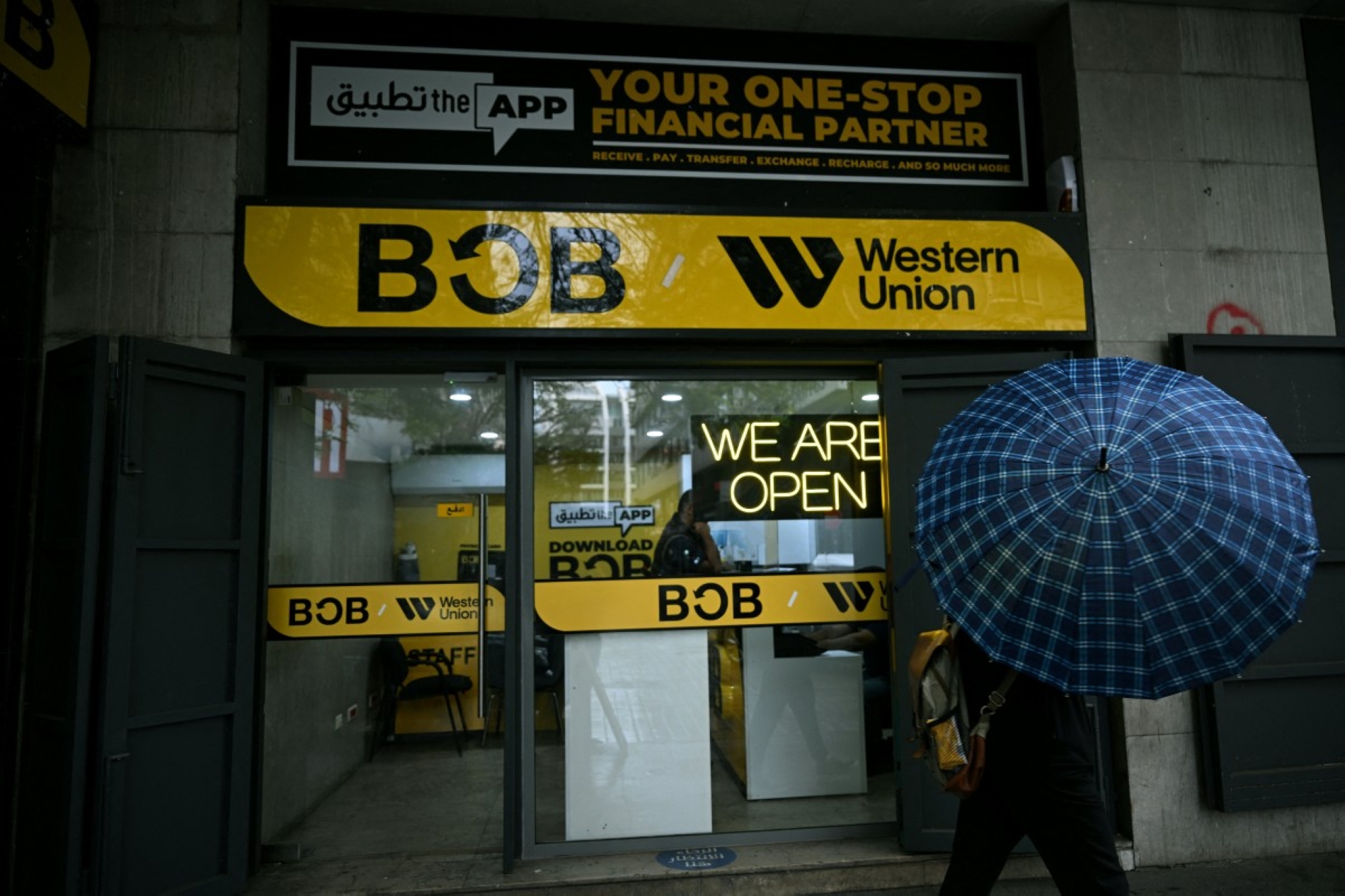
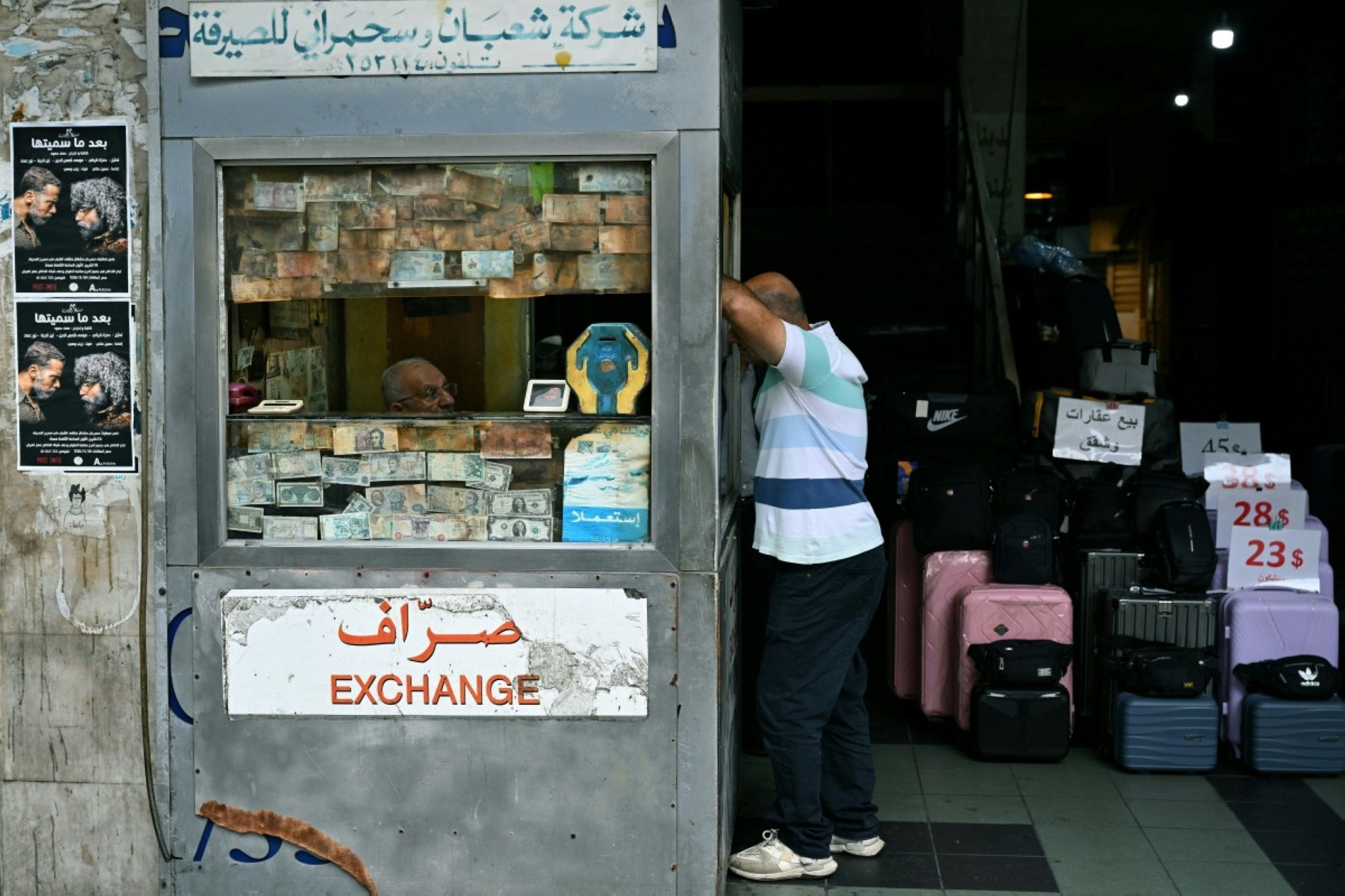
Shortly after the visit, the central bank announced a series of preventive measures targeting all licensed non-bank financial institutions, including money transfer operators, exchange houses, and other entities handling foreign-currency cash transfers into and out of the country.
The central bank framed these steps as efforts to reinforce compliance within the financial sector, supporting Lebanon's bid to be removed from the Financial Action Task Force's grey list and the European blacklist. While the measures are formally classified under anti-terrorism financing regulations, the central bank did not directly address the issue of Hezbollah's financing.
These measures are expected to curtail the operations of Hezbollah's Al-Qard Al-Hasan Association, a non-profit financial institution, significantly. Financial and monetary transfers will be suspended, and the ATMs provided to its branches will no longer be operational. The association's activities will primarily involve depositing gold as collateral in exchange for cash, in line with its status as a licensed financial entity.
The central bank also issued a decision prohibiting licensed financial institutions from conducting any business with Al-Qard Al-Hasan, as well as other entities, including Tasheelat SAE, Al-Yusr Finance and Investment Company, and Bait al-Mal for Muslims, along with any organisation listed on international sanctions lists.
Other means of funding the party
It is worth noting that the government's efforts to block Hezbollah's 'invisible' financing channels, following its decision to assert state control over weapons, have opened the discussion on restricting access to other assets, particularly gold.
Available data indicate that gold smuggling routes primarily run from Iran to Hezbollah through the UAE and Turkey, as well as via land, sea, and air ports, in a context of minimal financial oversight over gold traders, unlike the strict controls imposed on money changers and transfer companies.
Imports of jewellery, gold, and precious metals through to July totalled $1.751bn, or 15.3% of total imports, compared with only $440mn in the first half of 2019, a surge of $1.311bn. This sharp rise coincides with the recent announcement by the US Undersecretary of the Treasury for Counterterrorism and Financial Intelligence that Iran succeeded in channelling $1bn to Hezbollah.
Tracking the party's funds through blockchain-based cryptocurrencies remains more challenging, given the absence of formal regulation by the central bank. While decentralised cryptocurrencies offer users a degree of anonymity, advances in technology have made it possible to trace many transactions. At the same time, cryptocurrencies remain highly exposed to price volatility, adding another layer of risk to their use for financing.