The mounting cost of airport hoax threats

The negligible cost of disruption compared to the huge cost of responding to it has made hoax threats a highly effective form of economic sabotage

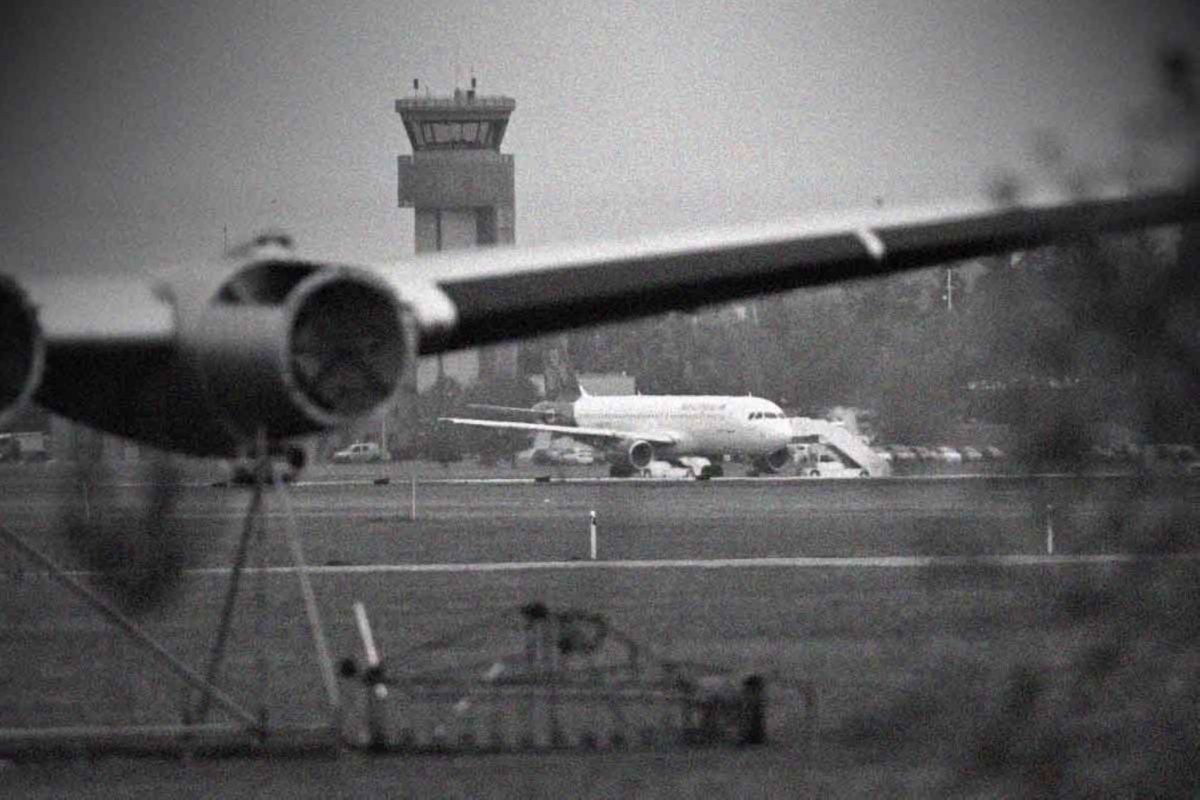
An Aer Lingus aircraft on the runway at Dublin International Airport was diverted and escorted by military jets following alerts regarding the presence of explosive materials on 5 November 2026.
AFP
An Aer Lingus aircraft on the runway at Dublin International Airport was diverted and escorted by military jets following alerts regarding the presence of explosive materials on 5 November 2026.

The mounting cost of airport hoax threats

Disrupting a flight does not necessarily require an explosive device, a weapon or even a perpetrator on the ground. Sometimes, an anonymous email claiming that explosives have been placed aboard a particular aircraft is enough to set off a long and costly chain of events in motion. The airport notifies the airline, the pilot is alerted, airspace is reorganised, and fighter jets may be scrambled to provide an escort, while police, bomb-disposal teams and fire crews prepare at the airport where the aircraft is expected to land.

Once it touches down, the passengers disembark, the baggage is unloaded, and the aircraft is moved to an isolated position for inspection. Even if the threat proves to be a hoax, as is usually the case, operations do not instantly return to normal. The crew may already have exceeded its legally permitted working hours, passengers may have missed connecting flights, and the aircraft may be late for its next scheduled service. The airport to which it has been diverted also has had to accommodate an unexpected aircraft and allocate runway capacity, security teams and ground services to it.

The negligible cost of disruption compared to the huge cost of responding to it has made hoax threats a highly effective form of economic sabotage.

The problem came sharply into focus in the first week of November 2026, when hoax threats targeted dozens of flights across Europe. The totals vary depending on whether they include aircraft that received threats but continued to their destinations. Even so, some media counts identified at least 34 affected flights over the course of several days. On one day alone, AFP reported that about 20 flights had been targeted, three of them diverted and at least five escorted by military aircraft.

The incidents involved flights connected with Britain, Ireland, Italy, Bulgaria, Poland, the Czech Republic, Romania, Denmark and Finland. Some aircraft were diverted to alternative airports, while others were searched after reaching their intended destinations. No explosives were found in the publicly reported cases, and the authorities have produced no evidence establishing that a particular state or organisation was responsible, or that all the messages came from the same source.
Reuters
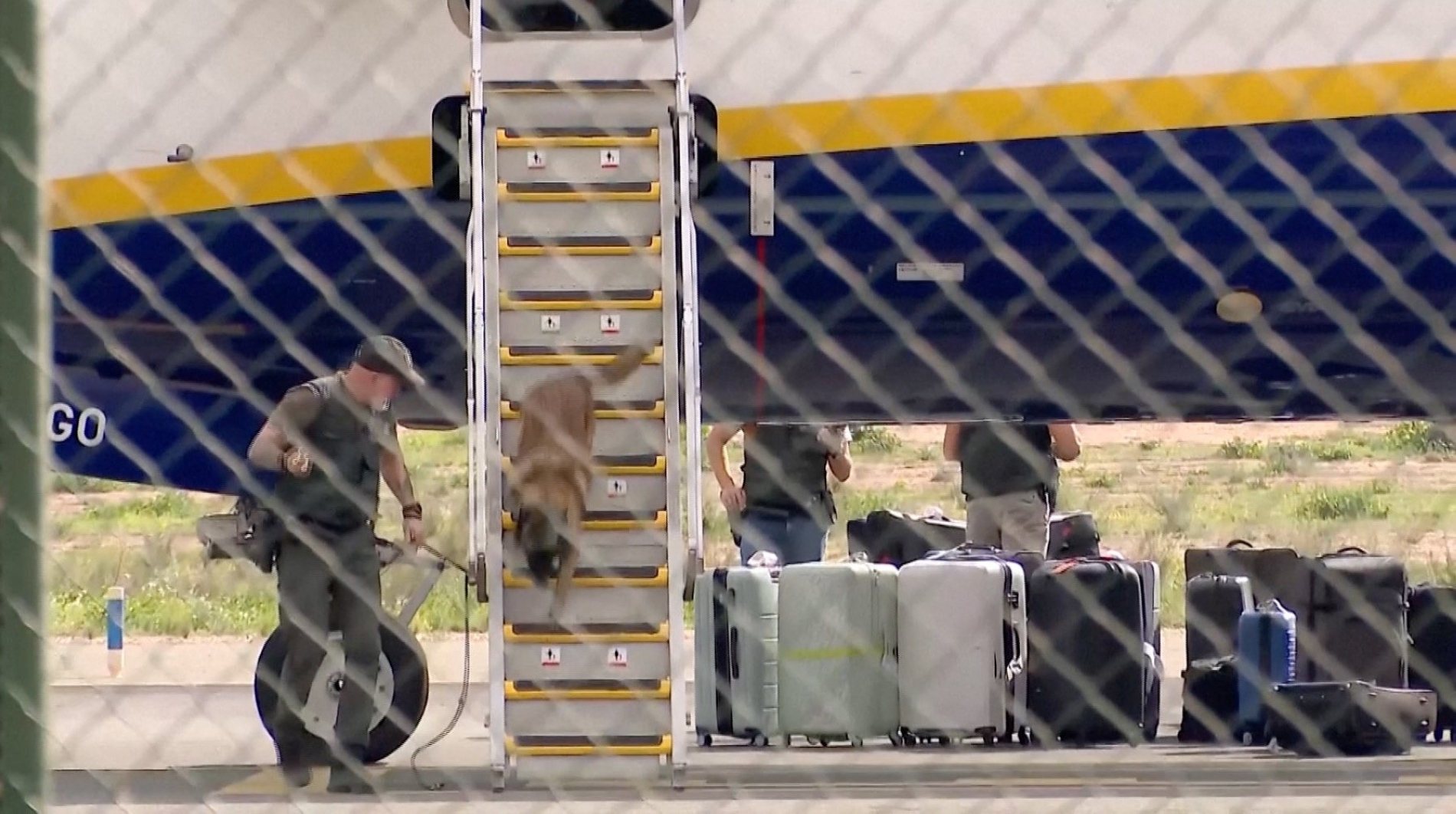
Spanish police officers search a Ryanair aircraft and its luggage at Murcia Airport, Spain, on 3 November 2026, after the airline’s operations centre reported the presence of explosives on board.

That distinction matters. Against the backdrop of European security tensions and discussion of hybrid attacks in the context of Russia’s war against Ukraine, it is easy to attribute such incidents politically before investigations are complete. The possibilities still range from a coordinated campaign and an online group to people copying earlier threats after seeing the resulting publicity, or individuals acting for entirely different reasons. The aim may have been to undermine confidence in air travel, test the speed of national responses or simply cause the greatest possible disruption with the least possible effort.

The European Union activated its aviation-security information-sharing mechanism after incidents affected 12 countries in a single day. The wave nevertheless exposed a structural difficulty: an aircraft may depart from one country, while the airline receives the threat in a second, the flight crosses the airspace of a third and ultimately lands in a fourth. Any delay or inconsistency in assessing the message adds precious minutes to the decision-making process and further costs to the flight.
Diverting a European flight can cost anything from €5,000 to €157,000, while the cost for a wide-body service can reach €365,000

Varying costs

There is no standard bill for a diversion. The cost depends on the type of aircraft, the length of the journey, the alternative airport, the time of landing, the number of passengers and whether the aircraft can continue its journey or requires a replacement crew.

EUROCONTROL's estimates nonetheless provide a useful basis for comparison. Its standard figure for diverting a regional flight is approximately €15,000, or about $16,721. This rises to €55,000 for a European service operated by a narrow-body aircraft, whether by a full-service or low-cost carrier, and to €82,000 for an intercontinental flight.

The possible ranges are considerably wider. Diverting a European flight can cost anything from €5,000 to €157,000, while the cost for a wide-body service can reach €365,000. These estimates include passenger compensation where European rules make it payable, so the actual bill may differ when the diversion results from a security threat beyond the airline's control.

AFP
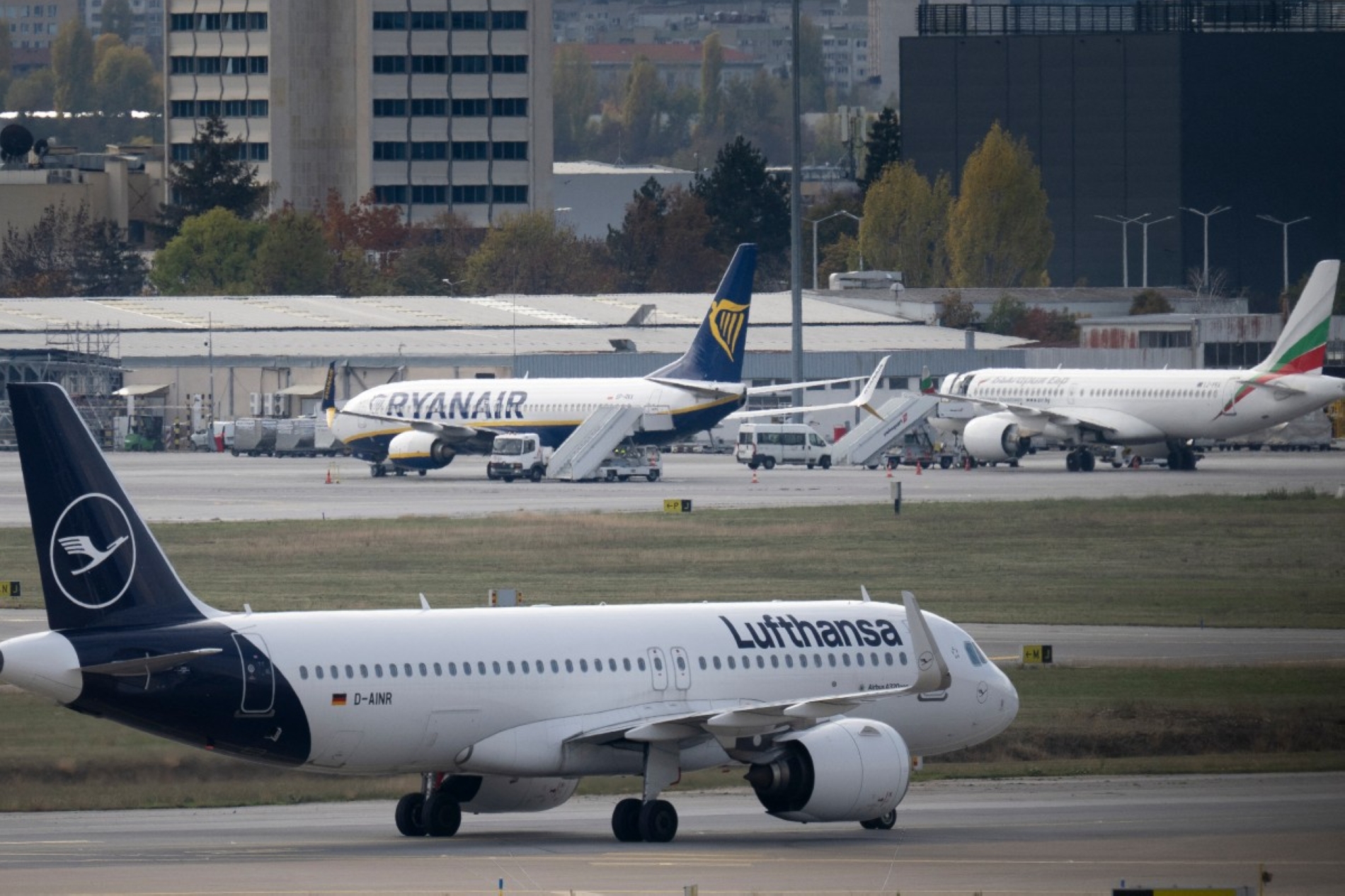
Aircraft on the runway at Vasil Levski Airport, in the city of Sofia, Bulgaria, on 5 November 2026.

Philip Baum, a visiting professor specialising in aviation security at Coventry University, estimates that diverting a flight because of a bomb threat can cost an airline as much as $250,000 in a complex case. The figure is not a general average. It reflects circumstances in which a diversion causes crews to exceed their permitted working hours, passengers to miss connections, hotels to be required and the aircraft's schedule to be disrupted for the rest of the day.

The immediate costs begin with additional fuel, navigation charges, landing fees and ground handling at the alternative airport. Passengers must then be disembarked, baggage and cargo unloaded, the aircraft inspected, and everything loaded again. If the flight cannot continue, the airline must arrange to transport passengers by road or air, provide food and hotel accommodation, and rebook their journeys.

The larger bill, however, may not become apparent until after the inspection. Commercial aviation operates as an interconnected chain: the same aircraft flies several services a day, crews move from one scheduled service to another, and passengers continue to a range of onward destinations. When a single aircraft falls out of schedule, the damage does not stop with that aircraft.

EUROCONTROL estimates the tactical cost of each minute of delay, including its knock-on effect on subsequent flights, at about €166 while the aircraft remains at the gate, €182 while taxiing and €212 while airborne. These are indicative averages rather than fixed prices, but they help explain how minutes can rapidly turn into tens of thousands of euros.

A case at Gatwick Airport offers a clear example. A passenger who was running late falsely reported that there was a bomb on his flight to Marrakesh in the hope of delaying it until he arrived. The aircraft was evacuated and all 147 passengers and their baggage were screened again. The airline also had to replace the crew after its members exceeded their permitted working hours.

The flight eventually departed three hours late, at an estimated cost of £30,000, or about $40,071, to easyJet. The caller, who said that he had panicked because he could not afford a replacement ticket, was sentenced to 16 months in prison.

AFP
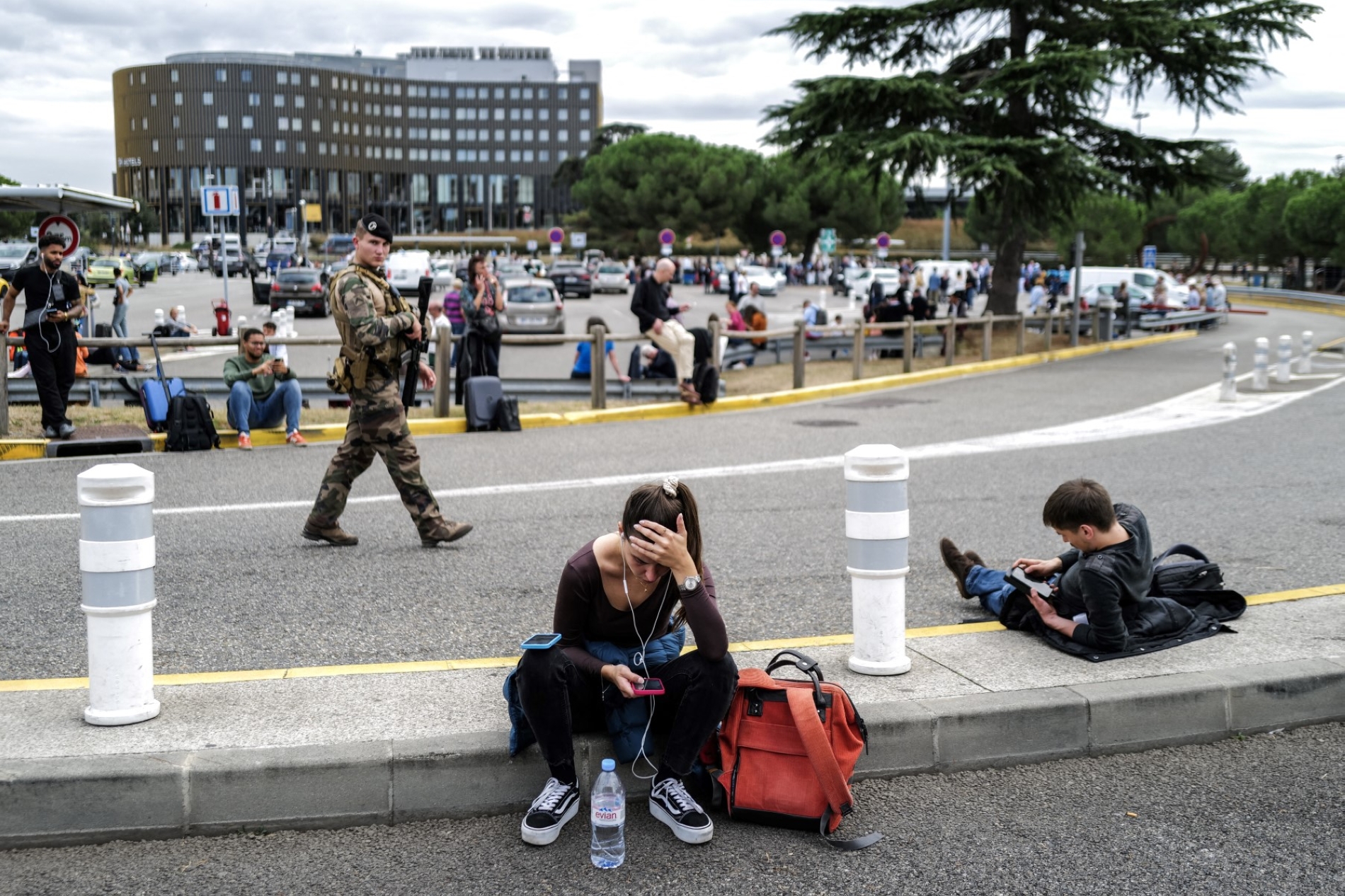
Travelers wait on the airport concourse as a French soldier patrols outside Toulouse-Blagnac Airport in Blagnac, southwestern France, on 18 October 2023.

Broader repercussions

The repercussions are broader when the threat targets an airport terminal rather than a single aircraft. In October 2023, France experienced a wave of approximately 100 hoax threats. More than half resulted in evacuations, with some airports affected more than once. On one day alone, the alerts led to the evacuation of 15 airports and the cancellation of 130 flights, in addition to other delays. Airport industry representatives estimated the losses at millions of euros.

EUROCONTROL puts the average cost of cancelling a commercial flight on the day of operation at approximately €20,930. Applying that average to the 130 flights cancelled that day would produce an indicative cost of about €2.72mn for the cancellations alone. This is an illustrative calculation, not an official bill for the incident. Nor does it include losses arising from delays, costs incurred by airports and the police, or lost revenue for retailers and service companies.

An airport loses passenger, landing and service charges, while restaurants, duty-free shops and car parks suffer reduced sales. Airport management must pay additional wages to operational and security staff, while ground-handling companies, caterers, road transport providers and hotels are also affected. If the threats continue, a less visible cost emerges in the form of weaker passenger confidence, higher insurance expenditure and permanently increased security budgets.

The state also pays for an enhanced police presence, bomb-disposal teams, fire services and investigations, and sometimes for military aircraft scrambled to escort a threatened flight. The bill borne by the state does not appear in an airline's accounts, but it remains a real economic cost funded by the taxpayer.

EUROCONTROL puts the average cost of cancelling a commercial flight on the day of operation at around €20,930

Passenger compensation unlikely

Security threats and hoax alerts are generally treated as "extraordinary circumstances" beyond an airline's control. Passengers are therefore unlikely to qualify for the fixed financial compensation provided under European air-passenger rules, provided that the airline can demonstrate that the disruption resulted from the threat and that it took all reasonable measures.

Exemption from compensation does not, however, remove the airline's duty of care. Depending on the length of the disruption, the carrier must still provide food, drink and accommodation where necessary, and offer passengers a refund or alternative transport. If the aircraft lands at a different airport, the airline may also have to transport passengers to the original destination airport or another nearby destination agreed with them.

That is the paradox of the system: the airline may bear no responsibility for the incident itself, yet it still pays a substantial part of the immediate cost. It then faces a difficult task if it attempts to recover the money from the person behind the threat.

Several European countries allow those who make hoax threats to be prosecuted. An airline, airport or state may also pursue a civil claim for documented losses

Prosecuting the perpetrator

The laws of several European countries allow those who make hoax threats to be prosecuted. An airline, airport or state may also pursue a civil claim for documented expenses and losses. Criminal penalties vary from one country to another. In Britain, communicating false information about the presence of a bomb can carry a prison sentence of up to seven years. In France, false information intended to create the belief that an act of destruction or damage endangering people has occurred or is imminent is punishable by two years in prison and a fine of €30,000. The penalty rises to five years and a €75,000 fine if the false information knowingly endangers the safety of an aircraft in flight.

In Germany, the penalty may reach three years' imprisonment or a fine. In Spain, falsely reporting or fabricating a public danger that mobilises the police or emergency services can result in imprisonment for between three months and one day and one year, or a fine calculated under the country's day-fine system.

A compensation order, however, does not guarantee that the money will be recovered. The perpetrator may be a minor, insolvent or living outside the relevant jurisdiction. The person may also have used a compromised account or anonymity services to conceal their identity. The claimant must also prove that each loss resulted directly from the hoax rather than from an independent operational decision or a pre-existing problem. Financial claims are therefore more useful as instruments of accountability and deterrence than as a guaranteed means of recovering the full loss.

font change