How Canada is navigating Trump’s threats

Foreign Minister Anita Anand on how Ottawa is handling the US trade and tariff war

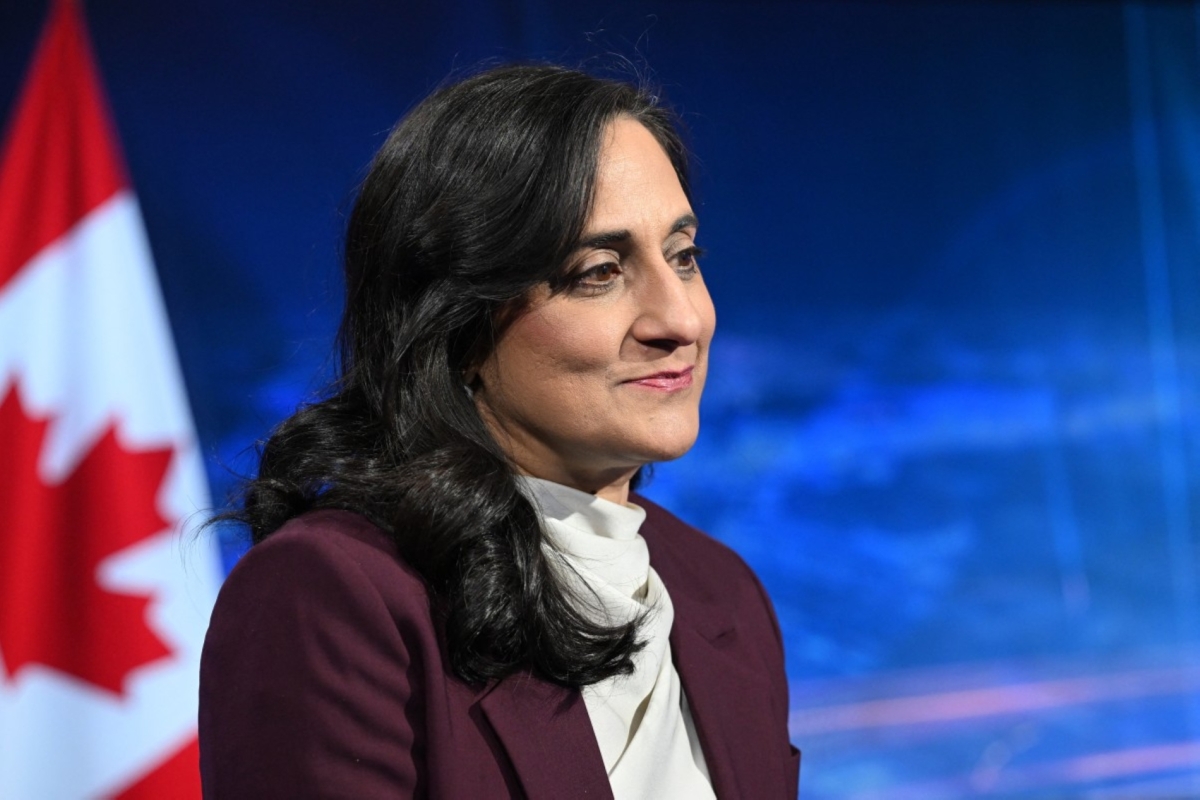
Canada's Foreign Minister Anita Anand answers journalists' questions during an interview as part of her visit to the NATO headquarters in Brussels on 11 May 2026.
NICOLAS TUCAT / AFP
Canada's Foreign Minister Anita Anand answers journalists' questions during an interview as part of her visit to the NATO headquarters in Brussels on 11 May 2026.

How Canada is navigating Trump’s threats

US President Donald Trump has upended relations with several traditional allies, but none perhaps more so than Canada, the world’s 11th-largest economy and a country with which the United States shares the planet’s longest land border. Trump has repeatedly referred to Canada as the “51st state”—an unsubtle threat to absorb its territory; he has imposed sanctions on Ottawa, harming its companies and consumers; and he has driven Canada to look to Europe and elsewhere for stable trade and defence partnerships.

On the sidelines of this week’s UN General Assembly, I caught up with Anita Anand, Canada’s foreign minister. What follows is a lightly edited transcript of our conversation.


Let us start with the trade war that your country has with the United States. President Donald Trump says, “We don’t need Canada. They need us.” How do you respond to that?

Our economies, which have been integrated for decades upon decades, are mutually interdependent. If you look at the auto sector, for example, prior to a car finally being produced, it travels back and forth across the border between Canada and the United States several times. It is just one example of the way in which, over the decades, the auto industry has become symbiotic. This is the case with many other sectors of our economy. Part of what the negotiators are focusing on is the sectoral tariffs, outside of the Canada-United States Free Trade Agreement, in steel, aluminium, lumber, and auto, for example, where the economies and supply chains are integrated. They are trying to reach a result that benefits both populations.
Getty Images via AFP
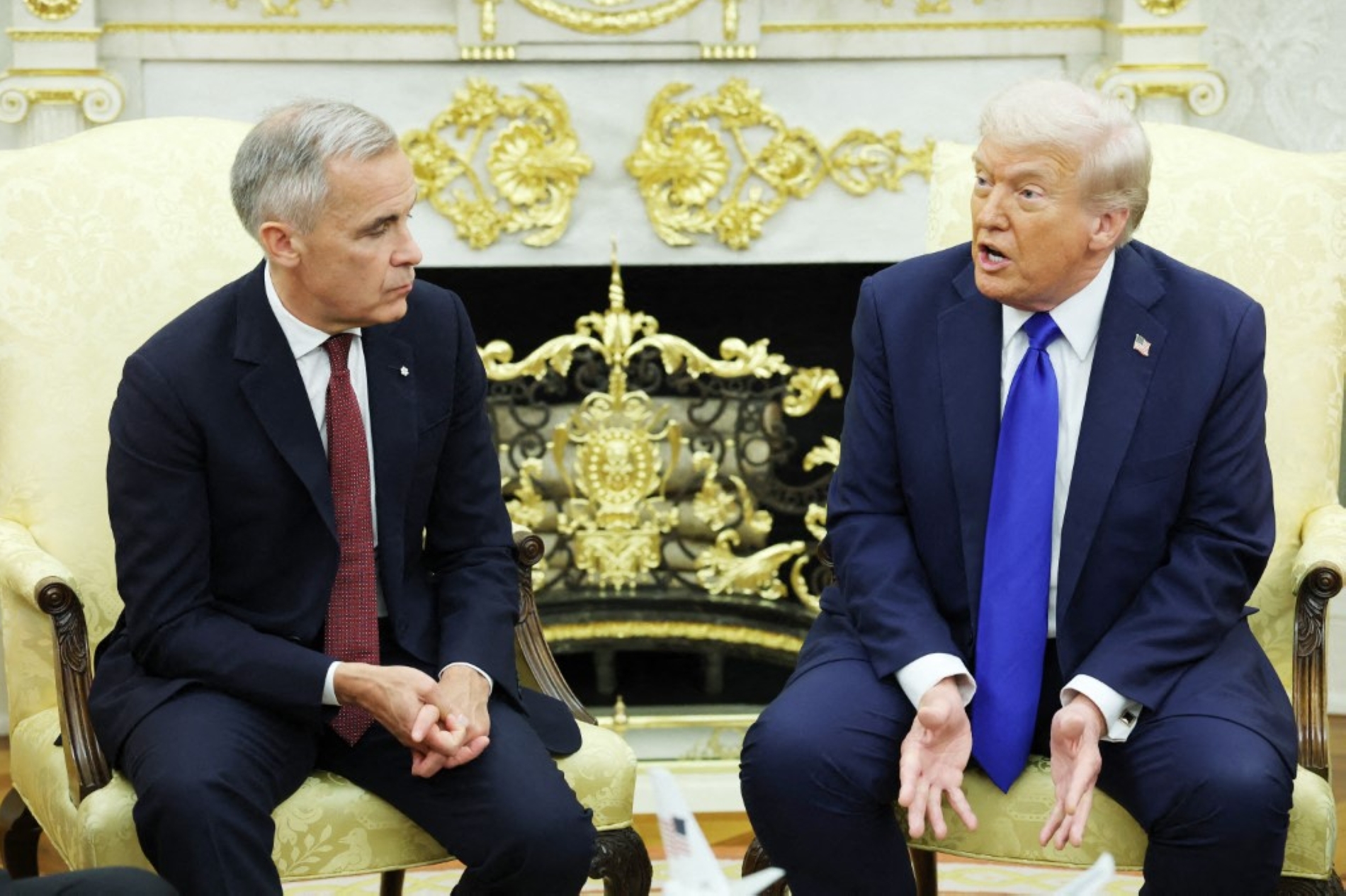
US President Donald Trump (R) and Canadian Prime Minister Mark Carney in the Oval Office of the White House on 7 October 2025 in Washington, DC.

Countries are responding to Trump’s tariffs in a variety of ways. Some have tried flattery and gifts; some are retaliating. Your administration has taken a tough stance—a strategy that helped get Prime Minister Mark Carney elected. I am curious whether there is a sense now that this path also comes with a steep economic cost. And if so, how is your administration thinking through those costs and what it means for the Canadian people?

A vast majority of goods continue to pass through the Canada-United States border every day without tariffs under the Canada-United States Free Trade Agreement. The work that we will continue to do is to act in the sovereign best interests of our country. That means not only working on trade with the United States but also diversifying our trade relationships across the board.

Prior to Prime Minister Carney’s election, we were and continue to be the only G-7 country that has a free trade agreement with every other G-7 country. In addition, over the past year, Canada has signed over 20 security, defence, and economic agreements with countries around the world in service of the trade diversification agenda.
We are doubling non-US trade over the next 10 years. As the prime minister says, we can give ourselves much more than any country can take away

Canadian foreign minister Anita Anand

Let us look at the Indo-Pacific. We signed a free trade agreement with Indonesia last year. We are negotiating one with the Philippines right now. We hope to conclude a comprehensive economic partnership agreement with India and a free trade agreement with ASEAN (the Association of Southeast Asian Nations) before the end of this year. That body of work is focused on the Indo-Pacific, but that is an example of what we are doing around the world in terms of trade diversification. It is work that will continue while the Canada-United States relationship and trade negotiations are occurring.

Two years from now, if we have a new administration in the United States and the relationship with Canada reverts to the norm, what happens to all these other global moves that Canada has made to de-risk from the United States?

The work that we are doing now is in service of our economic robustness, our longevity, our sovereignty, as Canadians and as a country. This would be the strategy regardless. We are doubling non-US trade over the next 10 years. As the prime minister says, we can give ourselves much more than any country can take away. In other words, we need to ensure our long-term resilience, and that is the case regardless of the trade negotiations between Canada and the United States. It is why the Canada-European Union relationship is growing. It is why the Canada-ASEAN relationship is growing. It is why we will continue to take a bold foreign-policy approach all over the world.

Sean Kilpatrick/Pool via REUTERS
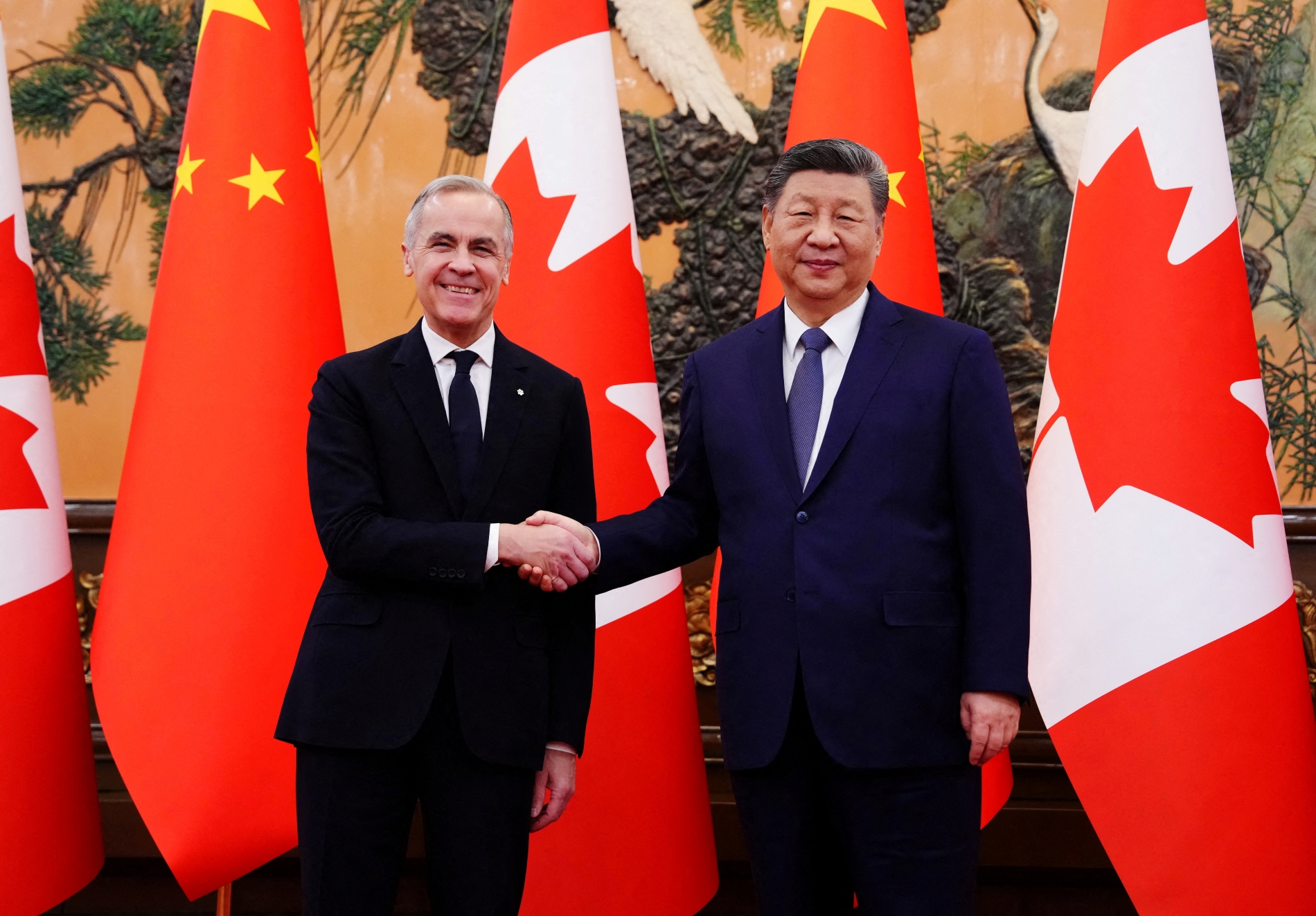
Canadian Prime Minister Mark Carney shakes hands with President of China Xi Jinping at the Great Hall of the People in Beijing, China, on Friday, 16 January 2026.

So let me talk a little bit then about the Canada-Europe relationship. I heard the phrase "associate member" being used a week ago. What would that entail? What does that mean?

The nomenclature that is being attached to the growing relationship between Canada and the EU is not the focus of the work we are doing building up to the Canada-EU summit in Montreal at the end of October. Our focus is on several pillars, where you will see deeper integration on critical minerals; AI and quantum; trade and investment following on from the Canada-EU Comprehensive Economic and Trade Agreement; and people-to-people ties, including in education, students, and the Erasmus program. The substantive discussions between our teams right now are focused on these pillars.

After that, perhaps the nomenclature will be addressed. But it would be premature to attach a name, a label, to this relationship as it is taking shape in this moment. So that work continues. The Canada-EU relationship has actually been growing over the last number of months. Let us look at the fact that Canada is the only non-European member of Security Action for Europe. We are the only non-European member invited to the European political community. We have a strategic defence partnership with the EU. We are very much focused on how to build the relationship out from those individual pieces to be something more comprehensive.

font change