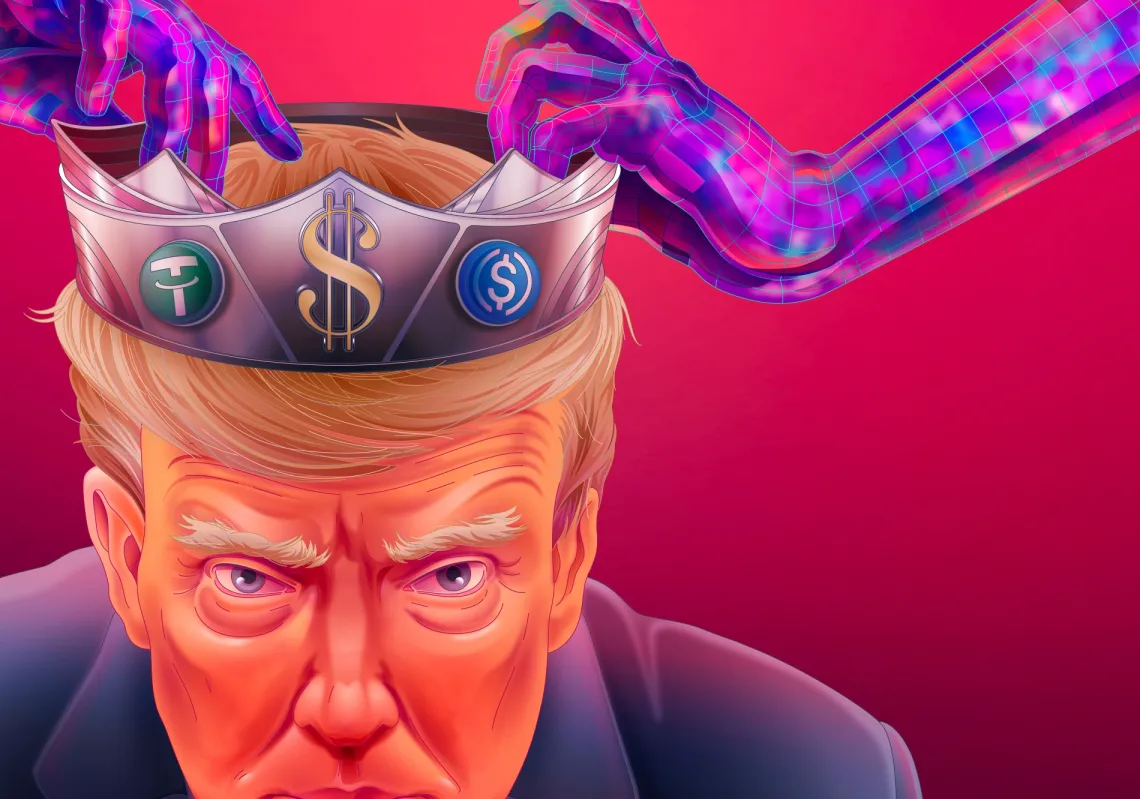
New battle over money emerges at Jackson Hole

Global competition is no longer about currencies alone, but about the channels through which money and data move and China and Brazil are testing the limits of Western dominance

Federal Reserve Board Governor Kevin Warsh speaks with Bank of England Governor Andrew Bailey and Bank of Canada Governor Tiff Macklem during the annual economic policy symposium in Jackson Hole, Wyoming, on 28 August, 2026.
AP
Federal Reserve Board Governor Kevin Warsh speaks with Bank of England Governor Andrew Bailey and Bank of Canada Governor Tiff Macklem during the annual economic policy symposium in Jackson Hole, Wyoming, on 28 August, 2026.

New battle over money emerges at Jackson Hole

The influence of a currency has traditionally been measured by its share of central-bank reserves, or by its use in international trade and the pricing of oil and other commodities. That measure is no longer enough. No matter how large the economy behind it, a currency cannot become a global power if it is difficult to move or lacks liquidity, safe assets, and widely accepted clearing and settlement networks. This is why the 2026 Jackson Hole Economic Policy Symposium matters well beyond the familiar question of where interest rates are heading.

Hosted by the Federal Reserve Bank of Kansas City from 27 to 29 August under the title “Financial Innovation: Implications for Payments and Policy”, the symposium devoted its programme to the infrastructure through which money moves: instant-payment systems, stablecoins, tokenised assets, central-bank digital currencies and the future of banking as platforms gain influence. The organisers described payment systems as “the circulatory system for the economy”. Currency ownership is not the only source of power. So too is the ability to set the rules under which money travels, see where it is going, and allow or block its passage.

The dollar’s strength does not rest solely on the size of the US economy or the depth of the Treasury market. It also derives from an interconnected system of correspondent banks, clearing houses, foreign-exchange markets, settlement systems, and legal and regulatory institutions. Swift plays a central role in this structure, but contrary to a common misconception, it neither transfers nor settles funds itself. It is a secure network through which financial institutions exchange messages and instructions. Settlement takes place through bank accounts and systems such as the US Fedwire Funds Service and the Clearing House Interbank Payments System, or CHIPS.

In retail payments, another layer of power lies with networks such as Visa and Mastercard. These companies do not themselves provide most of the credit involved, nor do they normally hold customers’ deposits. But they set the rules and standards that allow someone with a card issued by a bank in one country to pay a shop served by a bank in another. A single payment can therefore pass through several networks: one sends the instructions, another connects the card to the merchant, a third clears the transaction, and a further system completes final settlement in central-bank money. All this happens in seconds, beyond the customer’s view.

According to SWIFT data for May 2026, the dollar accounted for 59.1% of the value of international payments when transactions within the eurozone were excluded, compared with 13.9% for the euro and 2.2% for the Chinese renminbi. The figures do not cover every payment made worldwide, only the messages carried over SWIFT. Even so, they illustrate the gap between the weight of China’s economy and the international reach of its currency.

The more banks, companies and individuals join a network, the more useful it becomes and the greater the cost of leaving it. Over time, liquidity, expertise, trust and compliance rules gather around it. That is why the dollar’s dominance cannot easily be weakened simply by a group of countries agreeing to use their own currencies. A credible alternative requires a complete financial infrastructure capable of functioning every day, in normal conditions and in a crisis.
AFP
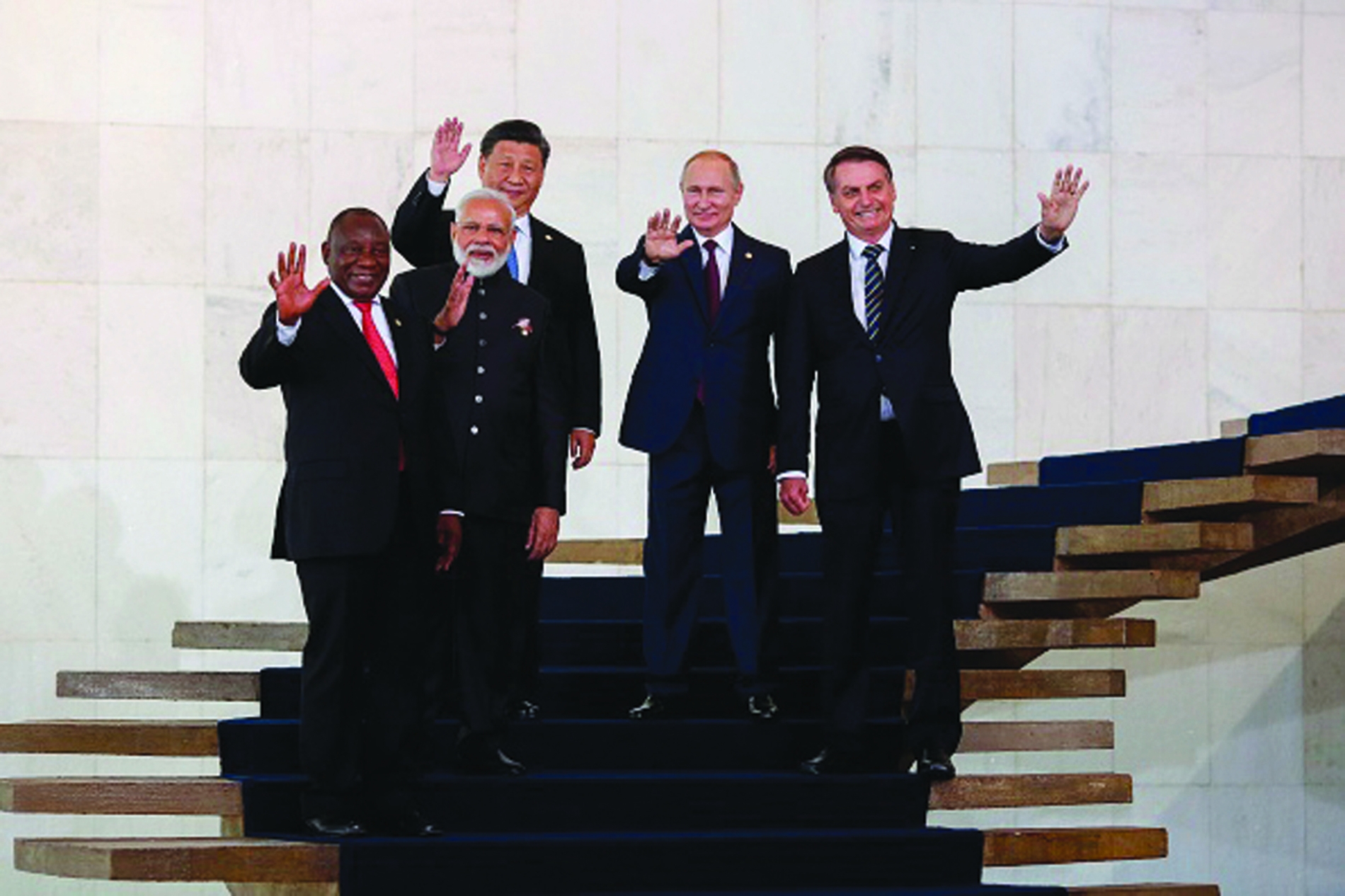
South Africa's President Cyril Ramaphosa (L), India's Prime Minister Narendra Modi (2nd L), China's President Xi Jinping (C), Russia's President Vladimir Putin (2nd R), Brazil's President Jair Bolsonaro (R).

China builds a parallel route

China has not confined itself to calling for wider use of the renminbi in trade. It created the Cross-Border Interbank Payment System, or CIPS, which provides clearing and settlement services for renminbi-denominated transactions. By June 2026, it had 210 direct participants and 1,619 indirect participants. According to its operator, the payment-routing data services associated with CIPS cover more than 190 countries and regions and around 5,000 banking institutions. Not all of those institutions are formal CIPS participants, but the reach of services indicates the breadth of the system’s potential access.

Interest in this infrastructure grew after Western sanctions on Russia demonstrated that international financial networks cannot be divorced from politics. The power to exclude a bank or a country from payment channels has become one of the most consequential forms of pressure. CIPS, however, is not a Chinese version of SWIFT. The former clears and settles renminbi transactions; the latter is a global messaging network used for multiple currencies. Some activity on the Chinese system still relies on SWIFT messages, so competition between the two is accompanied by a degree of interdependence.

China also faces an obstacle technology cannot remove. An international currency needs to be freely convertible, backed by deep financial markets and safe assets that investors are willing to hold, and supported by a predictable legal framework. China’s capital controls therefore continue to limit the renminbi’s international reach, no matter how efficient its payment infrastructure becomes.
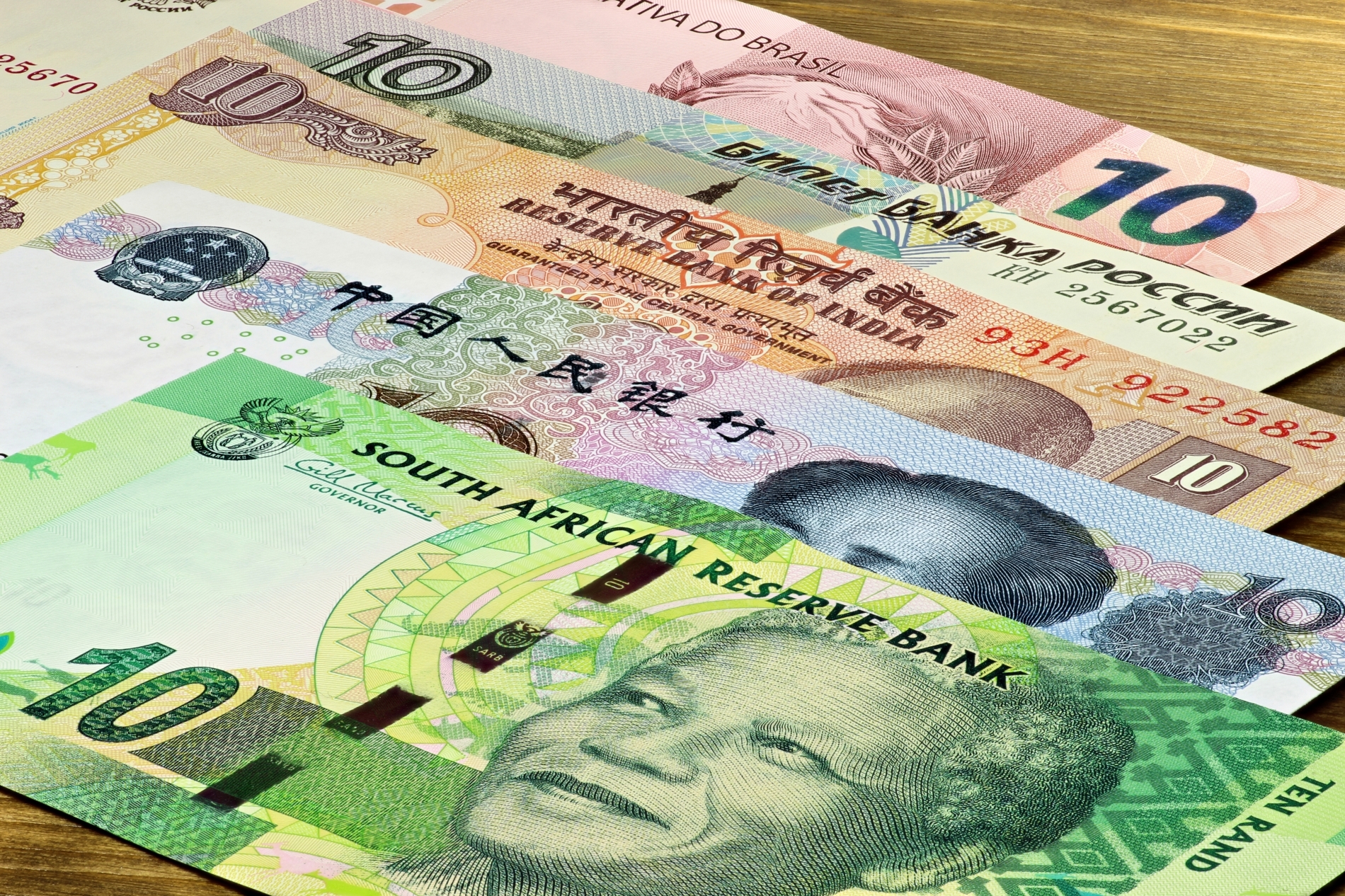

An international currency needs to be backed by deep financial markets, a predictable legal framework, and safe assets that investors are willing to hold.

Brazil: a unique domestic success 

Brazil offers a different model. In 2020, its central bank launched Pix, an instant-payment system that quickly became part of everyday life. By late 2025, it had reached around 170 million users, while transactions in 2024 were worth roughly BRL 11tn. Transfers can be made around the clock and completed within seconds using a telephone number or a simple code, without the sender having to know the recipient's bank details. Pix has shown that open public infrastructure can compete with card networks and private wallets. It has reduced costs for merchants, made digital payments easier for individuals and small businesses, and lowered reliance on cash.

Its success, however, remains primarily domestic. Linking payment systems across borders has proved far harder than operating one within a single country. It requires different laws to be reconciled, liquidity to be available in the required currencies, identity checks and anti-money-laundering procedures to be aligned, and responsibility to be assigned when fraud occurs or a transaction fails. Brazil can export its expertise, but Pix can become an international competitor only if other countries are prepared to connect their systems to it. A more realistic prospect may be to enable national payment networks to deal with one another directly, rather than attempting to create a single global application.

BRICS: ambition outpaces the existing infrastructure

The BRICS countries are seeking to increase the use of national currencies and reduce their exposure to the dollar and Western sanctions. Since 2020, the group's working bodies have been examining ways to deepen co-operation on payments. BRICS has backed its Cross-Border Payments Initiative, alongside wider settlement in local currencies, the harmonisation of financial messages under the ISO 20022 standard, and the exploration of alternative channels.

Shutterstock

Talk of a "BRICS currency" or a ready-made common network does not yet reflect reality. What exists is a collection of initiatives, bilateral arrangements and attempts to connect national systems. No single infrastructure approaches the reach or liquidity of the current system. The members also differ in their interests and in the openness of their markets. India wants cheaper payments and less reliance on the dollar, but that does not mean it is willing to accept greater Chinese influence.

Brazil emphasises efficiency and autonomy, while Russia, under sanctions, has a more urgent need for alternative channels. Connecting existing national systems may therefore be more feasible than creating a common currency or a new central institution. The world appears to be moving towards multiple payment routes, with parallel channels coexisting and connecting when necessary, rather than towards the disappearance of the dollar-based system.

Talk of a "BRICS currency" or a ready-made common network does not yet reflect reality.

Stablecoins extend the dollar's reach

Another challenge is emerging outside government. Stablecoins—digital tokens generally pegged to the dollar and transferred over blockchain networks—allow money to move quickly, especially in countries with weak banking services or limited access to foreign currency. They may reduce users' reliance on traditional banks, but that does not necessarily weaken the dollar. Most stablecoins are denominated in the US currency, and their spread could extend the dollar's digital use in emerging economies even when transactions take place outside conventional banking channels.

A transaction is not always cheaper simply because it is faster. Users generally have to buy a stablecoin with local currency, while recipients must then sell it. Once on- and off-ramp charges, exchange-rate spreads and compliance costs are included, the total may match or exceed the price of a bank transfer. According to the Bank for International Settlements' 2026 report, adjusted annual stablecoin transaction values stand at about $390bn, using a methodology that excludes much of the repetitive and trading-related activity. That is less than 1% of the value of payments handled by the major conventional networks.

By comparison, CHIPS, the largest private US dollar clearing and settlement system, processes about $2.2tn on an average business day. This does not make stablecoins irrelevant. They are expanding rapidly and offer a practical solution in some slow and expensive payment corridors. But for them to carry a substantial share of global economic payments will require time, broader trust and a stronger regulatory framework.

Reuters
The facade of the Federal Reserve building in Washington, DC, in 2025.

Is power shifting from banks to networks?

Some power is indeed shifting, but banks are not leaving the scene. Banks once controlled most links in the chain: the customer's account and card, the data, the transfer and the credit. Today, a technology company or digital wallet may control the interface the customer uses, collect spending data and determine the route a transaction takes, while the money remains deposited with a bank whose name the customer may barely notice. This weakens the bank's position even if it retains the deposit. The platform that manages the daily customer relationship can later offer loans, insurance and investments. As its user base grows, banks and merchants find it increasingly difficult to operate outside it.

Visa and Mastercard provide an early illustration of this shift. They sit between banks, customers, and merchants, set the rules of passage, and earn revenue from transactions. Platforms such as Alipay and WeChat Pay have gone further, bringing payments, commerce, digital identity and financial services together in a single application.

Yet these networks cannot easily dispense with banks. Banks create credit, manage liquidity, verify customers' identities and bear risk; they are also directly connected to central-bank money. Stablecoins and tokenised deposits likewise require reserves, trusted institutions, and rules for dealing with insolvency and fraud. Banks may therefore lose part of their direct relationship with customers and become providers of back-end infrastructure, while platforms capture the data, interface and distribution. That would be a significant change even if the banking sector itself did not shrink.

Federal Reserve Chair Kevin Warsh did not examine competition between payment networks in detail; he tackled it from the standpoint of monetary policy.

Code alone cannot create trust

The Jackson Hole programme and its sessions addressed innovation in the international monetary system, tokenised finance, countries' experiences of payment innovation, and the future of banking. Running through these subjects was the question of how far technology can perform functions that financial institutions have carried out for decades.

In his opening address, Federal Reserve Chair Kevin Warsh did not examine competition between payment networks in detail; he approached the issue from a monetary policy standpoint. He said the central bank should pay attention to both the money it creates and the money generated by banks and financial systems. He acknowledged that innovation is changing the mechanics linking the monetary base and the velocity of money to the economy. But he warned against using those changes as a reason to ignore the ultimate effects of money on financial conditions and prices. He also reaffirmed that short-term interest rates would remain the primary tool for achieving price stability and maximum employment, while unconventional policies should be reserved for genuine crises.

Changing payment channels does not remove central banks from the picture, but it could make their task more complicated. The risk becomes apparent if deposits migrate to stablecoins or platforms that are not fully subject to banking rules, or if more financial activity takes place beyond the channels authorities are accustomed to monitoring. The Bank for International Settlements advocates a model that brings central-bank reserves, bank deposits and tokenised assets together on regulated programmable platforms. Its proposal is to modernise the existing infrastructure and link national instant-payment systems, shortening the time required for cross-border transfers and reducing the number of intermediaries.

REUTERS/Mohamed Azakir
A money exchange vendor counts US dollar banknotes at his shop in Beirut, Lebanon, on 19 January 2023.

Those who make the rules hold the power

The dollar will not disappear soon, nor will a Chinese network or a grouping of emerging economies replace the current system in one leap. But reliance on a single route is declining as local, regional and digital payment channels multiply. Competition will centre on who sets the technical standards, owns transaction data, supplies liquidity in a crisis, and decides who may use a network and on what terms.

Controlling a payment network is about more than earning a fee on transactions. It offers a view of a large part of the economy's activity, the ability to set the conditions under which money can be accessed, and influence over where liquidity flows. When the network crosses borders, that financial influence also becomes a political instrument. In the 20th century, possessing the leading reserve currency was one of the clearest signs of economic power. In the digital economy, the way money moves has become part of that power, rather than simply a service operating in the background.

font change