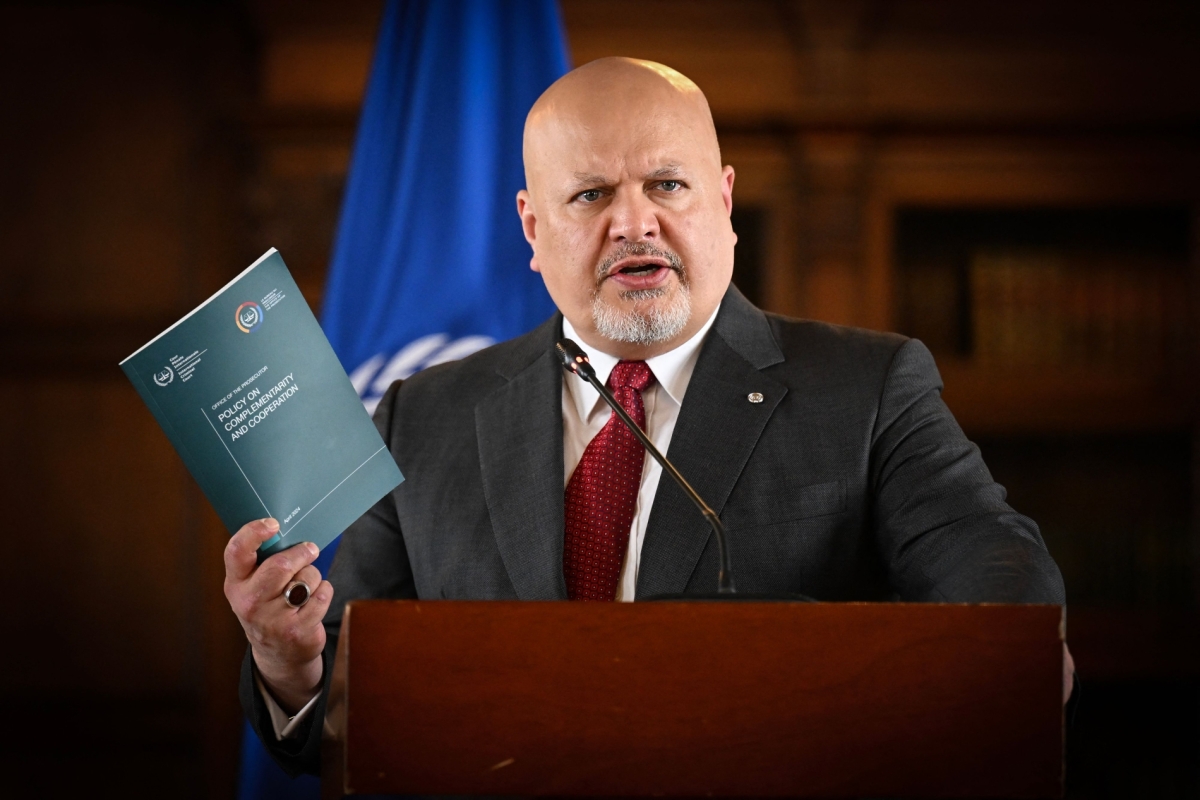

The International Criminal Court (ICC) has been dogged by controversy ever since it issued arrest warrants for Israel’s Prime Minister Benjamin Netanyahu and his former Minister of Defence Yoav Gallant in November 2024. The issuer was the ICC’s chief prosecutor Karim Khan, a British lawyer, who has since found himself the latest casualty of this ongoing imbroglio.
On 25 July, he was dismissed from his role after the court’s governing body concluded in June that he had committed serious misconduct in connection to allegations of sexual abuse made by two women working on the court’s staff. The following day, Venezuela announced that it was withdrawing from the ICC. In a post on X, the US State Department hailed the move as “marking a partnership on American-led efforts to dismantle the corrupt and worthless ICC”.
Punishing the issuers
The decision by the ICC’s member states to oust Khan is unprecedented. According to those familiar with proceedings, at a special meeting at the UN’s headquarters, 82 of the 125 member states voted in favour of removing him. Yet his ouster is not the first unprecedented event in this story. In the spring of 2024, Lord Cameron, then Britain’s foreign secretary, is alleged to have threatened to defund the ICC if it pursued arrest warrants against Israeli leaders.
Weeks later, 12 Republican senators (including Marco Rubio, now America’s chief diplomat) wrote to Khan warning him against targeting Israeli leaders and threatening ICC judges with asset freezes and travel bans. Despite the pressure, the court went ahead and issued the warrants on 21 November 2024. Cue the punishment. On 12 February 2025, an executive order imposed tough sanctions on the ICC. Visa restrictions and financial penalties targeted those involved in its investigations concerning US citizens and allies, which included Israel.

These restrictions are by no means trivial. Kimberley Prost, an ICC judge, described the effect. “It has such a serious impact in terms of day-to-day life, it’s not symbolic,” she said. “You lose all your credit cards no matter where they were issued.” Simple tasks, such as booking an Uber or reserving a flight or a hotel room, became impossible, she said. Bank transfers could be rejected. Another ICC official told The Guardian that they felt the sanctions were being used “to destroy the court, rather than just tie its hands”.
‘This is not Hollywood’
So far, however, the work of the court has not been impacted (although Khan’s career is in tatters). ‘Sarah’, one of his accusers, said the allegations were not an existential issue for the court. In an interview with Christiane Amanpour, she said: “I don’t believe that the legitimacy of the court should stand on the reputation of any one man. This is not a spectacle, this is not Hollywood. At the end of the day, this is a complaint. And what the court and other institutions do with such a complaint adds to its legitimacy, it doesn’t take away from it. It shows that they are willing to take possible misconduct seriously.”