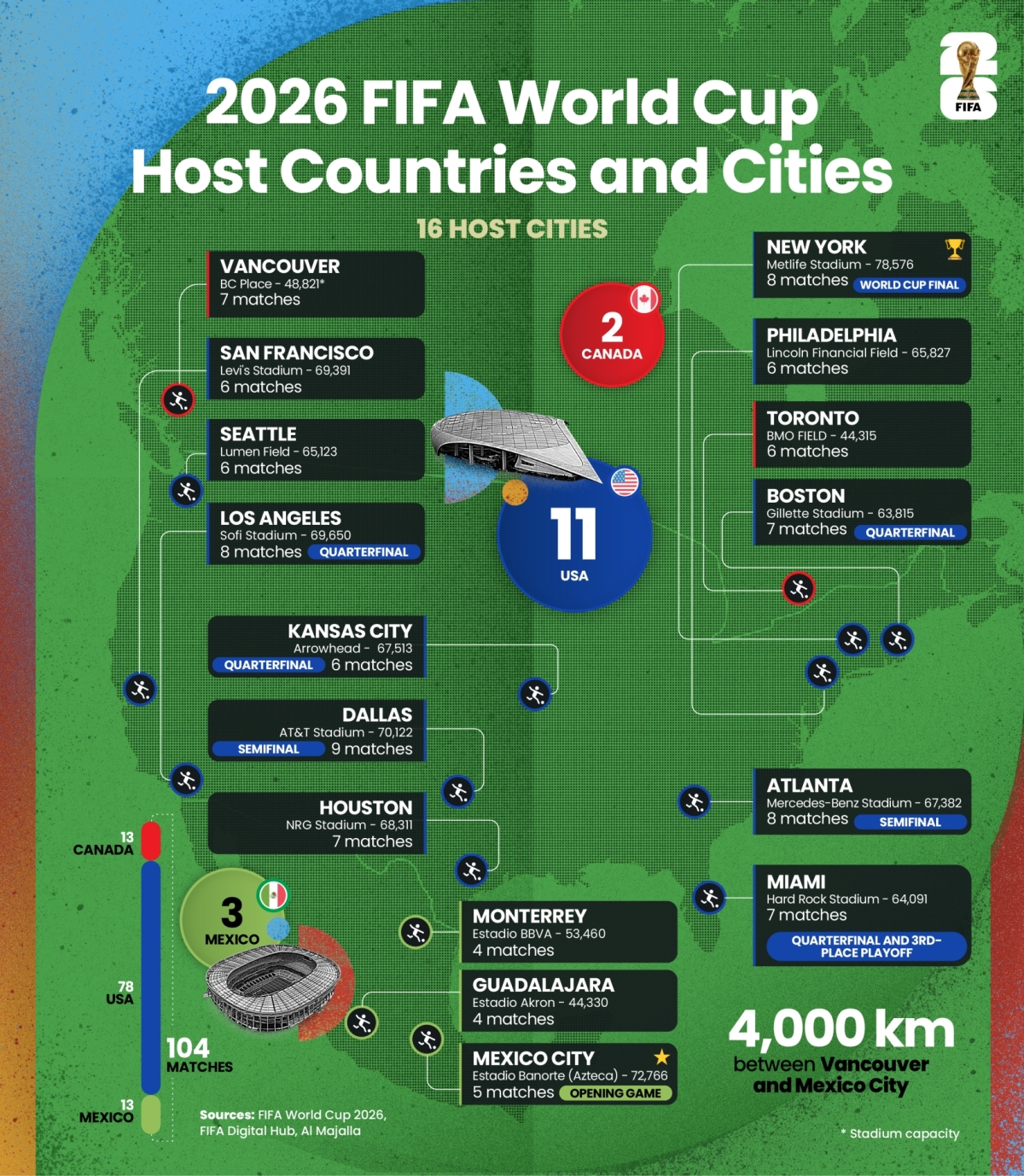

As fans fill stadiums from Mexico City to Vancouver, the 2026 FIFA World Cup is transforming North America into a giant sporting stage, connecting 16 host cities across three countries and spanning nearly 4,000 kilometres from Vancouver in the north to Mexico City in the south, in the largest and most geographically expansive tournament ever held.
The United States is hosting the majority of matches across 11 cities: Atlanta, Boston, Dallas, Houston, Kansas City, Los Angeles, Miami, New York/New Jersey, Philadelphia, San Francisco Bay Area, and Seattle. Canada’s host cities are Toronto and Vancouver, while Mexico will welcome fans in Mexico City, Guadalajara, and Monterrey.
Some of North America’s most iconic stadiums are hosting matches, including the MetLife Stadium in New Jersey, which will host the final, as well as historic venues such as Mexico City’s Estadio Azteca, which hosted the opening match on 11 June. Collectively, the tournament's 16 stadiums can accommodate more than one million spectators.
The expanded format features 48 teams and 104 matches, up from 64 in previous tournaments. Of those, 78 are being played in the United States, while Canada and Mexico share the remaining 26. Around 6.5 million visitors are expected to travel between host cities, driving billions of dollars in spending across tourism, hospitality, transportation, and entertainment.
More than a sporting event, the 2026 World Cup showcases the diversity, scale, and connectivity of North America. Its success could redefine the blueprint for hosting global sporting events, setting a new benchmark for the centenary World Cup in 2030, which will be co-hosted by Spain, Portugal, and Morocco.