Jensen Huang’s name is no longer tied solely to the world of graphics cards or video gaming. Today, he is among those shaping the global future of artificial intelligence, leading one of the world’s most valuable and consequential technology firms, NVIDIA, which is worth around $5tn, but which began life as a graphics specialist.
Born in Taiwan, Huang emigrated to the United States aged nine, growing up in a fiercely competitive environment that would help shape his professional identity. He studied electrical engineering and later founded NVIDIA in the 1990s, when the semiconductor industry was defined by intense competition and market instability.
What set Huang apart was not only his technical expertise, but his capacity to anticipate the future long before others could see it. NVIDIA focused on developing graphics processors for gaming, earning a formidable reputation, yet its real transformation came from Huang’s early recognition that these processors held far broader potential. He envisioned their role in powering AI—processing enormous volumes of data and driving machine learning capabilities.
Today, some of the world’s biggest tech firms depend on NVIDIA to design the chips that power large language models (LLMs). His influence has expanded to political circles. He now appears prominently alongside US President Donald Trump, at times more visibly than cabinet members. Firmly in the president’s inner circle, Huang is helping shape the direction of American technological influence worldwide.
Understanding processors
Born in Taiwan in 1963, Huang and his brother were sent to the US to live with an uncle in Tacoma, Washington. A year later, he went to live in rural Kentucky, where he was placed in a boarding facility affiliated with a religious institute for boys, partly functioning as a reform school. An austere setting far from his parents, it taught him that survival depended on self-reliance, endurance, patience, and discipline.
Eventually, his parents and brother joined him in the US and the family settled in the suburbs of Portland, Oregon. Huang attended high school, played tennis, and graduated at 16, two years ahead of his peers, having shown academic brilliance. He worked briefly as a dishwasher at a Denny’s restaurant, before studying electrical engineering at Oregon State University, then a Master’s from Stanford University in 1992, right in the heart of Silicon Valley’s innovation hub.
After completing his studies, Huang entered the semiconductor industry via AMD, where he spent just over a year contributing to microprocessor design. It gave him his first exposure to the inner workings of processors. He then joined LSI Logic, which specialised in chips that boosted storage capacity and enhanced network performance in data centres and digital infrastructure.
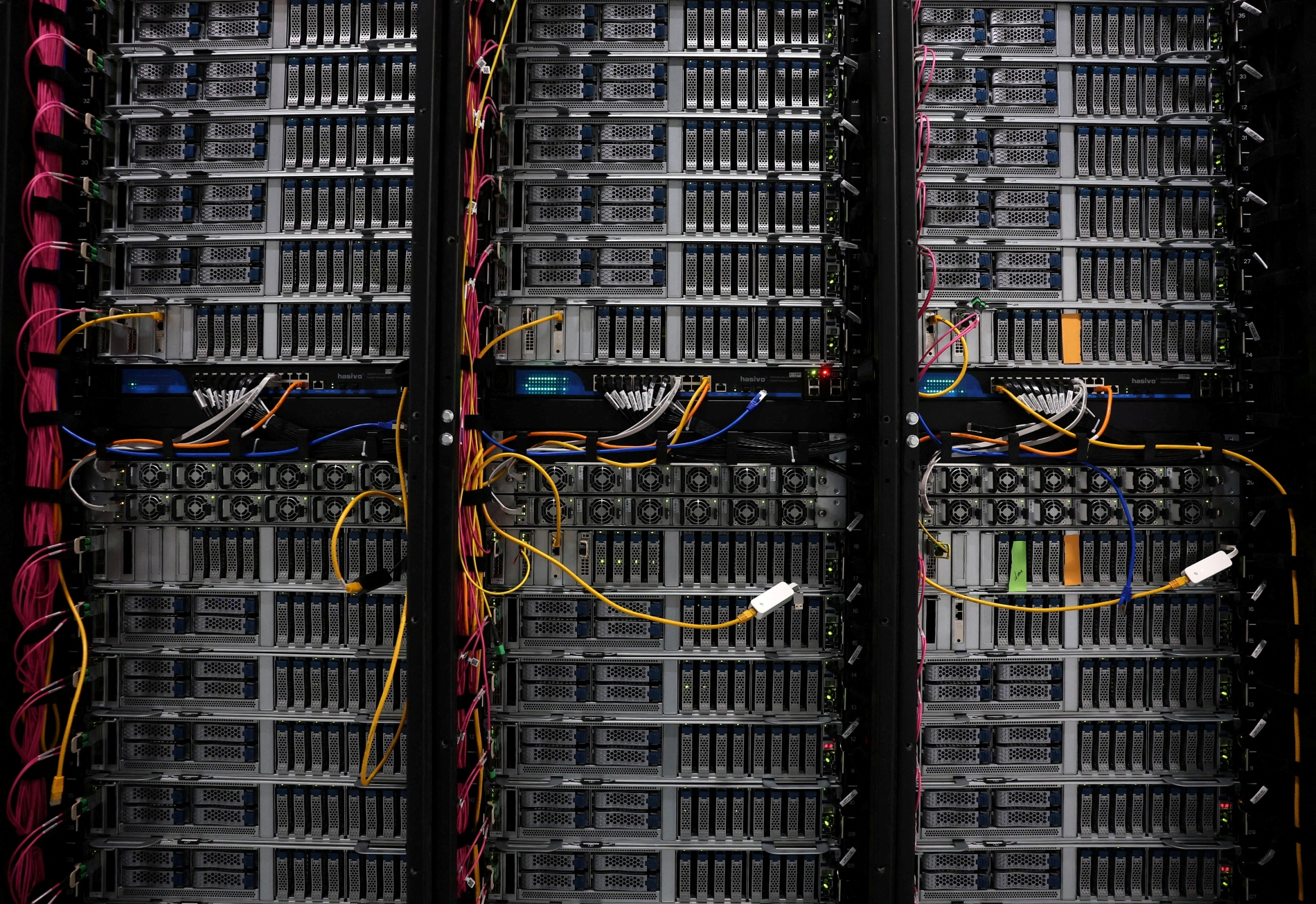
Huang held roles in engineering, marketing, and management, gaining a well-rounded understanding of how a technology company functions. This helped when he set up NVIDIA. Initially, he focused on developing graphics processors for gaming. He saw that gaming represented the most demanding computational environment in terms of speed, processing power, and visual quality.
Engines for computation
In 1995, the company released the NV1 chip. It could process both two-dimensional and three-dimensional graphics simultaneously and was adopted by Sega for one of its consoles—an early endorsement. Although the NV1 did not find widespread success in the personal computer market, it established NVIDIA’s technical philosophy: to push the limits of computational performance, rather than settle for conventional solutions.
Huang saw gaming as both a testing ground for peak processor performance and a vast commercial platform capable of supporting large-scale research and development. This led to NVIDIA’s first strategic shift in 1997, with the launch of the RIVA 128. This moved the company from limited graphics development into direct competition within the personal computer graphics card market.
In 1999 came the GeForce 256, which presented the graphics processing unit (GPU) as an independent engine for graphical computation, rather than as a simple display enhancer. This redefined the entire industry. Soon, Huang was leading NVIDIA through another critical evolution: the development of programmable graphics processors.
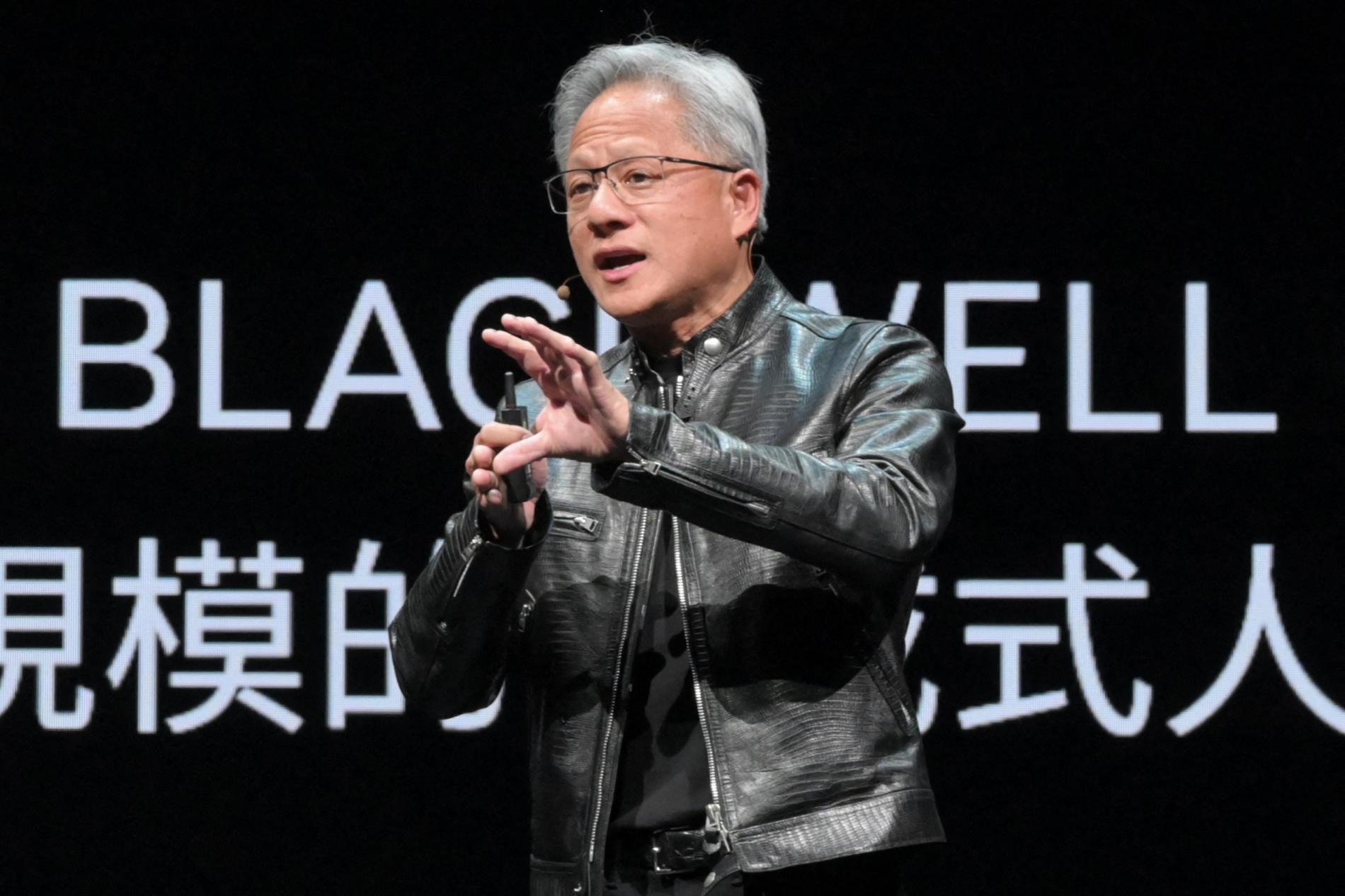
Until that point, graphics cards had executed fixed functions related to shape, colour, and lighting, with little room for adaptability. Programmability changed the game. Engineers could now write custom instructions for the GPU to perform advanced calculations, turning it into a parallel computing unit capable of handling thousands of operations at once.
Heading the revolution
The most transformative leap came in 2006 with the launch of CUDA. Through this platform, NVIDIA redefined the GPU from a graphics tool into a general-purpose computing engine. CUDA enabled developers to use the GPU for complex mathematical tasks in parallel. Unlike the CPU, which handles tasks sequentially and at slower speeds, the GPU could now process thousands of operations simultaneously.
This breakthrough paved the way for a wide range of applications in big data analysis, physical simulation, medical imaging, and eventually the training of AI models. CUDA carried NVIDIA into the centre of the digital revolution.
Huang was the architect behind many of these technological transformations and never confined himself to managing from a distance. His approach to leadership was grounded in bold, forward-looking decisions, even when they appeared high-risk—whether in GPU development, CUDA, AI, or sovereign computing. He became known for a high-pressure, fast-execution environment, while giving engineering teams broad freedom to innovate. Calculated risk was seen as key to staying ahead.