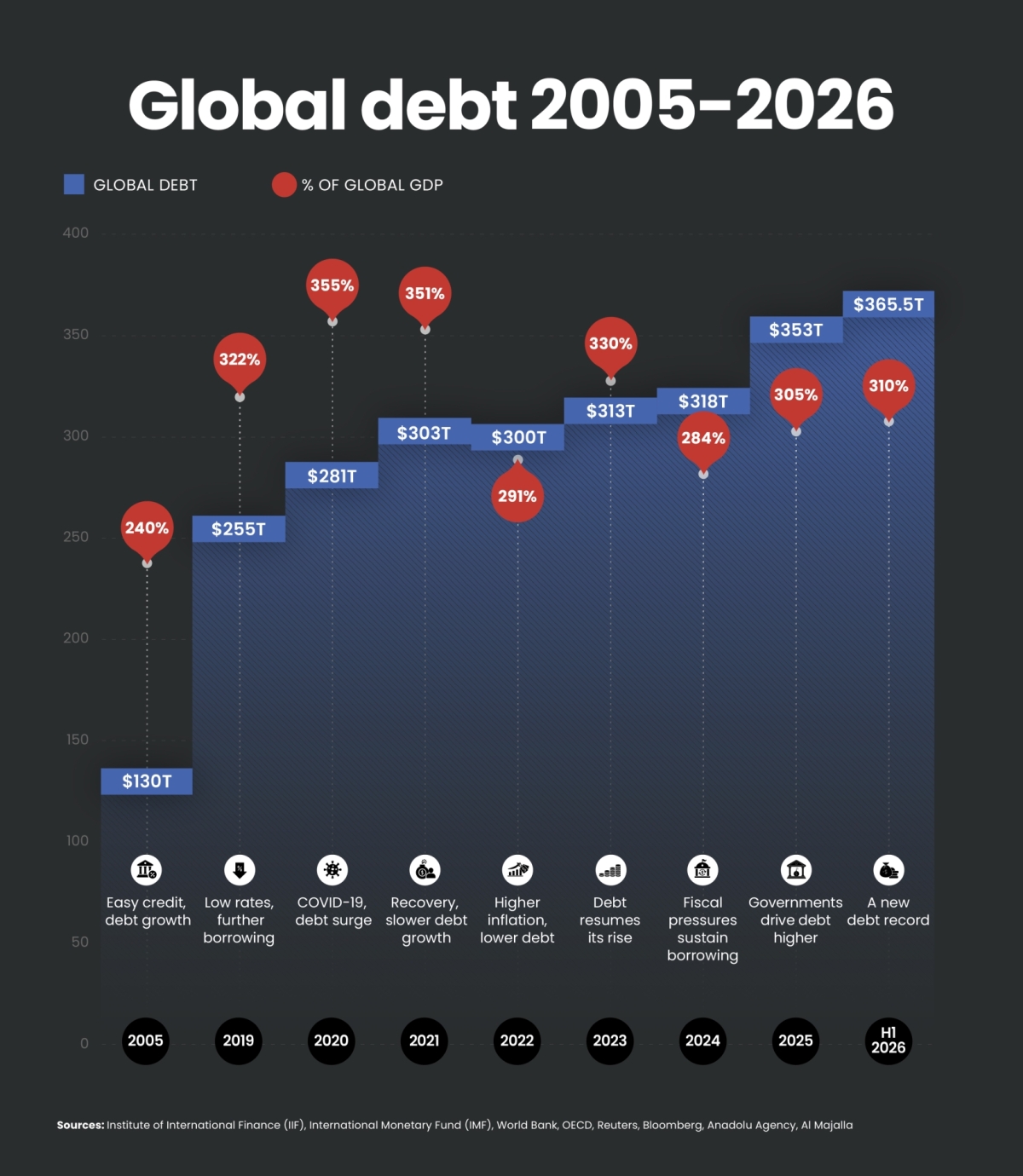

From $130tn in 2005 to more than $365tn in 2026, debt has effectively become a permanent fixture in the global economy, with governments and businesses increasingly feeling the heat.
The 2008 crisis triggered deleveraging in parts of the private and financial sectors, while exceptionally low interest rates gave governments and emerging-market companies room to borrow more. By 2019, global debt had already reached a dangerous level, leaving governments with less fiscal manoeuvrability when the covid-19 pandemic struck.
During the pandemic, governments borrowed to protect incomes, businesses and health systems as revenues collapsed, while companies and households also took on debt. Inflation subsequently offered temporary relief by lifting nominal GDP and reducing debt ratios, but it did not amount to broad-based deleveraging.
Today, debt composition is changing. Public borrowing has become a larger share of the global total, while private-sector debt has eased from pandemic peaks. Fiscal deficits, higher interest costs and spending pressures are becoming central to the next phase. Governments face simultaneous demands from ageing populations and healthcare, defence, energy security, and infrastructure. At the same time, AI, data centres and industrial investment are creating new corporate borrowing needs.
This makes the current debt cycle different from the crisis-driven waves of 2008 and 2020: borrowing is increasingly structural. Emerging markets are the main driver of rising debt in 2026. Yet higher interest rates are making each new dollar of debt more expensive to service.
The likely direction is continued high—and potentially rising—debt, unless economic growth steadily outpaces borrowing. The key pressure points will be fiscal deficits, refinancing costs and strategic investment. The risk is less the absolute size of debt than a widening gap between servicing costs and the growth, productivity and revenues needed to sustain it.